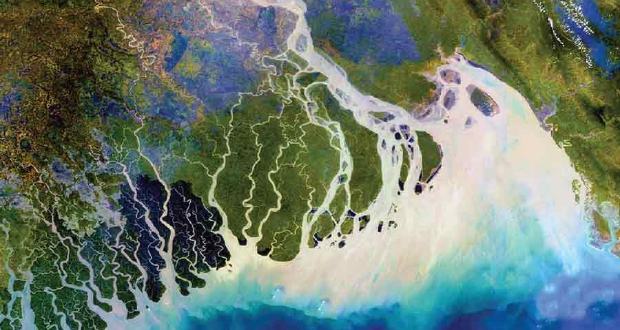
Bangladesh needs to strengthen climate resilience in coastal zones: World Bank
With increasing climate risks, Bangladesh needs to continue investments to strengthen climate resilience in the coastal zones to protect the development gains, says a new World Bank report launched Monday. The report, “Bangladesh: Enhancing Coastal Resilience in a Changing Climate” highlights the country’s journey to reducing vulnerability to climate change and recommends further actions towards improving the resilience of its coastal region. It analyses the drivers of risks, how the government has reduced these risks and offers new perspectives and innovative solutions. Despite vulnerability to climatic risks, Bangladesh has emerged as a global leader in climate change adaptation and is known for proactively investing in resilience. “It shows how long-term investments in disaster risk reduction save lives, reduce economic losses, and protect development gains,” the report says. This was possible due to a range of initiatives backed up by a strategic policy framework, from grassroots-level adaptation and community-based early warning systems to structural investments in infrastructure complemented by nature-based solutions and fostering innovation. Since independence in 1971, Bangladesh has reduced cyclone-related fatalities by 100-fold. However, a rapidly growing population, environmental degradation, and increasing climate risks are putting pressure on the existing natural and infrastructure systems in the coastal zone which is home to about 40 million people. Bangladesh needs to take further immediate actions to improve resilience, the report emphasised. “Coastal resilience is not a static goal to be met, but rather a continuous process of adapting to changing conditions and finding synergies between development objectives,” said Dandan Chen, World Bank Acting Country Director for Bangladesh and Bhutan. “For the last fifty years, the World Bank has supported Bangladesh to build climate resilience and improve disaster risk management. Today, the country shares valuable experience in improving disaster preparedness and climate resilience and is an inspiration for other climate-vulnerable nations.” The report finds that further investments in coastal resilience would produce an array of economic, social, and environmental benefits for Bangladesh.
India targets net-zero carbon emissions by 2070, says Modi
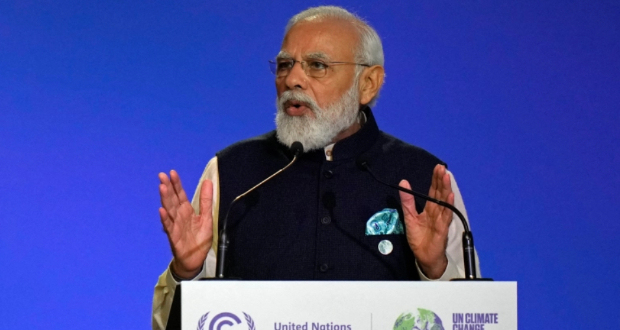
India’s economy will become carbon neutral by the year 2070, the country’s prime minster has announced at the COP26 climate crisis summit in Glasgow. The target date is two decades beyond what scientists say is needed to avert catastrophic climate impacts. India is the last of the world’s major carbon polluters to announce a net-zero target, with China saying it would reach that goal in 2060, and the United States and the European Union aiming for 2050.
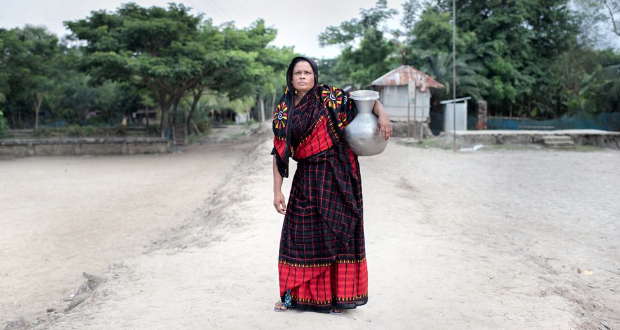
COP26: What climate summit means for one woman in Bangladesh
China's carbon emissions are vast and growing, dwarfing those of other countries. Experts agree that without big reductions in China's emissions, the world cannot win the fight against climate change. In 2020, China's President Xi Jinping said his country would aim for its emissions to reach their highest point before 2030 and for carbon neutrality before 2060. His statement has now been confirmed as China's official position ahead of the COP26 global climate summit in Glasgow. But China has not said exactly how these goals will be achieved.
Why China's climate policy matters to us all
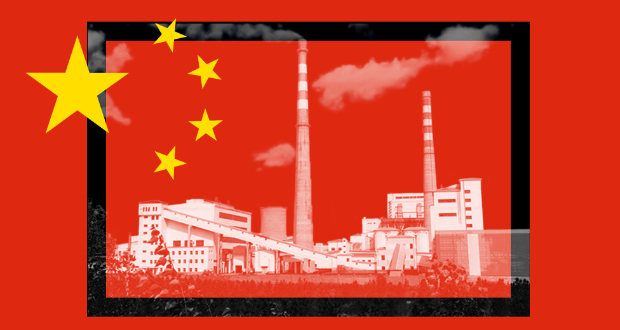
China's carbon emissions are vast and growing, dwarfing those of other countries. Experts agree that without big reductions in China's emissions, the world cannot win the fight against climate change. In 2020, China's President Xi Jinping said his country would aim for its emissions to reach their highest point before 2030 and for carbon neutrality before 2060. His statement has now been confirmed as China's official position ahead of the COP26 global climate summit in Glasgow. But China has not said exactly how these goals will be achieved.
Deliver on promises, developing world tells rich at climate talks

A crucial U.N. conference heard calls on its first day for the world's major economies to keep their promises of financial help to address the climate crisis, while big polluters India and Brazil made new commitments to cut emissions. World leaders, environmental experts and activists all pleaded for decisive action to halt the global warming which threatens the future of the planet at the start of the two-week COP26 summit in the Scottish city of Glasgow on Monday. The task facing negotiators was made even more daunting by the failure of the Group of 20 major industrial nations to agree ambitious new commitments at the weekend.