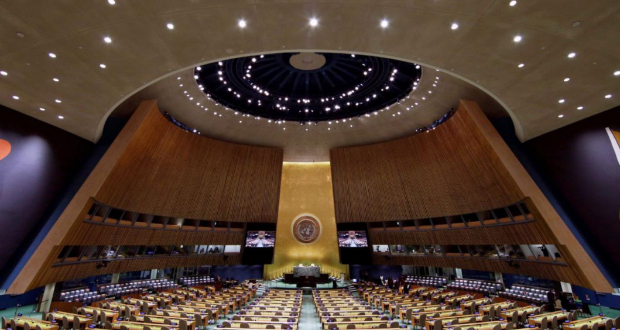
The 77th UNGA and Rohingya Crisis
The 77th session of the United Nations General Assembly (UNGA), which commenced last week, would certainly reflect on the critical issues the world is currently faced with: the Ukraine crisis, global energy prices, widening trade deficits, and challenges in post-Covid recovery. However, it is necessary for the UNGA to attach priority to the Rohingya issue, too. The current session needs to build up on previous discussions and resolutions on the Rohingya crisis over the last few years, and undertake strengthened initiatives for implementation. According to concrete evidence and findings of the International Criminal Court (ICC), the Myanmar authorities have been committing genocide and ethnic cleansing in Rakhine in gross violation of human rights. The crisis has deepened further during the past couple of years. In this context, the 77th UNGA needs to reflect on the imperativeness and urgency in implementing ICC decisions and provisions of international law. The Myanmar military government has been ignoring all concerns and appeals by the international community (both at bilateral and multilateral levels) to stop repression in Rakhine. Myanmar has not demonstrated minimum efforts on its part to cushion this crisis. The UNGA needs to incorporate provisions that would expose intransigence, lapses and deficiencies in compliance of UN decisions. Furthermore, this session should consider creating a "review mechanism" to hold Myanmar's military government accountable and make them face penalties accordingly.
India targets net-zero carbon emissions by 2070, says Modi
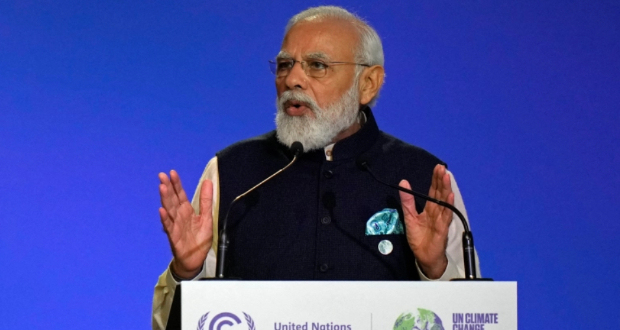
India’s economy will become carbon neutral by the year 2070, the country’s prime minster has announced at the COP26 climate crisis summit in Glasgow. The target date is two decades beyond what scientists say is needed to avert catastrophic climate impacts. India is the last of the world’s major carbon polluters to announce a net-zero target, with China saying it would reach that goal in 2060, and the United States and the European Union aiming for 2050.
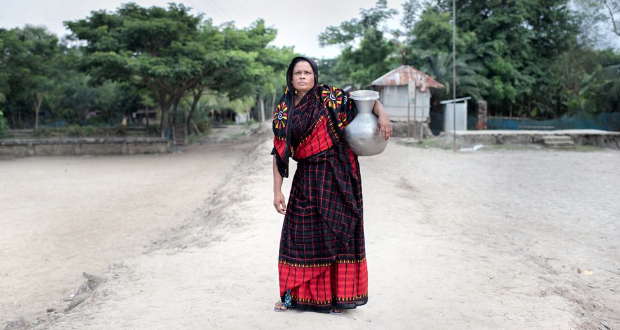
COP26: What climate summit means for one woman in Bangladesh
China's carbon emissions are vast and growing, dwarfing those of other countries. Experts agree that without big reductions in China's emissions, the world cannot win the fight against climate change. In 2020, China's President Xi Jinping said his country would aim for its emissions to reach their highest point before 2030 and for carbon neutrality before 2060. His statement has now been confirmed as China's official position ahead of the COP26 global climate summit in Glasgow. But China has not said exactly how these goals will be achieved.
Why China's climate policy matters to us all
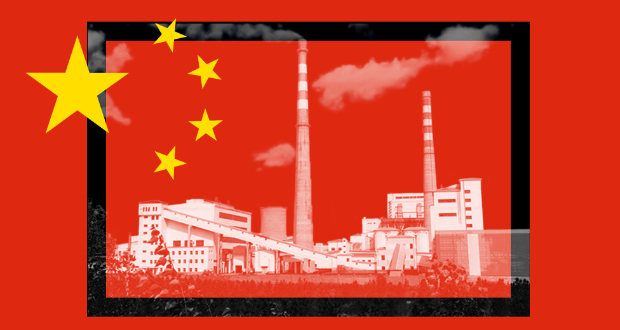
China's carbon emissions are vast and growing, dwarfing those of other countries. Experts agree that without big reductions in China's emissions, the world cannot win the fight against climate change. In 2020, China's President Xi Jinping said his country would aim for its emissions to reach their highest point before 2030 and for carbon neutrality before 2060. His statement has now been confirmed as China's official position ahead of the COP26 global climate summit in Glasgow. But China has not said exactly how these goals will be achieved.
Deliver on promises, developing world tells rich at climate talks

A crucial U.N. conference heard calls on its first day for the world's major economies to keep their promises of financial help to address the climate crisis, while big polluters India and Brazil made new commitments to cut emissions. World leaders, environmental experts and activists all pleaded for decisive action to halt the global warming which threatens the future of the planet at the start of the two-week COP26 summit in the Scottish city of Glasgow on Monday. The task facing negotiators was made even more daunting by the failure of the Group of 20 major industrial nations to agree ambitious new commitments at the weekend.