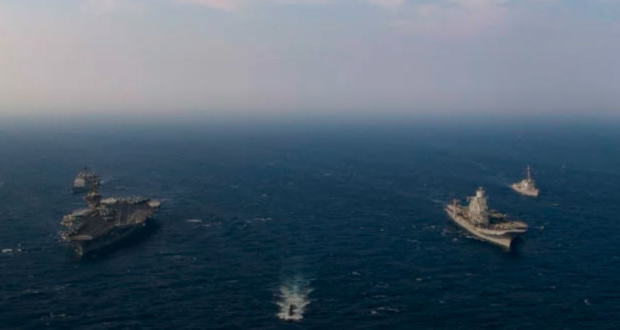
Exploring the Bay of Bengal Once Again
During the Cold War, the Atlantic and Pacific were crucial maritime theatres. Long ago, the Indian Ocean wasn’t a possible superpower battleground. The development of India to a significant power in Asia through greater commerce and production, and the democracy and economic growth of emerging nations have entirely recalibrated the relevance of the Indian Ocean Region (IOR) to the globe. Robert D. Kaplan contends in his book “Monsoon” that the IOR will soon be the focus of international power and strife (Kaplan 2010). As the BoB is a major portion of the IOR, power plays there will shape the regional strategic environment. Due to its economic and geopolitical importance, the Bay of Bengal has become the centre of world politics, but it stretches to Sri Lanka. Busiest international shipping route. 40,000 ships travel this route annually. This route carries half of the world’s products and fuel. Many governments are recognising the BoB’s strategic importance. With rising energy needs, Asian countries are protecting their Sea Lines of Communications (SLOC). Since the BoB connects to the Malacca Strait, which opens to the South China Sea, these routes are essential to SCS economies (China, Japan). This explains the growing interest and engagement of extra-littoral entities in the Bay. Increasing marine power projection in the BoB is important for SLOC protection. Even when large power disputes are controllable, their aims are increasingly questioned.
India targets net-zero carbon emissions by 2070, says Modi
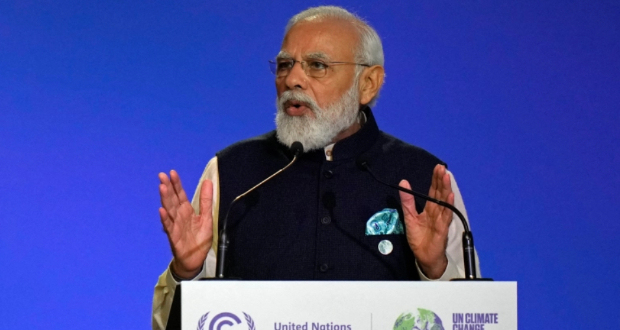
India’s economy will become carbon neutral by the year 2070, the country’s prime minster has announced at the COP26 climate crisis summit in Glasgow. The target date is two decades beyond what scientists say is needed to avert catastrophic climate impacts. India is the last of the world’s major carbon polluters to announce a net-zero target, with China saying it would reach that goal in 2060, and the United States and the European Union aiming for 2050.
COP26: What climate summit means for one woman in Bangladesh

China's carbon emissions are vast and growing, dwarfing those of other countries. Experts agree that without big reductions in China's emissions, the world cannot win the fight against climate change. In 2020, China's President Xi Jinping said his country would aim for its emissions to reach their highest point before 2030 and for carbon neutrality before 2060. His statement has now been confirmed as China's official position ahead of the COP26 global climate summit in Glasgow. But China has not said exactly how these goals will be achieved.
Why China's climate policy matters to us all
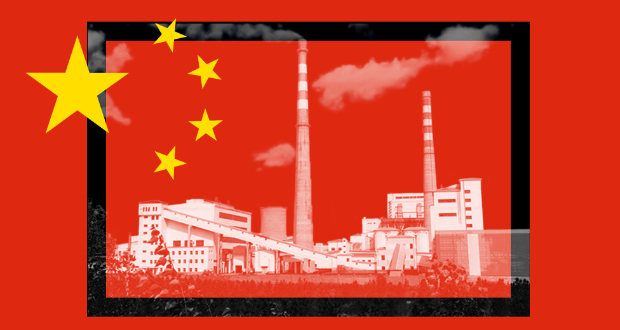
China's carbon emissions are vast and growing, dwarfing those of other countries. Experts agree that without big reductions in China's emissions, the world cannot win the fight against climate change. In 2020, China's President Xi Jinping said his country would aim for its emissions to reach their highest point before 2030 and for carbon neutrality before 2060. His statement has now been confirmed as China's official position ahead of the COP26 global climate summit in Glasgow. But China has not said exactly how these goals will be achieved.
Deliver on promises, developing world tells rich at climate talks

A crucial U.N. conference heard calls on its first day for the world's major economies to keep their promises of financial help to address the climate crisis, while big polluters India and Brazil made new commitments to cut emissions. World leaders, environmental experts and activists all pleaded for decisive action to halt the global warming which threatens the future of the planet at the start of the two-week COP26 summit in the Scottish city of Glasgow on Monday. The task facing negotiators was made even more daunting by the failure of the Group of 20 major industrial nations to agree ambitious new commitments at the weekend.