International Conference On Situating the Bay of Bengal in a Free and Open Indo-Pacific
The narrative of “free and open Indo-Pacific” has been instrumental in shaping foreign policies of many countries that compose this geo-strategic realm set across maritime Asia. At the heart of the Indo-Pacific lies the Bay of Bengal, situated at the confluence of the Indian and Pacific Ocean and fringed by countries of both South and Southeast Asia. The Bay’s depths are home to a fabled wealth of vast hydrocarbon reserves and its waves are traversed by a rich tapestry of shipping routes-vital for trade in oil and natural gas. In a future riddled with uncertainty over energy, the lure of the Bay is therefore undeniable for both its littoral as well as extra-regional states. China’s presence in the Bay has its origin in its quest for energy. The country’s assertive rise has roused the apprehension of multiple major powers such as Japan, USA, UK and Australia, over freedom of navigation, propelling the Bay into the centre stage of strategic power play. India has also outlined her own vision of the Indo-Pacific as natural extension of its immediate geographical region that hosts a vast array of global opportunities and challenges. The Bay of Bengal, and its auxiliary-the Andaman Sea-is India’s geostrategic gateway into the wider waters of the Indo-Pacific. India has launched the Indo-Pacific Oceans’ Initiative (IPOI) to focus on seven central pillars conceived around Maritime Security; Maritime Ecology; Maritime Resources; Capacity Building and Resource Sharing; Disaster Risk Reduction and Management; Science, Technology and Academic Cooperation; and Trade Connectivity and Maritime Transport. The Bay also features in the agenda of collaborative security grouping such as the Quad and AUKUS. Conventional threats are however not isolated concerns but are intertwined with a variety of non-traditional security threats that the Bay faces ranging from maritime piracy and human trafficking to IUU fishing and natural disasters. As all these concerns are transnational in nature, security cooperation is a crucial need in the Bay, a basic requirement for which is information sharing about this maritime domain. Accordingly, the Bay littorals countries are keen to re-engage with one another for better protection of their interests, bilaterally and through BIMSTEC.
India targets net-zero carbon emissions by 2070, says Modi
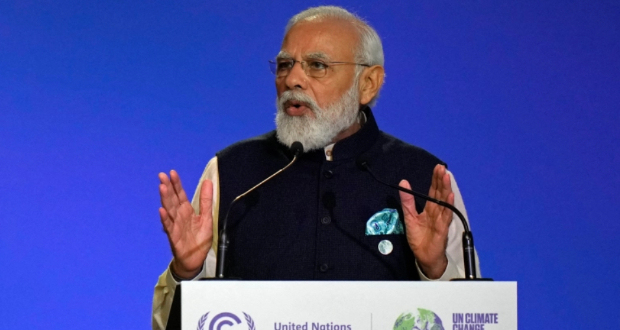
India’s economy will become carbon neutral by the year 2070, the country’s prime minster has announced at the COP26 climate crisis summit in Glasgow. The target date is two decades beyond what scientists say is needed to avert catastrophic climate impacts. India is the last of the world’s major carbon polluters to announce a net-zero target, with China saying it would reach that goal in 2060, and the United States and the European Union aiming for 2050.
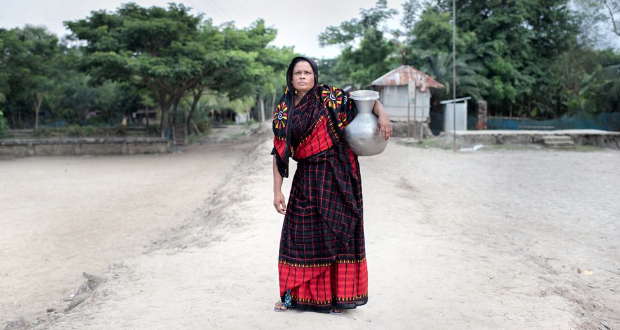
COP26: What climate summit means for one woman in Bangladesh
China's carbon emissions are vast and growing, dwarfing those of other countries. Experts agree that without big reductions in China's emissions, the world cannot win the fight against climate change. In 2020, China's President Xi Jinping said his country would aim for its emissions to reach their highest point before 2030 and for carbon neutrality before 2060. His statement has now been confirmed as China's official position ahead of the COP26 global climate summit in Glasgow. But China has not said exactly how these goals will be achieved.
Why China's climate policy matters to us all
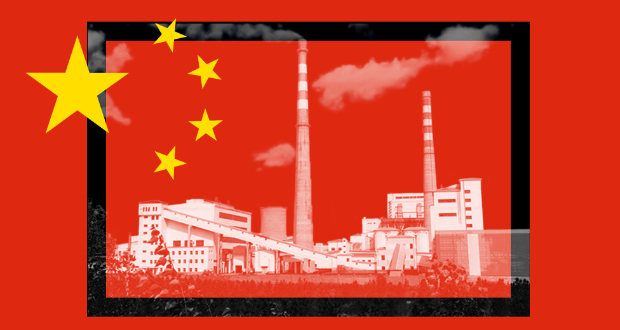
China's carbon emissions are vast and growing, dwarfing those of other countries. Experts agree that without big reductions in China's emissions, the world cannot win the fight against climate change. In 2020, China's President Xi Jinping said his country would aim for its emissions to reach their highest point before 2030 and for carbon neutrality before 2060. His statement has now been confirmed as China's official position ahead of the COP26 global climate summit in Glasgow. But China has not said exactly how these goals will be achieved.
Deliver on promises, developing world tells rich at climate talks

A crucial U.N. conference heard calls on its first day for the world's major economies to keep their promises of financial help to address the climate crisis, while big polluters India and Brazil made new commitments to cut emissions. World leaders, environmental experts and activists all pleaded for decisive action to halt the global warming which threatens the future of the planet at the start of the two-week COP26 summit in the Scottish city of Glasgow on Monday. The task facing negotiators was made even more daunting by the failure of the Group of 20 major industrial nations to agree ambitious new commitments at the weekend.