
Bangladesh’s Seaports: Securing Domestic and Regional Economic Interests
Once labelled a ‘basket case’ by US Secretary of State Henry Kissinger in the aftermath of its economy-crippling liberation war, Bangladesh is now considered as one of the fastest growing economies in the world.[1] From being one of the poorest nations at its birth in 1971, Bangladesh attained lower-middle-income status in 2015, and, as of 2022, is on track to exit the United Nations’ list of least developed countries in 2026.[2] Bangladesh is enclosed almost entirely by India (in the west, north, and east), with its south opening to the Bay of Bengal. As such, its seaports are crucial to the economy, and currently conduct over 90 percent of the country’s international trade.[3] Indeed, Bangladesh’s location at the north of the Bay allows for access to the important sea lines of communication (SLOCs)[a] that cross these waters. Bangladesh has two seaports—the Port of Chattogram[b] and the Port of Mongla (see Map 1). Although both are built on riverbanks, they are referred to as seaports because they are located a few kilometres upstream from the Bay. The maze of waterways on which both ports are built forms an integral part of a multimodal network that links the country to the hinterland, a contiguous zone of neighbouring countries (India, Nepal, Bhutan, Myanmar, and Thailand). As such, Bangladesh can assist the landlocked Himalayan countries of Nepal and Bhutan, and India’s Northeast region by providing them an access to the sea through its seaports. The Chattogram Port can also engage with the Sittwe Port in Myanmar, given its physical proximity to the country, and further with the Yangon Port in Thailand. As such, Bangladesh’s seaports are important maritime gateways for the neighbouring countries, especially those landlocked, with the potential to boost their trade. This also converges with the countries’ interest in strengthening cooperation—bilaterally and through the Bay of Bengal Multi-Sectoral Technical and Economic Cooperation (BIMSTEC)[4],[5]—in the Bay region following the strategic resurgence of this maritime space. Indeed, Bangladesh’s seaports have the potential to increase trade and connectivity in six of the seven BIMSTEC member countries.[c]
India targets net-zero carbon emissions by 2070, says Modi
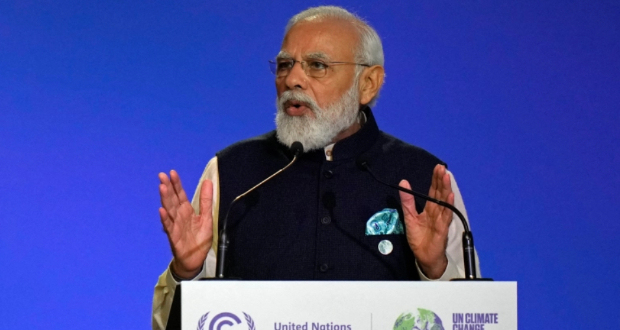
India’s economy will become carbon neutral by the year 2070, the country’s prime minster has announced at the COP26 climate crisis summit in Glasgow. The target date is two decades beyond what scientists say is needed to avert catastrophic climate impacts. India is the last of the world’s major carbon polluters to announce a net-zero target, with China saying it would reach that goal in 2060, and the United States and the European Union aiming for 2050.
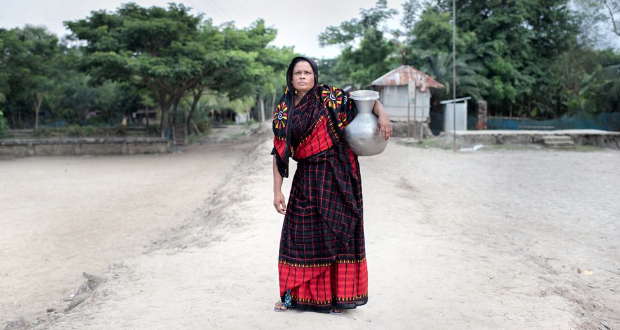
COP26: What climate summit means for one woman in Bangladesh
China's carbon emissions are vast and growing, dwarfing those of other countries. Experts agree that without big reductions in China's emissions, the world cannot win the fight against climate change. In 2020, China's President Xi Jinping said his country would aim for its emissions to reach their highest point before 2030 and for carbon neutrality before 2060. His statement has now been confirmed as China's official position ahead of the COP26 global climate summit in Glasgow. But China has not said exactly how these goals will be achieved.
Why China's climate policy matters to us all
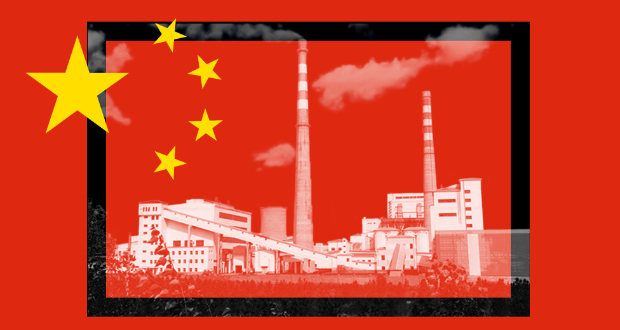
China's carbon emissions are vast and growing, dwarfing those of other countries. Experts agree that without big reductions in China's emissions, the world cannot win the fight against climate change. In 2020, China's President Xi Jinping said his country would aim for its emissions to reach their highest point before 2030 and for carbon neutrality before 2060. His statement has now been confirmed as China's official position ahead of the COP26 global climate summit in Glasgow. But China has not said exactly how these goals will be achieved.
Deliver on promises, developing world tells rich at climate talks

A crucial U.N. conference heard calls on its first day for the world's major economies to keep their promises of financial help to address the climate crisis, while big polluters India and Brazil made new commitments to cut emissions. World leaders, environmental experts and activists all pleaded for decisive action to halt the global warming which threatens the future of the planet at the start of the two-week COP26 summit in the Scottish city of Glasgow on Monday. The task facing negotiators was made even more daunting by the failure of the Group of 20 major industrial nations to agree ambitious new commitments at the weekend.