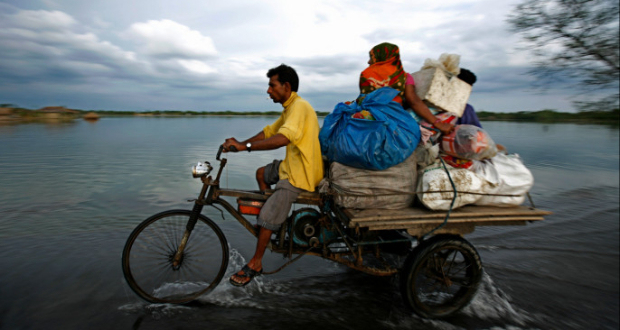
Bangladesh seeks German support to implement National Adaptation Plan
Bangladesh has sought help from Germany to implement the National Adaptation Plan (NAP) and areas related to climate change including technology transfer, capacity building and renewable energy. Minister of Environment, Forest and Climate Change Md Shahab Uddin had a meeting with the members of the German Parliament visiting Bangladesh along with Achim Troster, the German Ambassador to Bangladesh, at the Foreign Service Academy on Saturday. The minister said $230 billion will be required to implement the newly formulated NAP to deal with climate change risks. It will be easier to implement if the developed world, including Germany, supports it. He said that Bangladesh is implementing various projects across the country including in the Sundarbans to prevent climate change. The government is also implementing programs to implement a circular economy in waste management and set a timeline to introduce block bricks instead of burnt bricks to prevent air pollution, the minister added.
India targets net-zero carbon emissions by 2070, says Modi
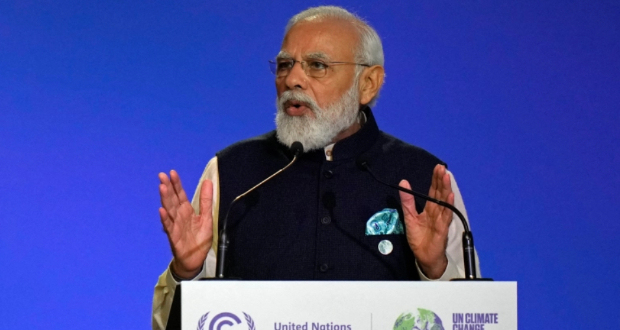
India’s economy will become carbon neutral by the year 2070, the country’s prime minster has announced at the COP26 climate crisis summit in Glasgow. The target date is two decades beyond what scientists say is needed to avert catastrophic climate impacts. India is the last of the world’s major carbon polluters to announce a net-zero target, with China saying it would reach that goal in 2060, and the United States and the European Union aiming for 2050.
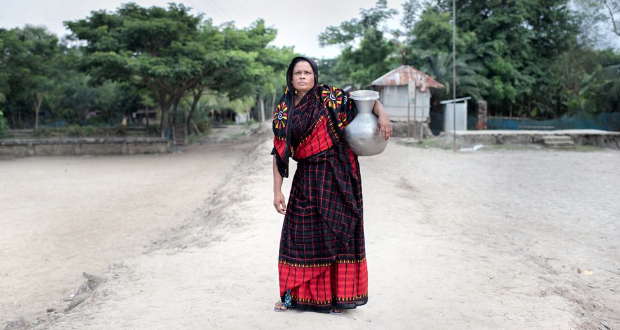
COP26: What climate summit means for one woman in Bangladesh
China's carbon emissions are vast and growing, dwarfing those of other countries. Experts agree that without big reductions in China's emissions, the world cannot win the fight against climate change. In 2020, China's President Xi Jinping said his country would aim for its emissions to reach their highest point before 2030 and for carbon neutrality before 2060. His statement has now been confirmed as China's official position ahead of the COP26 global climate summit in Glasgow. But China has not said exactly how these goals will be achieved.
Why China's climate policy matters to us all
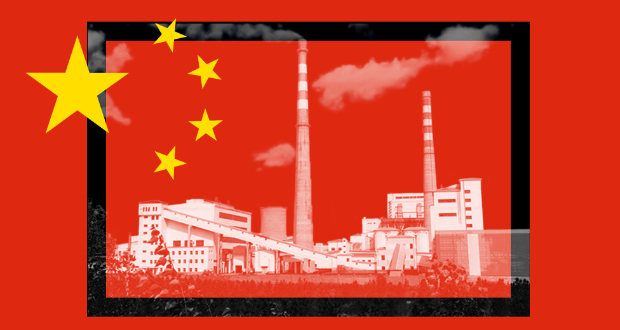
China's carbon emissions are vast and growing, dwarfing those of other countries. Experts agree that without big reductions in China's emissions, the world cannot win the fight against climate change. In 2020, China's President Xi Jinping said his country would aim for its emissions to reach their highest point before 2030 and for carbon neutrality before 2060. His statement has now been confirmed as China's official position ahead of the COP26 global climate summit in Glasgow. But China has not said exactly how these goals will be achieved.
Deliver on promises, developing world tells rich at climate talks

A crucial U.N. conference heard calls on its first day for the world's major economies to keep their promises of financial help to address the climate crisis, while big polluters India and Brazil made new commitments to cut emissions. World leaders, environmental experts and activists all pleaded for decisive action to halt the global warming which threatens the future of the planet at the start of the two-week COP26 summit in the Scottish city of Glasgow on Monday. The task facing negotiators was made even more daunting by the failure of the Group of 20 major industrial nations to agree ambitious new commitments at the weekend.