Prospects for the EU–Latin America strategic partnership

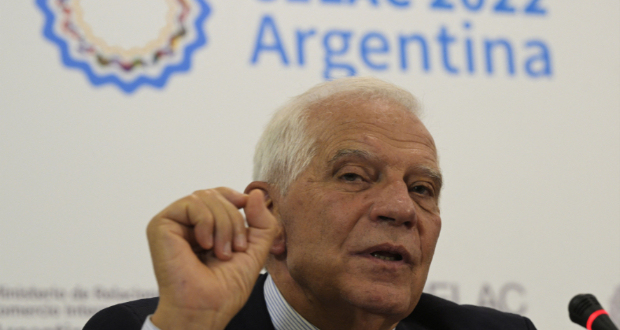
The European Union and the Community of Latin American and Caribbean States (CELAC), a regional coordination forum, will hold a summit on 17–18 July in Brussels after an eight-year hiatus. The event will be the culmination of a recent diplomatic push by the EU that has included repeated visits by dignitaries to Latin America, multiple statements from Brussels on the region’s ‘strategic priority’, and the adoption of roadmaps for strengthening ties, most recently including ‘a new agenda’ for bi-regional relations, released in June by the European Commission and Josep Borrell, the EU’s high representative for foreign affairs. Last year, Borrell stated that 2023 should be ‘the year of Latin America in Europe and of Europe in Latin America’.


The EU and the countries of Latin America and the Caribbean held an initial summit in 1999 in Brazil and established a ‘strategic partnership’, but it was never fully operationalised. Recent global shocks, including the coronavirus pandemic, the war in Ukraine and the acceleration of the climate crisis have made more urgent the need to do so. The EU’s renewed interest in engaging with Latin America stems from its desire to diversify trade flows, secure access to critical minerals for the energy transition and to align on climate mitigation and other global issues. Brussels is also interested in greater cooperation over the global narcotics trade, given that cocaine shipments from Latin America to the EU have increased in recent years alongside a surge in European use of the drug.
 

Opportunities

The EU–CELAC summit is in many ways well-timed. Brussels is interested in finalising key trade deals with Latin America, including modernised economic agreements with Chile and Mexico, as well as the long-debated and strategically important EU–Mercosur association agreement (including Argentina, Brazil, Paraguay and Uruguay). The EU is already a significant geo-economic actor in the region – in recent years it has been the largest provider of development assistance, the third-largest trading partner and the largest source of foreign direct investment in the region – which provides leverage in negotiations and a solid foundation for future engagement.
Read Full Article: 

Share This Article

Related Articles

India targets net-zero carbon emissions by 2070, says Modi

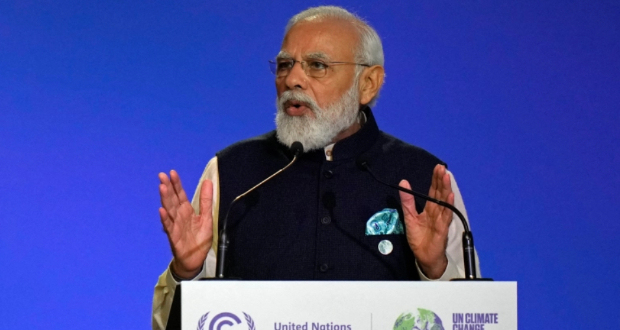
India’s economy will become carbon neutral by the year 2070, the country’s prime minster has announced at the COP26 climate crisis summit in Glasgow. The target date is two decades beyond what scientists say is needed to avert catastrophic climate impacts. India is the last of the world’s major carbon polluters to announce a net-zero target, with China saying it would reach that goal in 2060, and the United States and the European Union aiming for 2050.

COP26: What climate summit means for one woman in Bangladesh

China's carbon emissions are vast and growing, dwarfing those of other countries. Experts agree that without big reductions in China's emissions, the world cannot win the fight against climate change. In 2020, China's President Xi Jinping said his country would aim for its emissions to reach their highest point before 2030 and for carbon neutrality before 2060. His statement has now been confirmed as China's official position ahead of the COP26 global climate summit in Glasgow. But China has not said exactly how these goals will be achieved.

Why China's climate policy matters to us all

China's carbon emissions are vast and growing, dwarfing those of other countries. Experts agree that without big reductions in China's emissions, the world cannot win the fight against climate change. In 2020, China's President Xi Jinping said his country would aim for its emissions to reach their highest point before 2030 and for carbon neutrality before 2060. His statement has now been confirmed as China's official position ahead of the COP26 global climate summit in Glasgow. But China has not said exactly how these goals will be achieved.

Deliver on promises, developing world tells rich at climate talks

A crucial U.N. conference heard calls on its first day for the world's major economies to keep their promises of financial help to address the climate crisis, while big polluters India and Brazil made new commitments to cut emissions. World leaders, environmental experts and activists all pleaded for decisive action to halt the global warming which threatens the future of the planet at the start of the two-week COP26 summit in the Scottish city of Glasgow on Monday. The task facing negotiators was made even more daunting by the failure of the Group of 20 major industrial nations to agree ambitious new commitments at the weekend.