Preparing for Great Power Conflict

The U.S. and Chinese militaries have been shaped by a distinct set of direct and indirect experiences. The U.S. military has focused its energy and resources on combating terrorism and performing counterinsurgency operations in Iraq and Afghanistan. Even in 2023, U.S. emphasis on major power competition contends with other national security priorities, including current crises and continued deployments around the globe. 

The People's Liberation Army (PLA), on the other hand, has largely focused its military modernization and restructuring to prepare for a regional conflict that would likely involve U.S. military intervention. Despite having no combat experience since the 1979 Sino-Vietnamese War, the PLA has conducted an in-depth study of all aspects of the U.S. military's technological and operational capabilities — including its organization, command and control, logistics, joint operations, and concepts of operation — since the 1990s.

The dichotomy presented by the experiences of both militaries raises several questions about how they are preparing for the possibility of a major power conflict. Since 2001, the U.S. military has gained significant direct combat experience, but has done so against technologically inferior, nonpeer adversaries. In contrast, the PLA had no direct combat experience. Even though its concepts of operation are designed to fight a major power, these concepts are largely derived from indirect observations and lessons from U.S. operations since 1991. The ways that each side gains and processes experience and incorporates it into training will heavily affect readiness for and performance in a future war.
Read Full Article: 

Share This Article

Related Articles

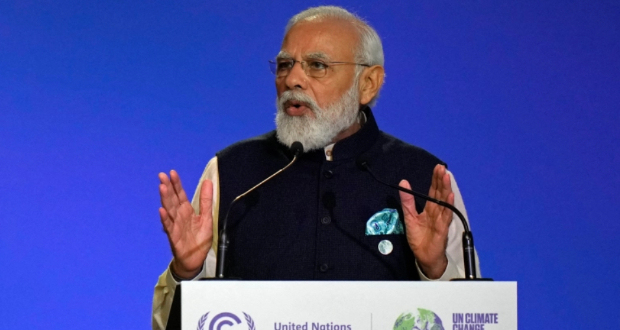
India targets net-zero carbon emissions by 2070, says Modi

India’s economy will become carbon neutral by the year 2070, the country’s prime minster has announced at the COP26 climate crisis summit in Glasgow. The target date is two decades beyond what scientists say is needed to avert catastrophic climate impacts. India is the last of the world’s major carbon polluters to announce a net-zero target, with China saying it would reach that goal in 2060, and the United States and the European Union aiming for 2050.

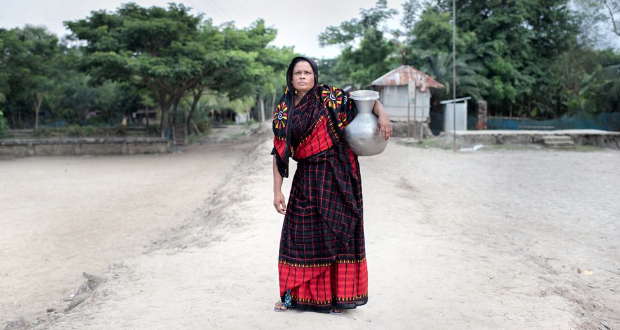
COP26: What climate summit means for one woman in Bangladesh

China's carbon emissions are vast and growing, dwarfing those of other countries. Experts agree that without big reductions in China's emissions, the world cannot win the fight against climate change. In 2020, China's President Xi Jinping said his country would aim for its emissions to reach their highest point before 2030 and for carbon neutrality before 2060. His statement has now been confirmed as China's official position ahead of the COP26 global climate summit in Glasgow. But China has not said exactly how these goals will be achieved.

Why China's climate policy matters to us all

China's carbon emissions are vast and growing, dwarfing those of other countries. Experts agree that without big reductions in China's emissions, the world cannot win the fight against climate change. In 2020, China's President Xi Jinping said his country would aim for its emissions to reach their highest point before 2030 and for carbon neutrality before 2060. His statement has now been confirmed as China's official position ahead of the COP26 global climate summit in Glasgow. But China has not said exactly how these goals will be achieved.

Deliver on promises, developing world tells rich at climate talks

A crucial U.N. conference heard calls on its first day for the world's major economies to keep their promises of financial help to address the climate crisis, while big polluters India and Brazil made new commitments to cut emissions. World leaders, environmental experts and activists all pleaded for decisive action to halt the global warming which threatens the future of the planet at the start of the two-week COP26 summit in the Scottish city of Glasgow on Monday. The task facing negotiators was made even more daunting by the failure of the Group of 20 major industrial nations to agree ambitious new commitments at the weekend.