The US needs a new system for declaring natural disasters and distributing federal aid

What constitutes a “disaster,” how it’s measured, and whose disaster experience counts are bureaucratic decisions with material consequences. What we classify as hazard events and how we classify them has evolved tremendously since the 1920s, when Mississippi River floods first brought national attention and federal aid to natural disasters; this extended through to the landmark events of the 1994 Northridge Earthquake, Hurricanes Katrina, Sandy, Harvey, and Maria, and the recent wildfires in the West.

Scholars have long called out the challenge of defining hazard events that are socially and economically disruptive. To govern and administer assistance, the U.S. codifies disasters through a “federal disaster declaration.” But the current system for such declarations is not only inconsistent, opaque, and difficult to navigate for survivors (especially the most vulnerable), it also excludes the kinds of hazards we will increasingly face due to climate change.

Disaster declarations structure the way we track, research, and communicate about hazards and their socioeconomic impacts. The disaster declaration process begins with a state or tribal request, after a disaster exceeds their capacity to respond; it ends with the president declaring an emergency or major disaster, which opens the gates for federal agencies to transfer personnel and funding to impacted communities, as codified in the Stafford Act. The Federal Emergency Management Agency (FEMA) manages the regulations, burden of proof, and assessment of damage, and makes recommendations to the White House on whether to issue the declaration.
Read Full Article: 

Share This Article

Related Articles

India targets net-zero carbon emissions by 2070, says Modi

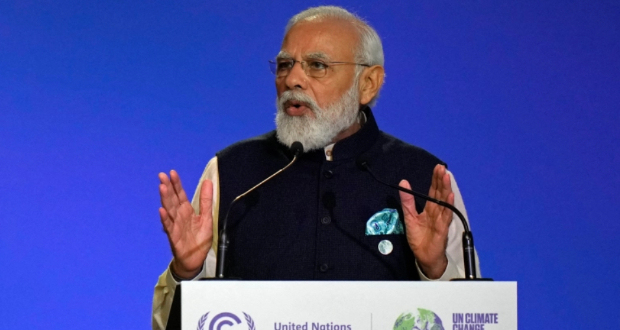
India’s economy will become carbon neutral by the year 2070, the country’s prime minster has announced at the COP26 climate crisis summit in Glasgow. The target date is two decades beyond what scientists say is needed to avert catastrophic climate impacts. India is the last of the world’s major carbon polluters to announce a net-zero target, with China saying it would reach that goal in 2060, and the United States and the European Union aiming for 2050.

COP26: What climate summit means for one woman in Bangladesh

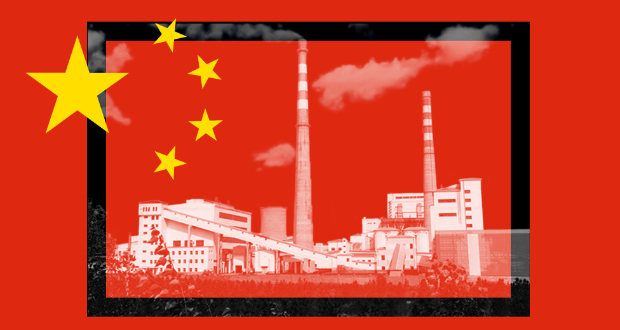
China's carbon emissions are vast and growing, dwarfing those of other countries. Experts agree that without big reductions in China's emissions, the world cannot win the fight against climate change. In 2020, China's President Xi Jinping said his country would aim for its emissions to reach their highest point before 2030 and for carbon neutrality before 2060. His statement has now been confirmed as China's official position ahead of the COP26 global climate summit in Glasgow. But China has not said exactly how these goals will be achieved.

Why China's climate policy matters to us all

China's carbon emissions are vast and growing, dwarfing those of other countries. Experts agree that without big reductions in China's emissions, the world cannot win the fight against climate change. In 2020, China's President Xi Jinping said his country would aim for its emissions to reach their highest point before 2030 and for carbon neutrality before 2060. His statement has now been confirmed as China's official position ahead of the COP26 global climate summit in Glasgow. But China has not said exactly how these goals will be achieved.

Deliver on promises, developing world tells rich at climate talks

A crucial U.N. conference heard calls on its first day for the world's major economies to keep their promises of financial help to address the climate crisis, while big polluters India and Brazil made new commitments to cut emissions. World leaders, environmental experts and activists all pleaded for decisive action to halt the global warming which threatens the future of the planet at the start of the two-week COP26 summit in the Scottish city of Glasgow on Monday. The task facing negotiators was made even more daunting by the failure of the Group of 20 major industrial nations to agree ambitious new commitments at the weekend.