Countering US dominance: North Korea’s northern triangle strategy

During the Cold War, there were opposing regional blocs with opposing interests: The northern triangle comprising North Korea, China, and the erstwhile Soviet Union and the southern triangle with South Korea, the United States (US), and Japan. However, the recent geopolitical events, the Russia-Ukraine conflict coupled with the escalating rivalry between the US and China, largely contributed to the re-emergence of the northern triangle that had disintegrated post the Cold War. These circumstances have created a new geopolitical landscape characterised by a renewed cooperation and alignment of Pyongyang with Moscow and Beijing.

Animosity against the US

Recently, on the occasion of the 73rd anniversary of the onset of the Korean War, North Korea organised large-scale gatherings in Pyongyang, where approximately 120,000 individuals vehemently denounced the “imperialistic” actions of the US and vowed to engage in a “war of revenge.” They accused the US of intentionally provoking the Korean War and perpetuating lasting wounds on the Korean people. In addition, the demonstrators expressed a sense of pride in North Korea’s ongoing advancements in nuclear weapons and missile programmes. They emphasised that their country now possesses the “strongest absolute weapon” capable of punishing the US “imperialists”, and they asserted that it serves as a deterrent, instilling fear in any potential enemy from provoking them.

The resumption of Intercontinental Ballistic Missile (ICBM) tests aims to target the US, whereas the short- and medium-range missile tests aim to counter regional defences and target US allies and assets.

In recent times, animosity against America is consistently on the rise, and since 2022, North Korea’s more than 100 missile tests and Kim’s rejection of denuclearisation strained bilateral relations. North Korea has asserted that its nuclear weapons serve as a deterrent against potential attacks by the US. The resumption of Intercontinental Ballistic Missile (ICBM) tests aims to target the US, whereas the short- and medium-range missile tests aim to counter regional defences and target US allies and assets. Notably, after the failed denuclearisation talks, Pyongyang’s foreign policy plans appear to have undergone recent adjustments to account for new geopolitical realities, such as the Russia-US confrontation over Ukraine and the China-US tensions concerning Taiwan.

Nonetheless, due to the imposition of extensive sanctions, threats, ongoing geopolitics, and regular military drills, North Korea has found itself in a challenging situation. In light of the current volatile international order, North Korea is further confronting the US by strategically aligning with Russia and China. The objective is to form a united front that can serve as a deterrent against the prevailing US policies. 
Read Full Article:

Share This Article

Related Articles

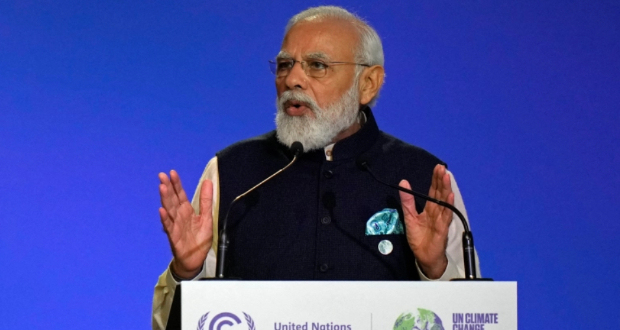
India targets net-zero carbon emissions by 2070, says Modi

India’s economy will become carbon neutral by the year 2070, the country’s prime minster has announced at the COP26 climate crisis summit in Glasgow. The target date is two decades beyond what scientists say is needed to avert catastrophic climate impacts. India is the last of the world’s major carbon polluters to announce a net-zero target, with China saying it would reach that goal in 2060, and the United States and the European Union aiming for 2050.

COP26: What climate summit means for one woman in Bangladesh

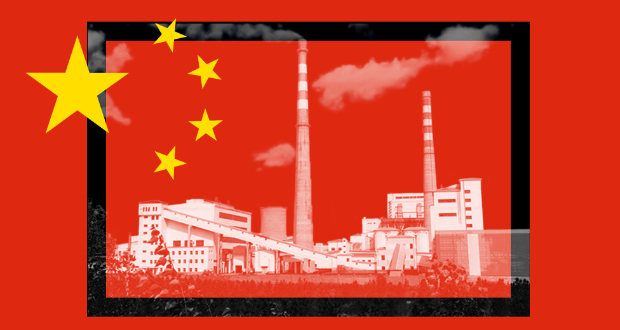
China's carbon emissions are vast and growing, dwarfing those of other countries. Experts agree that without big reductions in China's emissions, the world cannot win the fight against climate change. In 2020, China's President Xi Jinping said his country would aim for its emissions to reach their highest point before 2030 and for carbon neutrality before 2060. His statement has now been confirmed as China's official position ahead of the COP26 global climate summit in Glasgow. But China has not said exactly how these goals will be achieved.

Why China's climate policy matters to us all

China's carbon emissions are vast and growing, dwarfing those of other countries. Experts agree that without big reductions in China's emissions, the world cannot win the fight against climate change. In 2020, China's President Xi Jinping said his country would aim for its emissions to reach their highest point before 2030 and for carbon neutrality before 2060. His statement has now been confirmed as China's official position ahead of the COP26 global climate summit in Glasgow. But China has not said exactly how these goals will be achieved.

Deliver on promises, developing world tells rich at climate talks

A crucial U.N. conference heard calls on its first day for the world's major economies to keep their promises of financial help to address the climate crisis, while big polluters India and Brazil made new commitments to cut emissions. World leaders, environmental experts and activists all pleaded for decisive action to halt the global warming which threatens the future of the planet at the start of the two-week COP26 summit in the Scottish city of Glasgow on Monday. The task facing negotiators was made even more daunting by the failure of the Group of 20 major industrial nations to agree ambitious new commitments at the weekend.