Israel judicial reform: Crowds confront police as key law passed

Israeli police clashed with crowds of protesters at night after parliament adopted a highly controversial law to limit the Supreme Court's powers.

The measure - part of a big reform package - will prevent the court from overruling government actions it considers unreasonable.

Police in Jerusalem and Tel Aviv used water cannon to disperse protesters blocking highways.

Critics say the hard-right government's reforms threaten Israeli democracy.

After months of mass street protests over the judicial reform Monday's Knesset (parliament) vote was an important victory for Prime Minister Benjamin Netanyahu.

But the battle is not over. It may go on for months.

A political watchdog group and centrist opposition leader Yair Lapid plan to petition the Supreme Court to annul the new law.

Moreover, Israel's Histadrut trade union confederation has threatened a general strike and thousands of military reservists, including air force pilots, have vowed to not report for duty if the law is allowed to stand.

For a country that prides itself on its ability to respond fast to any kind of threat, the fact that Israel's very security might be compromised is causing real anxiety.

Mr Netanyahu has insisted the law is necessary for the government to "carry out policy in line with the decision of the majority of the citizens of the country".

But he said he was willing to resume talks with the opposition, even until November, to find an all-inclusive agreement.

The planned reforms have triggered some of the biggest protests in Israel's history. On Monday at least 22 people were arrested, police said.

Opponents fear the changes could undermine the country's democratic system, tipping it into authoritarian territory.

They worry that nationalist and ultra-Orthodox religious parties allied to Mr Netanyahu will be able to shape policy with unchecked power.

But the government argues that the reforms are necessary to correct an imbalance in power which has seen the courts increasingly intervene in political decisions.

The so-called "reasonableness" bill was approved by 64 votes to 0, after the opposition boycotted the final vote.

The White House - a key ally of Israel - called it "unfortunate" that the law had been passed.
Read Full Article:

Share This Article

Related Articles

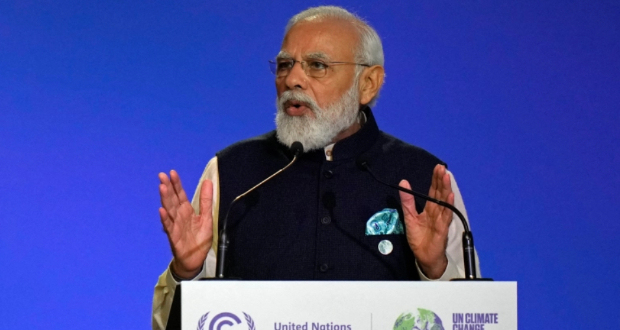
India targets net-zero carbon emissions by 2070, says Modi

India’s economy will become carbon neutral by the year 2070, the country’s prime minster has announced at the COP26 climate crisis summit in Glasgow. The target date is two decades beyond what scientists say is needed to avert catastrophic climate impacts. India is the last of the world’s major carbon polluters to announce a net-zero target, with China saying it would reach that goal in 2060, and the United States and the European Union aiming for 2050.

COP26: What climate summit means for one woman in Bangladesh

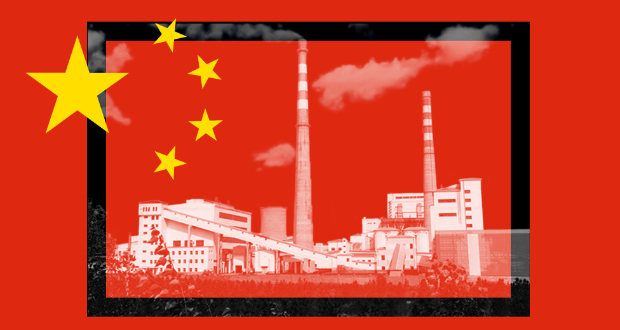
China's carbon emissions are vast and growing, dwarfing those of other countries. Experts agree that without big reductions in China's emissions, the world cannot win the fight against climate change. In 2020, China's President Xi Jinping said his country would aim for its emissions to reach their highest point before 2030 and for carbon neutrality before 2060. His statement has now been confirmed as China's official position ahead of the COP26 global climate summit in Glasgow. But China has not said exactly how these goals will be achieved.

Why China's climate policy matters to us all

China's carbon emissions are vast and growing, dwarfing those of other countries. Experts agree that without big reductions in China's emissions, the world cannot win the fight against climate change. In 2020, China's President Xi Jinping said his country would aim for its emissions to reach their highest point before 2030 and for carbon neutrality before 2060. His statement has now been confirmed as China's official position ahead of the COP26 global climate summit in Glasgow. But China has not said exactly how these goals will be achieved.

Deliver on promises, developing world tells rich at climate talks

A crucial U.N. conference heard calls on its first day for the world's major economies to keep their promises of financial help to address the climate crisis, while big polluters India and Brazil made new commitments to cut emissions. World leaders, environmental experts and activists all pleaded for decisive action to halt the global warming which threatens the future of the planet at the start of the two-week COP26 summit in the Scottish city of Glasgow on Monday. The task facing negotiators was made even more daunting by the failure of the Group of 20 major industrial nations to agree ambitious new commitments at the weekend.