Ukraine: Prepare for a Longer War and Be Cautious in Pushing for Major Offensives
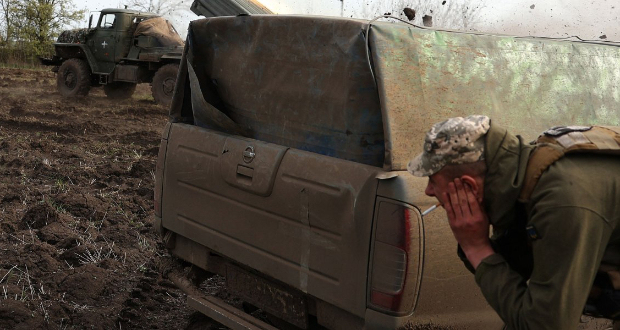
It is always tempting to push for a quick end to a conflict and to call for decisive action. But the United States may now be calling for far quicker and more decisive action from Ukraine than Ukrainian forces can actually execute. It may also be doing so in ways which ignore the strategic realities of the ways in which war is most likely to evolve. Pushing Ukraine to take the offensive may well do little more than help exhaust it and raise casualties. A war that many in the United States seem to tactically predict will somehow largely end this year, may also go on and on until one side breaks in the face of the strain and attrition or both sides become locked into a near stalemate that neither side knows how to win.
Many in the United States seem to have a degree of optimism that owes more to the past than the present. Earlier in the war, Ukraine was able to take advantage of Russian massive miscalculation in assuming it could repeat its experience in seizing Crimea in 2014 and virtually drive in and take control of the country. Russia was unprepared for serious Ukrainian resistance, failed to understand how limited the success of its effort at modernization of its forces and command and control structure had been, and was not ready at any level to fight a serious war.
Ukraine first successfully held in the face of the original Russian offensive and then sent in effective military forces that could push back Russian forces that were never properly organized for sustained combat, had no recent warfighting experience, and were not prepared to resist. Ukraine scored major gains, and if it had been properly equipped for sustained offensive action during the period in which Russian was being forced to retreat, it might have driven Russia out of far more territory and made some form of a major victory a far more realistic probability.
No one can totally dismiss the possibility that Ukraine can still do this. Putin’s problems with Yevgeny Prigozhin and the Wagner Group highlight his political challenges. Russia remains largely on the defensive and the lack of any clear Russian path to a shift to the offensive all illustrate Russia’s limits. War is not predictable, and a real, sustainable Ukrainian breakthrough might occur. Russia might be driven into a sustained retreat, and Putin might lose power or must negotiate a peace that Ukraine would willingly accept.
The most probable outcome, however, is a war of attrition that has no clear outcome or time limit. It is a war where both sides fight a long series of relatively static battles with high levels of attrition while they increasingly dig in along the entire front, using drones and missiles to attack each other. Defense in depth will be fought with light precision guided weapons that limit efforts to create and sustain major armored breakthroughs. Missiles will not fully counter trenches, and mines and artillery will halt smaller breakthroughs. It is a war that may come grimly close to a modernized version of World War I or Stalingrad.
This makes the current U.S. effort to push Ukraine into new offensives potentially dangerous. If anything, such offensives may lead to higher Ukrainian casualties and consume both its newly trained troops and more advanced supplies of weapons. Taking the offensive in wars of attrition almost always produces initially high casualties unless decisive damage is done to the defender before the attacker strikes. The United States and its allies avoided such losses in attacking Saddam Hussein in 1991 by launching a massive air campaign to weaken Iraq’s land defenses before the land campaign began. However, but Ukraine has no option of this kind and is already suffering major losses of its more advanced weapons and high casualties.
India targets net-zero carbon emissions by 2070, says Modi
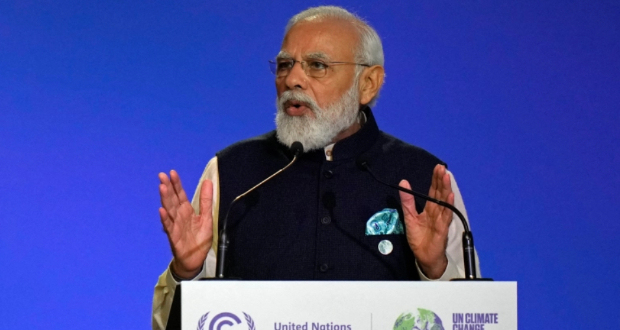
India’s economy will become carbon neutral by the year 2070, the country’s prime minster has announced at the COP26 climate crisis summit in Glasgow. The target date is two decades beyond what scientists say is needed to avert catastrophic climate impacts. India is the last of the world’s major carbon polluters to announce a net-zero target, with China saying it would reach that goal in 2060, and the United States and the European Union aiming for 2050.
COP26: What climate summit means for one woman in Bangladesh

China's carbon emissions are vast and growing, dwarfing those of other countries. Experts agree that without big reductions in China's emissions, the world cannot win the fight against climate change. In 2020, China's President Xi Jinping said his country would aim for its emissions to reach their highest point before 2030 and for carbon neutrality before 2060. His statement has now been confirmed as China's official position ahead of the COP26 global climate summit in Glasgow. But China has not said exactly how these goals will be achieved.
Why China's climate policy matters to us all
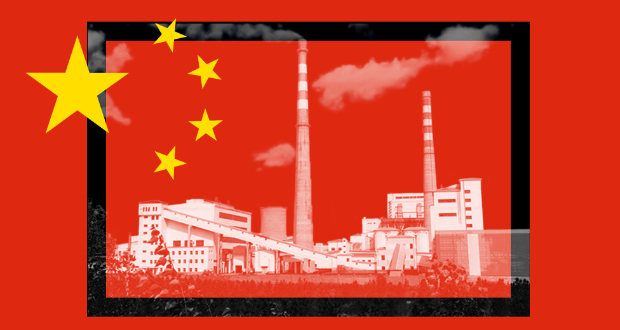
China's carbon emissions are vast and growing, dwarfing those of other countries. Experts agree that without big reductions in China's emissions, the world cannot win the fight against climate change. In 2020, China's President Xi Jinping said his country would aim for its emissions to reach their highest point before 2030 and for carbon neutrality before 2060. His statement has now been confirmed as China's official position ahead of the COP26 global climate summit in Glasgow. But China has not said exactly how these goals will be achieved.
Deliver on promises, developing world tells rich at climate talks

A crucial U.N. conference heard calls on its first day for the world's major economies to keep their promises of financial help to address the climate crisis, while big polluters India and Brazil made new commitments to cut emissions. World leaders, environmental experts and activists all pleaded for decisive action to halt the global warming which threatens the future of the planet at the start of the two-week COP26 summit in the Scottish city of Glasgow on Monday. The task facing negotiators was made even more daunting by the failure of the Group of 20 major industrial nations to agree ambitious new commitments at the weekend.