Indian Parliamentary Committee recommends early resolution to Teesta water sharing

Parliamentary Standing Committee on External Affairs in India unanimously recommended to the government to resolve pending Teesta water sharing issue at the earliest 'to improve the bilateral relation further' with Bangladesh.

The standing committee comprises of all parties’ lawmakers submitted the report on 'India's Neighborhood First Policy' in both the houses of the Parliament –Rajyasabha, upper house and Loksabha, lower house,  on July 25.

P.P. Chaudhary, Chairperson of the Parliamentary Standing Committee on External Affairs is from BJP. Important member of the parliament like former Home Minister of Congress P Chidambaram, Abhishek Banerjee of TMC, BJP MP Swapan Dasgutpa and other 27 members of Parliament of Rajyasabha and Loksabha are the members of the committee.

The report contains a special chapter on the bilateral relations between India and Bangladesh . It says "The Committee are aware of the long outstanding issue between India and Bangladesh on sharing of Teesta River water and desire that this important issue be worked out at the earliest for improved bilateral relations with Bangladesh. The Committee also urges the Ministry to initiate meaningful dialogues with Bangladesh on a regular basis to arrive at a consensus in the matter and the progress and outcome may be informed to the committee on the issue of pending disputes between India and Bangladesh and the fresh initiatives and meaningful dialogues proposed to be taken to resolve such disputes."

Regarding the Teesta Issue, the committee reiterated the position of India, saying it is committed to sign the agreement as and when there is consensus on this issue.

The Committee observed that apart from ongoing cooperation in areas such as connectivity, security, water-sharing and energy, cooperation in peaceful uses of nuclear energy, space cooperation, and new technologies  have been identified as the areas for further strengthening of India’s relationship with Bangladesh under the Neighbourhood First Policy. The committee expected that the government would come up with fresh mutually beneficial initiatives in these areas and implement the same for enhanced bilateral ties and growth and prosperity of both the countries.
Read Full Article:

Share This Article

Related Articles

India targets net-zero carbon emissions by 2070, says Modi

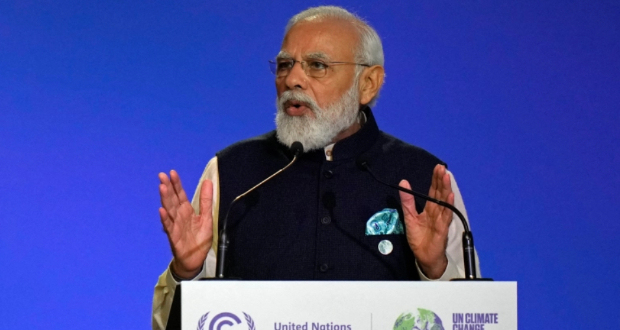
India’s economy will become carbon neutral by the year 2070, the country’s prime minster has announced at the COP26 climate crisis summit in Glasgow. The target date is two decades beyond what scientists say is needed to avert catastrophic climate impacts. India is the last of the world’s major carbon polluters to announce a net-zero target, with China saying it would reach that goal in 2060, and the United States and the European Union aiming for 2050.

COP26: What climate summit means for one woman in Bangladesh

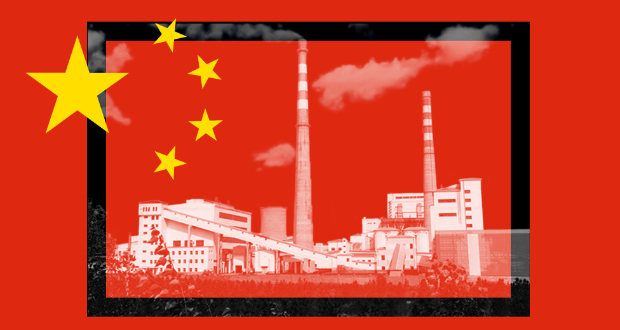
China's carbon emissions are vast and growing, dwarfing those of other countries. Experts agree that without big reductions in China's emissions, the world cannot win the fight against climate change. In 2020, China's President Xi Jinping said his country would aim for its emissions to reach their highest point before 2030 and for carbon neutrality before 2060. His statement has now been confirmed as China's official position ahead of the COP26 global climate summit in Glasgow. But China has not said exactly how these goals will be achieved.

Why China's climate policy matters to us all

China's carbon emissions are vast and growing, dwarfing those of other countries. Experts agree that without big reductions in China's emissions, the world cannot win the fight against climate change. In 2020, China's President Xi Jinping said his country would aim for its emissions to reach their highest point before 2030 and for carbon neutrality before 2060. His statement has now been confirmed as China's official position ahead of the COP26 global climate summit in Glasgow. But China has not said exactly how these goals will be achieved.

Deliver on promises, developing world tells rich at climate talks

A crucial U.N. conference heard calls on its first day for the world's major economies to keep their promises of financial help to address the climate crisis, while big polluters India and Brazil made new commitments to cut emissions. World leaders, environmental experts and activists all pleaded for decisive action to halt the global warming which threatens the future of the planet at the start of the two-week COP26 summit in the Scottish city of Glasgow on Monday. The task facing negotiators was made even more daunting by the failure of the Group of 20 major industrial nations to agree ambitious new commitments at the weekend.