This week, CSIS is launching the Project on Water Security, which will provide a permanent home for CSIS analysis on the rising threats of water insecurity to U.S. geopolitical and economic interests, with a special focus on the relationship between global food security and global water security. The Project on Water Security is part of the newly rebranded CSIS Global Food and Water Security Program.
The threats to water security are as diverse as the uses for water itself. Here, CSIS experts examine various challenges facing global water security, demonstrating the highly complex, deeply interconnected, and precariously positioned systems that populations and industries around the world rely on. Increased communication and coherence, not just between the water sector and others like food and energy, but within the water security sector itself, is urgently needed to address the challenges of providing safe, reliable, and affordable water to those who need it most.
From Crisis to Risk Management
Franck Gbaguidi
Senior Associate (Non-resident), Global Food and Water Security Program
This year is predicted to be record-breaking for water scarcity. With the global population having recently surpassed 8 billion, it is projected that about two-thirds of the world will suffer from water shortages by 2025. This alarming situation will lead to a rise in water-related conflicts, some of which already induced extreme measures, such as deploying water police units. Failing to address this crisis will also result in severe consequences for agriculture and industry, exacerbating food shortages, jeopardizing the livelihoods of farmers, and causing disruptions in global supply chains.
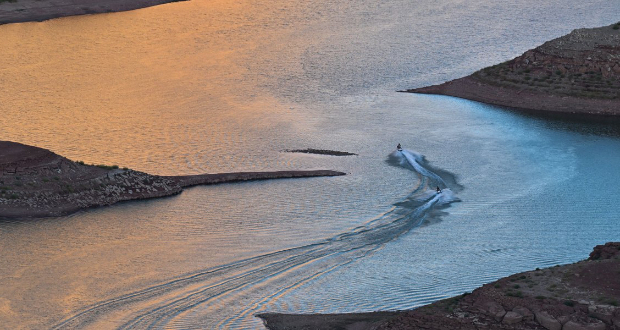
Challenges will vary by region: China's hydropower generation will be affected, Europe's fluvial transport will be disrupted, and tensions among states in the American Southwest will escalate as water scarcity becomes the new normal in the Colorado River Basin. Adding to the severity, climate change is exacerbating the crisis by depleting resources and acting as a threat multiplier, especially in the Middle East and Africa. Despite this, policymakers often overlook or inadequately respond to the problem of water scarcity, not recognizing it as a systemic crisis.
To tackle water scarcity, a shift from emergency measures to carefully planned policy efforts is essential. The current ratio between short-term crisis management and long-term risk management must be reversed. This entails designing and implementing multiyear water plans with specific targets, akin to how energy or climate policy plans are now being developed. These efforts should be concentrated in three areas:
- Water System Efficiency: Policymakers should prioritize overlooked yet critical solutions, such as water metering to better inform policy decision making, leakage repair to prevent significant water loss, and infrastructure upgrades to avoid large-scale contamination and pollution.
- Water Technology: A substantial increase in public and private investments is needed to mainstream rainwater harvesting, install industrial wastewater treatment systems, and ramp up greywater reuse to reduce the impact on water at local levels.
- Water Sobriety: A mindset shift is required to recognize water as a scarce resource, particularly from agricultural and industrial actors. A functioning system of checks and balances among governments, investors, civil society organizations, and leaders from water-intensive industries is critical to ensuring progress.
Only by combining efforts from all three angles will the world effectively turn the tide on water scarcity.