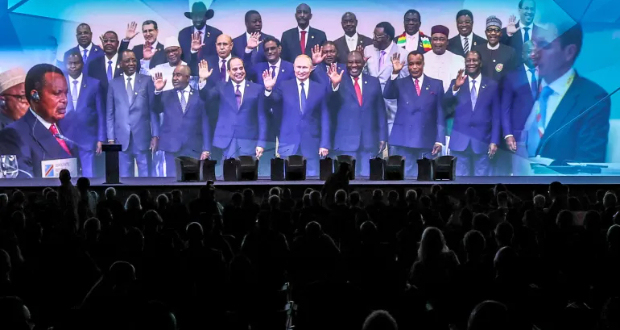
Second Russia-Africa Summit Lays Bare Russia’s Waning Influence

The heightened interest in this year’s Russia-Africa summit in St. Petersburg last week is not hard to explain. The fallout from the fighting in Ukraine has had serious consequences for Africa, the most obvious being the disruption to grain exports via the Black Sea (before the war, fifteen African states received more than half of their grain imports from either Ukraine and/or Russia).


African countries have also been affected by rising energy prices triggered by Western sanctions on Russian oil and gas exports. This in turn has fueled inflation on the continent and, in tandem with the deteriorating external economic situation, dealt a blow to financial stability. Some African countries have seen credit rating downgrades and significant increases in borrowing costs.

It’s also important to remember that Africa is one of the largest regional voting blocs at the United Nations. While some UN resolutions may seem insignificant, they will all play a role in any eventual peace process in Ukraine. African leaders—both individually and collectively—could also be mediators between Moscow and Kyiv.

It’s no coincidence that Ukrainian Foreign Minister Dmytro Kuleba recently made his third visit to Africa since the start of the war. His talking points were alternative supply routes for Ukrainian agricultural goods following Russia’s withdrawal from the Black Sea grain deal (which had allowed ships to export Ukrainian grain from Black Sea ports for over a year) and Ukrainian President Volodymyr Zelensky’s vision for peace.

For his part, in his keynote speech to the Russia-Africa summit, Russian President Vladimir Putin not only promised free grain shipments to Burkina Faso, Zimbabwe, Mali, Somalia, the Central African Republic, and Eritrea, but portrayed Russia as an ally of African nations and as a country that represents the interests of the Global South.

Earlier this year, Russia published a new Foreign Policy Concept filled with theses about “Western hegemony” and portraying Russia and Africa as both struggling for the goal of a “more equitable polycentric world and elimination of social and economic inequality.” Similar priorities for the relationship were laid out in Putin’s article published ahead of the summit: a new world order (“more just and democratic”), a “non-discriminatory” agenda, and logistics chains and financial partnerships that are “free from unfavorable external impacts.”

It’s stating the obvious to point out that these are all issues far more applicable to Russia—isolated by sanctions and indirectly battling the West—than Africa itself. But they do fit with Russia’s rhetoric about promoting the interests of the developing world.

The Ukraine war and its consequences mean that for Moscow, this year’s summit was a relic of better times. In the early 2000s, and even after the annexation of Crimea in 2014, the Kremlin’s efforts in Africa were logical and looked like they could yield results. The only other such summit, which was held in 2019, was widely seen as the jumping-off point for Russia’s return to Africa, enabling it to take a position alongside other important regional powers and promote its interests amid its global confrontation with the West.
Read Full Article:

Share This Article

Related Articles

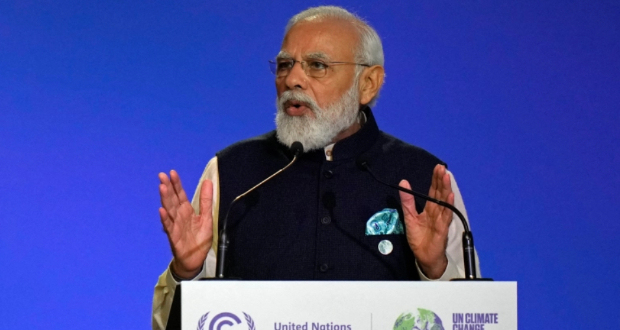
India targets net-zero carbon emissions by 2070, says Modi

India’s economy will become carbon neutral by the year 2070, the country’s prime minster has announced at the COP26 climate crisis summit in Glasgow. The target date is two decades beyond what scientists say is needed to avert catastrophic climate impacts. India is the last of the world’s major carbon polluters to announce a net-zero target, with China saying it would reach that goal in 2060, and the United States and the European Union aiming for 2050.

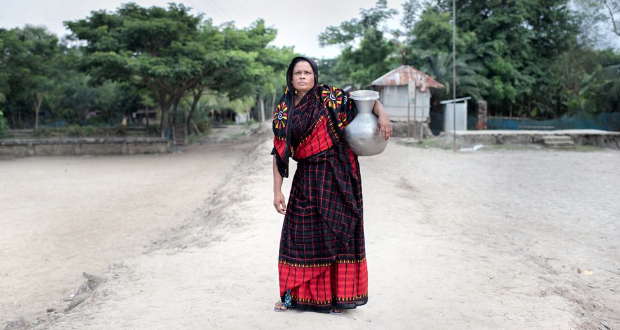
COP26: What climate summit means for one woman in Bangladesh

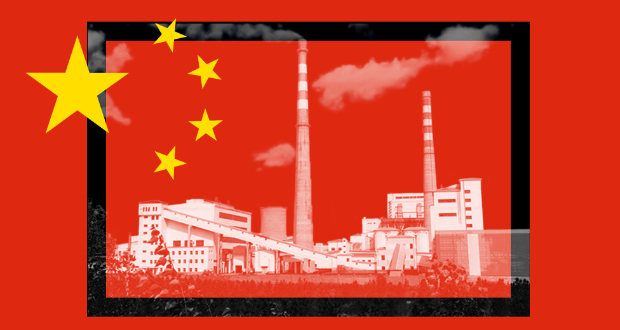
China's carbon emissions are vast and growing, dwarfing those of other countries. Experts agree that without big reductions in China's emissions, the world cannot win the fight against climate change. In 2020, China's President Xi Jinping said his country would aim for its emissions to reach their highest point before 2030 and for carbon neutrality before 2060. His statement has now been confirmed as China's official position ahead of the COP26 global climate summit in Glasgow. But China has not said exactly how these goals will be achieved.

Why China's climate policy matters to us all

China's carbon emissions are vast and growing, dwarfing those of other countries. Experts agree that without big reductions in China's emissions, the world cannot win the fight against climate change. In 2020, China's President Xi Jinping said his country would aim for its emissions to reach their highest point before 2030 and for carbon neutrality before 2060. His statement has now been confirmed as China's official position ahead of the COP26 global climate summit in Glasgow. But China has not said exactly how these goals will be achieved.

Deliver on promises, developing world tells rich at climate talks

A crucial U.N. conference heard calls on its first day for the world's major economies to keep their promises of financial help to address the climate crisis, while big polluters India and Brazil made new commitments to cut emissions. World leaders, environmental experts and activists all pleaded for decisive action to halt the global warming which threatens the future of the planet at the start of the two-week COP26 summit in the Scottish city of Glasgow on Monday. The task facing negotiators was made even more daunting by the failure of the Group of 20 major industrial nations to agree ambitious new commitments at the weekend.