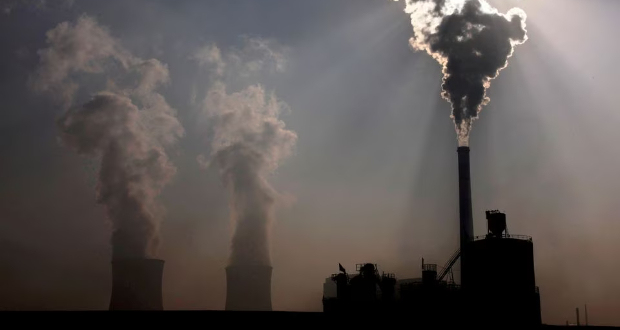
China's energy security push drives up fossil fuel approvals - research
China approved more than 50 gigawatts (GW) of new coal power in the first half of 2023, research by environment group Greenpeace showed, with the world's top carbon polluter focused on energy security rather than cutting fossil fuel consumption.
As scientists and environmentalists urge governments to make deeper emission cuts after record-breaking heatwaves across the globe, the impact of extreme weather has spurred China to build even more coal-fired plants as it tries to counter the effects of drought on hydropower production and avoid power outages.
"China's government has put energy security and energy transition at odds with one another," said Greenpeace's Gao Yuhe, who led the research published on Thursday.
Beijing has promised to bring carbon emissions to a peak before 2030, but another pledge made by President Xi Jinping to start cutting coal use over the 2026-2030 period is now under threat, Gao said.
"Beijing has clearly stated that coal power will still grow at a 'reasonable pace' into 2030," she said.
China's National Energy Administration (NEA) did not immediately reply to a fax sent requesting a comment on the coal plants and their power generation policies.
Coal output in China surged 9% to 4.5 billion tons last year, more than half the world's total, and continued to rise this year, government data showed, with coal plants under pressure to offset a 22.9% decline in hydropower generation during the first half.
The increase in China's coal usage reflects a worldwide pattern. The International Energy Agency said last week that global coal consumption reached a record 8.3 billion tons in 2022, with strong growth in Asia offsetting declines elsewhere.
In March, the National Development and Reform Commission, China's state economic planner, said it would "strengthen" coal's supporting role in the overall energy mix.
China has built more than 1,000 GW of coal-fired capacity from 2000 to 2022, enough to power the entire European Union and amounting to 69% of total global additions, according to data compiled by the Global Energy Monitor think tank.
'BUILT-IN BIAS'
Officially, many of China's new coal-fired power plants are designed to provide back-up for clean but weather-dependent power sources like wind, solar, and hydro, especially during droughts or peak consumption periods.
India targets net-zero carbon emissions by 2070, says Modi
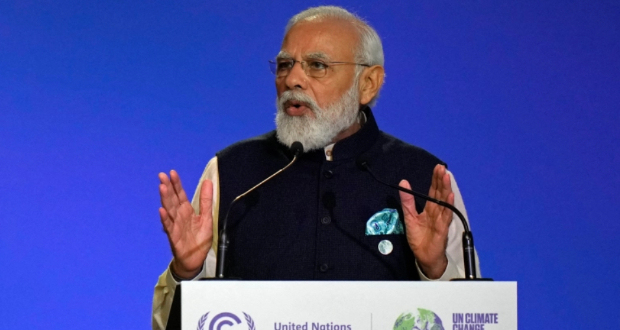
India’s economy will become carbon neutral by the year 2070, the country’s prime minster has announced at the COP26 climate crisis summit in Glasgow. The target date is two decades beyond what scientists say is needed to avert catastrophic climate impacts. India is the last of the world’s major carbon polluters to announce a net-zero target, with China saying it would reach that goal in 2060, and the United States and the European Union aiming for 2050.
COP26: What climate summit means for one woman in Bangladesh

China's carbon emissions are vast and growing, dwarfing those of other countries. Experts agree that without big reductions in China's emissions, the world cannot win the fight against climate change. In 2020, China's President Xi Jinping said his country would aim for its emissions to reach their highest point before 2030 and for carbon neutrality before 2060. His statement has now been confirmed as China's official position ahead of the COP26 global climate summit in Glasgow. But China has not said exactly how these goals will be achieved.
Why China's climate policy matters to us all
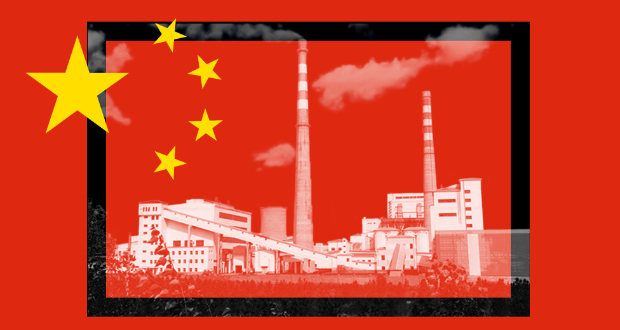
China's carbon emissions are vast and growing, dwarfing those of other countries. Experts agree that without big reductions in China's emissions, the world cannot win the fight against climate change. In 2020, China's President Xi Jinping said his country would aim for its emissions to reach their highest point before 2030 and for carbon neutrality before 2060. His statement has now been confirmed as China's official position ahead of the COP26 global climate summit in Glasgow. But China has not said exactly how these goals will be achieved.
Deliver on promises, developing world tells rich at climate talks

A crucial U.N. conference heard calls on its first day for the world's major economies to keep their promises of financial help to address the climate crisis, while big polluters India and Brazil made new commitments to cut emissions. World leaders, environmental experts and activists all pleaded for decisive action to halt the global warming which threatens the future of the planet at the start of the two-week COP26 summit in the Scottish city of Glasgow on Monday. The task facing negotiators was made even more daunting by the failure of the Group of 20 major industrial nations to agree ambitious new commitments at the weekend.