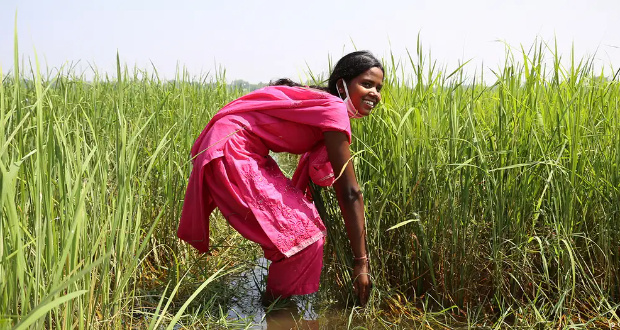
Rice market in turmoil as India curtails exports
Rice prices have soared to the highest in a decade as India limits exports and erratic weather wreaks havoc on Asian rice fields. This is likely to worsen food insecurity in many countries that rely on rice as a staple.
Rice prices have seen a sharp surge in recent months as major producers curtail their trade and supplies. This could impact millions of consumers around the world, with Asian and African countries expected to bear the brunt.
Thailand, the world's second-largest rice exporter, is urging its farmers to reduce rice cultivation as part of an effort to conserve water.
"The cumulative rainfall is approximately 40% below normal levels, posing a high risk of water shortage," said Surasri Kidtimonton, secretary-general of the ONWR, in a statement released by Thailand's National Water Administration on July 31. Kidtimonton encouraged farmers to consider planting crops that require less water and have faster harvesting cycles.
The world's top exporter of rice, India, imposed an export ban on non-Basmati white rice last month, with the government saying its aim was to help lower rice prices at home and secure domestic availability.
Rice market faces uncertainty
The United Arab Emirates, a major importer and re-exporter of Indian rice, followed suit, restricting sales of its rice supplies to other countries.
Thai and Vietnamese exporters reacted by pushing to renegotiate the prices on sales contracts for around half a million tons for August shipments, Reuters news agency reported on August 1.
The recent developments come as the global food markets are grappling with the repercussions of Russia's withdrawal from the Black Sea grain deal, which terminated an agreement allowing safe export of Ukrainian grain via the Black Sea amid Moscow's invasion of its neighbor. Russia has also ramped up its military attacks on Ukraine's port and grain facilities.
This has fueled concerns that disruptions in the global rice trade could worsen the already endangered food security situation in many countries.
Why are rice prices increasing?
Rice prices have surged to their highest levels in a decade, marking a 14% increase since last June. The situation is primarily caused by warmer, drier weather and erratic rainfall damaging rice production throughout Asia. In the past months, torrential rains and floods in northern India, for example, have damaged many rice fields.
Additionally,rising fertilizer and fuel prices have contributed to increased production costs.
The ongoing war in Ukraine and the termination of the grain deal have also constrained the global supply of wheat and corn, raising the demand for rice as an alternative staple.
India targets net-zero carbon emissions by 2070, says Modi
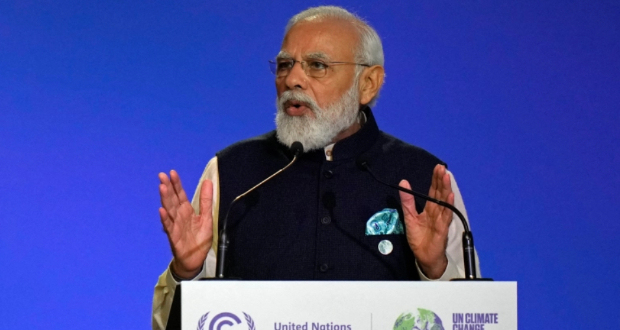
India’s economy will become carbon neutral by the year 2070, the country’s prime minster has announced at the COP26 climate crisis summit in Glasgow. The target date is two decades beyond what scientists say is needed to avert catastrophic climate impacts. India is the last of the world’s major carbon polluters to announce a net-zero target, with China saying it would reach that goal in 2060, and the United States and the European Union aiming for 2050.
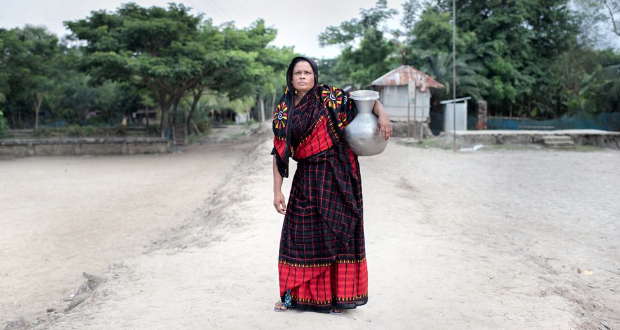
COP26: What climate summit means for one woman in Bangladesh
China's carbon emissions are vast and growing, dwarfing those of other countries. Experts agree that without big reductions in China's emissions, the world cannot win the fight against climate change. In 2020, China's President Xi Jinping said his country would aim for its emissions to reach their highest point before 2030 and for carbon neutrality before 2060. His statement has now been confirmed as China's official position ahead of the COP26 global climate summit in Glasgow. But China has not said exactly how these goals will be achieved.
Why China's climate policy matters to us all
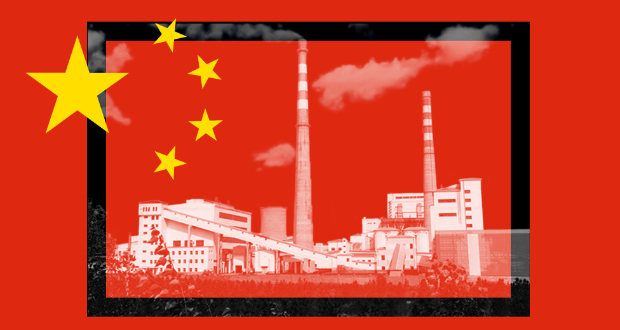
China's carbon emissions are vast and growing, dwarfing those of other countries. Experts agree that without big reductions in China's emissions, the world cannot win the fight against climate change. In 2020, China's President Xi Jinping said his country would aim for its emissions to reach their highest point before 2030 and for carbon neutrality before 2060. His statement has now been confirmed as China's official position ahead of the COP26 global climate summit in Glasgow. But China has not said exactly how these goals will be achieved.
Deliver on promises, developing world tells rich at climate talks

A crucial U.N. conference heard calls on its first day for the world's major economies to keep their promises of financial help to address the climate crisis, while big polluters India and Brazil made new commitments to cut emissions. World leaders, environmental experts and activists all pleaded for decisive action to halt the global warming which threatens the future of the planet at the start of the two-week COP26 summit in the Scottish city of Glasgow on Monday. The task facing negotiators was made even more daunting by the failure of the Group of 20 major industrial nations to agree ambitious new commitments at the weekend.