Amazon summit calls on developed nations to fulfill climate funding deals

Twelve countries have called on wealthy nations to meet their climate funding obligations, on the final day of the Amazon Summit in Belem, Brazil.


Wednesday’s pact, called “United for Our Forests”, brought together leaders from the Amazon, the Congo Basin and southeast Asia, three regions with some of the most extensive rainforests in the world.

The joint statement called for the development of a financing mechanism so the international community could pay for the critical services provided by forests.

“Our countries must wield more influence over the management of resources allocated to the conservation and sustainable use of biodiversity,” the pact said of developing nations.

It also urged developed nations to meet an existing commitment to provide $200bn a year for biodiversity preservation and expressed concern that a previous promise to deliver $100bn in climate financing annually had not been fulfilled.

Speaking on Wednesday, Brazilian President Luiz Inacio Lula da Silva said the Amazon Summit gave an opportunity for rainforest nations to unify in advance of October’s United Nations Climate Change Conference summit, or COP28, in Abu Dhabi.


“We are going to COP28 with the aim of telling the rich world that, if they want to effectively preserve the forest that exists, they need to pay money not only to take care of the canopy but to take care of the people who live under it,” he said.

Wednesday’s statement also criticised what it described as trade restrictions disguised as environmental measures, in an apparent reference to the European Union’s passage of a law prohibiting firms from importing goods linked to deforestation.

The communiqué was signed by leaders from Bolivia, Brazil, Colombia, the Democratic Republic of Congo, Ecuador, Guyana, Indonesia, Peru, the Republic of Congo, Suriname, Venezuela and Saint Vincent and the Grenadines.
Read Full Article:

Share This Article

Related Articles

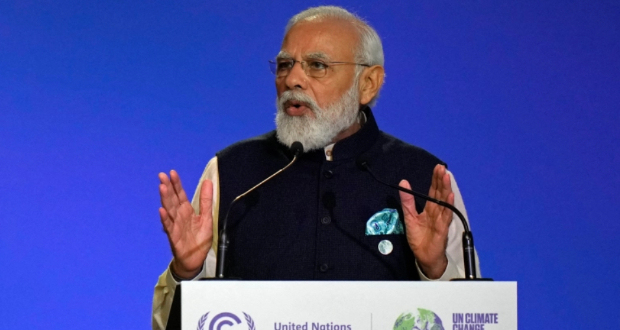
India targets net-zero carbon emissions by 2070, says Modi

India’s economy will become carbon neutral by the year 2070, the country’s prime minster has announced at the COP26 climate crisis summit in Glasgow. The target date is two decades beyond what scientists say is needed to avert catastrophic climate impacts. India is the last of the world’s major carbon polluters to announce a net-zero target, with China saying it would reach that goal in 2060, and the United States and the European Union aiming for 2050.

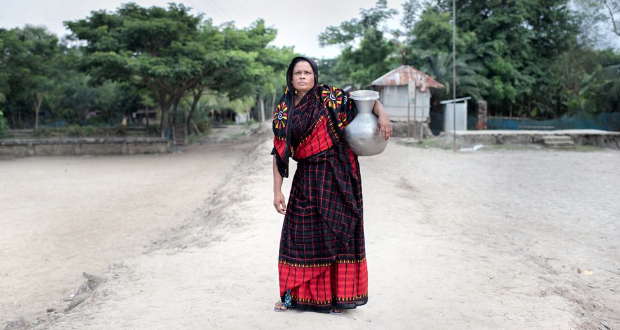
COP26: What climate summit means for one woman in Bangladesh

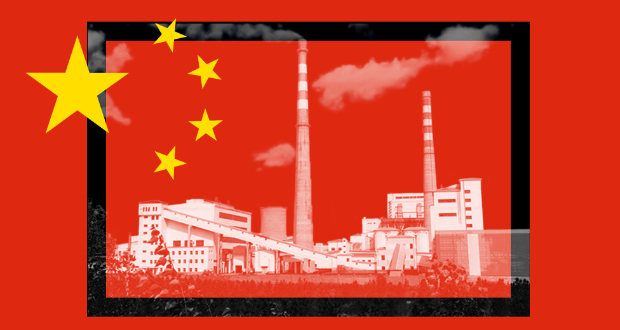
China's carbon emissions are vast and growing, dwarfing those of other countries. Experts agree that without big reductions in China's emissions, the world cannot win the fight against climate change. In 2020, China's President Xi Jinping said his country would aim for its emissions to reach their highest point before 2030 and for carbon neutrality before 2060. His statement has now been confirmed as China's official position ahead of the COP26 global climate summit in Glasgow. But China has not said exactly how these goals will be achieved.

Why China's climate policy matters to us all

China's carbon emissions are vast and growing, dwarfing those of other countries. Experts agree that without big reductions in China's emissions, the world cannot win the fight against climate change. In 2020, China's President Xi Jinping said his country would aim for its emissions to reach their highest point before 2030 and for carbon neutrality before 2060. His statement has now been confirmed as China's official position ahead of the COP26 global climate summit in Glasgow. But China has not said exactly how these goals will be achieved.

Deliver on promises, developing world tells rich at climate talks

A crucial U.N. conference heard calls on its first day for the world's major economies to keep their promises of financial help to address the climate crisis, while big polluters India and Brazil made new commitments to cut emissions. World leaders, environmental experts and activists all pleaded for decisive action to halt the global warming which threatens the future of the planet at the start of the two-week COP26 summit in the Scottish city of Glasgow on Monday. The task facing negotiators was made even more daunting by the failure of the Group of 20 major industrial nations to agree ambitious new commitments at the weekend.