For every general election, a new digital law

The recent cabinet decision to replace the much-talked-about Digital Security Act-2018 (DSA) with a new law, Cyber Security Bill-2023, has created an uproar among the rights defenders, lawyers, journalists, NGOs, and the civil society members. 


According to them, the new law is going to be another version of the existing draconian law, which monstrously empowered the police and other law enforcement agencies to curb freedom of speech, freedom of the press, and muzzle dissent voices -- the DSA.

This is indeed true, to a large extent, that the Cyber Security Bill-2023, most likely to be passed in the September session of the Awami League-led parliament, is identical: Almost all of the sections of DSA have been kept intact, except section 29, which was largely abused against the opposition, dissent voices, and journalists. 

Section 29 of the DSA contains the provision of jail term for three years for defamation. The proposed Cyber Security Bill-2023 has dropped the jail term from section 29 -- a move that people have praised.

Reading the draft of the new proposed law, it seems that the basic difference between the DSA and Cyber Security Bill-2023 is the extent of jail term: The DSA has longer jail terms while the Cyber Security Bill-2023 proposes lower jail terms.

For instance, section 21 of the DSA stipulates anyone launching or aiding to launch any propaganda or campaign in any digital platform about Bangladesh’s war of independence, the spirit of the war of independence, Father of the Nation Sheikh Mujibur Rahman, national anthem, or national flag will face maximum prison sentence of 10 years or a financial punishment of Tk 10 million or both. Repeat of such offenses will enhance the punishment to life sentence or a fine of Tk 30 million or both.

In section 21 of the Cyber Security Bill-2023, the punishment for the aforesaid “offenses” is seven years’ imprisonment or a fine of Tk 10 million or both.

The purpose of this article is not to dissect the DSA or the Cyber Security Bill-2023, rather point out a common action of the two major political parties in Bangladesh since 2006 -- the Awami League and the Bangladesh Nationalist Party (BNP).
Read Full Article:

Share This Article

Related Articles

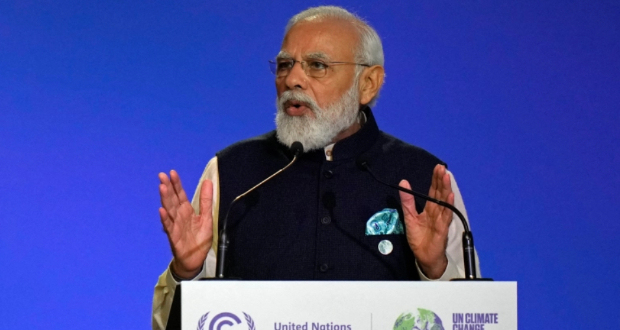
India targets net-zero carbon emissions by 2070, says Modi

India’s economy will become carbon neutral by the year 2070, the country’s prime minster has announced at the COP26 climate crisis summit in Glasgow. The target date is two decades beyond what scientists say is needed to avert catastrophic climate impacts. India is the last of the world’s major carbon polluters to announce a net-zero target, with China saying it would reach that goal in 2060, and the United States and the European Union aiming for 2050.

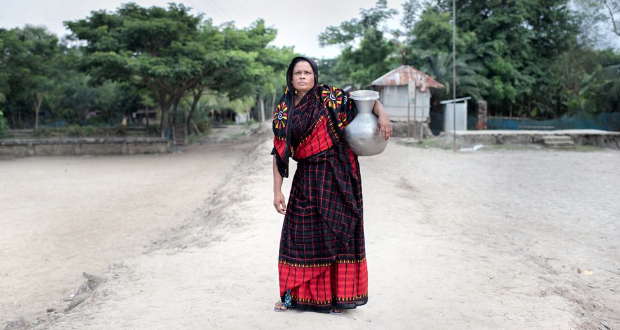
COP26: What climate summit means for one woman in Bangladesh

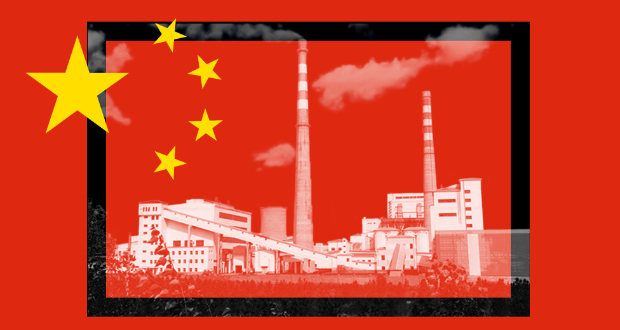
China's carbon emissions are vast and growing, dwarfing those of other countries. Experts agree that without big reductions in China's emissions, the world cannot win the fight against climate change. In 2020, China's President Xi Jinping said his country would aim for its emissions to reach their highest point before 2030 and for carbon neutrality before 2060. His statement has now been confirmed as China's official position ahead of the COP26 global climate summit in Glasgow. But China has not said exactly how these goals will be achieved.

Why China's climate policy matters to us all

China's carbon emissions are vast and growing, dwarfing those of other countries. Experts agree that without big reductions in China's emissions, the world cannot win the fight against climate change. In 2020, China's President Xi Jinping said his country would aim for its emissions to reach their highest point before 2030 and for carbon neutrality before 2060. His statement has now been confirmed as China's official position ahead of the COP26 global climate summit in Glasgow. But China has not said exactly how these goals will be achieved.

Deliver on promises, developing world tells rich at climate talks

A crucial U.N. conference heard calls on its first day for the world's major economies to keep their promises of financial help to address the climate crisis, while big polluters India and Brazil made new commitments to cut emissions. World leaders, environmental experts and activists all pleaded for decisive action to halt the global warming which threatens the future of the planet at the start of the two-week COP26 summit in the Scottish city of Glasgow on Monday. The task facing negotiators was made even more daunting by the failure of the Group of 20 major industrial nations to agree ambitious new commitments at the weekend.