Will the Middle East run out of groundwater soon?
As rivers dry up and rainfall declines, water stored underground is more important than ever in the climate-change-impacted Middle East. But managing groundwater is complex. Nobody even really knows how much there is.
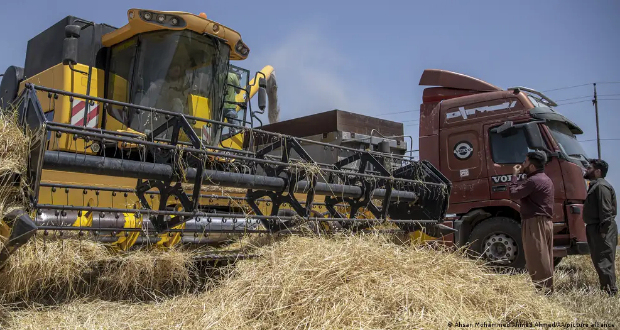
It is the invisible ingredient responsible for this year's bumper wheat harvest in Iraq, a country generally considered one of the most endangered by climate change and drought in the world.
It has also helped increase the number of Tunisia's all-important date-palm oases, is keeping Yemen's agriculture going despite war and ensures that Libya's bustling coastal cities are supplied with water.
Groundwater — fresh water stored underneath the earth and accessed mostly by wells — has always played a significant role in arid Middle East countries. Because it is underground, it is not as impacted by drought and heat , and it's the main source of fresh water for at least 10 Arab nations, the United Nations Economic and Social Commission for Western Asia, or ESCWA, stated in a 2020 report.
But as climate change impacts what little rainfall these countries get and extremely hot summers dry up more rivers and lakes, groundwater is becoming even more important.
Unseen underground rivers
"Awareness of groundwater is rising," said Annabelle Houdret, a senior researcher at the German Institute of Development and Sustainability, or IDOS, who's been looking into groundwater management in Morocco specifically.
"In general, people have not thought about it as much as they should because they don't see it. If you see a river where levels falls dramatically, it immediately gets a reaction," she continued. "But [groundwater] is an abstract. By the time we become aware of what's happening with groundwater, it may well be too late."
Making it even more complicated is the variable nature of groundwater, Mohammed Mahmoud, director of the climate and water program at Washington-based think tank, the Middle East Institute, told DW.
There is growing pressure on groundwater in the region, Mahmoud says, but it's also a complicated resource. How to manage groundwater depends on what sort of ground or rocks it's stored in, how deep it's stored, how it flows and how it's connected to nearby surface water like rivers and lakes. It also depends on whether the groundwater comes from renewable sources.
India targets net-zero carbon emissions by 2070, says Modi
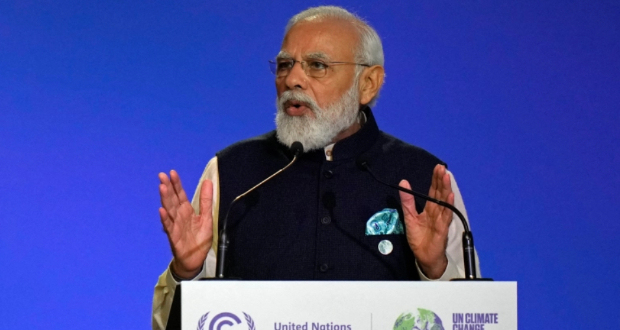
India’s economy will become carbon neutral by the year 2070, the country’s prime minster has announced at the COP26 climate crisis summit in Glasgow. The target date is two decades beyond what scientists say is needed to avert catastrophic climate impacts. India is the last of the world’s major carbon polluters to announce a net-zero target, with China saying it would reach that goal in 2060, and the United States and the European Union aiming for 2050.
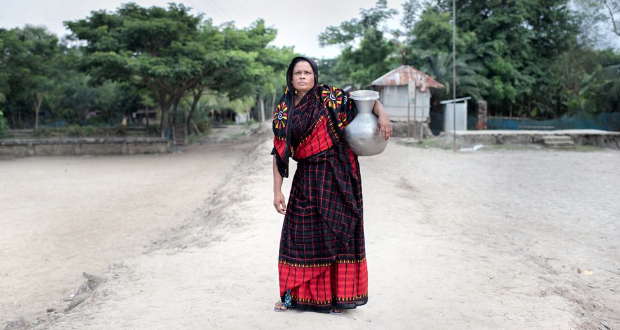
COP26: What climate summit means for one woman in Bangladesh
China's carbon emissions are vast and growing, dwarfing those of other countries. Experts agree that without big reductions in China's emissions, the world cannot win the fight against climate change. In 2020, China's President Xi Jinping said his country would aim for its emissions to reach their highest point before 2030 and for carbon neutrality before 2060. His statement has now been confirmed as China's official position ahead of the COP26 global climate summit in Glasgow. But China has not said exactly how these goals will be achieved.
Why China's climate policy matters to us all
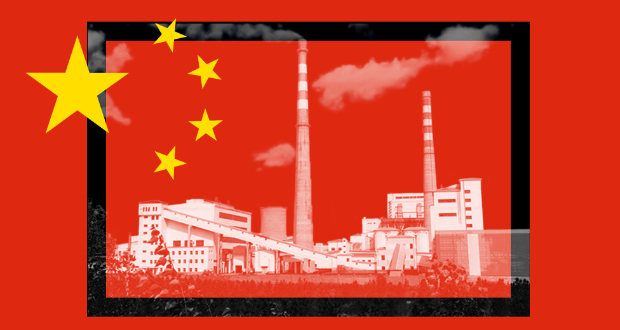
China's carbon emissions are vast and growing, dwarfing those of other countries. Experts agree that without big reductions in China's emissions, the world cannot win the fight against climate change. In 2020, China's President Xi Jinping said his country would aim for its emissions to reach their highest point before 2030 and for carbon neutrality before 2060. His statement has now been confirmed as China's official position ahead of the COP26 global climate summit in Glasgow. But China has not said exactly how these goals will be achieved.
Deliver on promises, developing world tells rich at climate talks

A crucial U.N. conference heard calls on its first day for the world's major economies to keep their promises of financial help to address the climate crisis, while big polluters India and Brazil made new commitments to cut emissions. World leaders, environmental experts and activists all pleaded for decisive action to halt the global warming which threatens the future of the planet at the start of the two-week COP26 summit in the Scottish city of Glasgow on Monday. The task facing negotiators was made even more daunting by the failure of the Group of 20 major industrial nations to agree ambitious new commitments at the weekend.