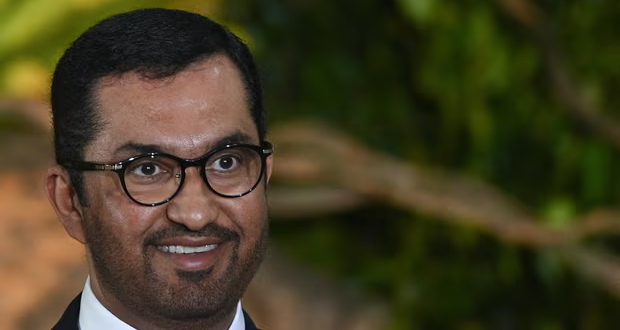
UN climate summit host UAE failed to report methane emissions to UN
The United Arab Emirates, which will run the crucial Cop28 UN climate summit in December, has failed to report its emissions of the powerful greenhouse gas methane to the UN for almost a decade, the Guardian can reveal.
Its state oil company, Adnoc, whose chief executive, Sultan Al Jaber, controversially will preside over the climate summit, has also set itself a methane leak target far higher than the level it claims it has already reached. Al Jaber recently urged countries and companies to be “brutally honest” about the inadequacy of global action to fight the climate crisis.
Al Jaber is tasked with leading countries at Cop28 to deliver the climate action desperately needed, with extreme weather damaging lives across the world. He has previously been backed by the US and EU but has also faced calls to step down.
Critics say the revelations, and the UAE’s huge planned expansion of oil and gas production against scientific advice, show the “opposite of leadership” and undermine Al Jaber’s credibility.
Methane is responsible for about a quarter of global heating, and leaks from fossil fuel exploitation are a key source. Cutting these emissions is a fast and low-cost way to slow the temperature rise.
The UN’s climate body has required countries to submit their methane emissions every two years since 2014. The UAE has not submitted any reports, unlike other Middle Eastern oil states including Saudi Arabia, Kuwait and Oman.
In July, Al Jaber called on countries to update another type of submission to the UN, climate action plans called nationally determined contributions.
Cutting methane emissions from oil and gas production is seen as a vital part of climate action, and Adnoc announced in October 2022 that it would aim by 2025 to limit leaks to less than 0.15% of the gas produced.
However, the company’s estimate of its level of emissions for 2022 was 0.07%, announced after an Adnoc board meeting chaired by the UAE crown prince, Khaled bin Mohamed bin Zayed.
The 0.15% methane target is also higher than the level achieved in 2019 by Qatar (0.06%) and Saudi Arabia (0.14%), according to a recently published satellite analysis by scientists at Harvard University in the US.
India targets net-zero carbon emissions by 2070, says Modi
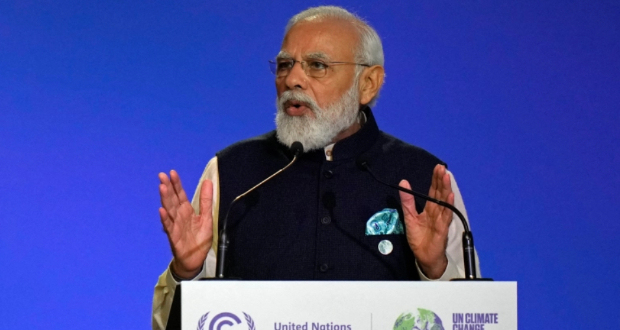
India’s economy will become carbon neutral by the year 2070, the country’s prime minster has announced at the COP26 climate crisis summit in Glasgow. The target date is two decades beyond what scientists say is needed to avert catastrophic climate impacts. India is the last of the world’s major carbon polluters to announce a net-zero target, with China saying it would reach that goal in 2060, and the United States and the European Union aiming for 2050.
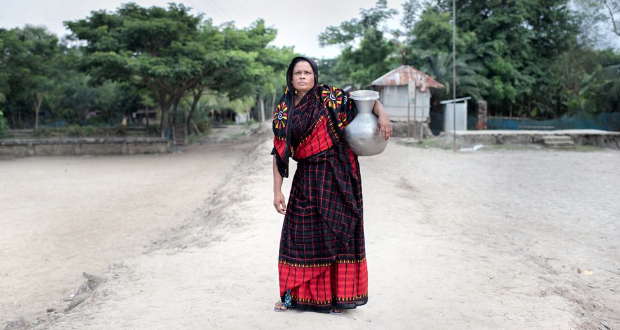
COP26: What climate summit means for one woman in Bangladesh
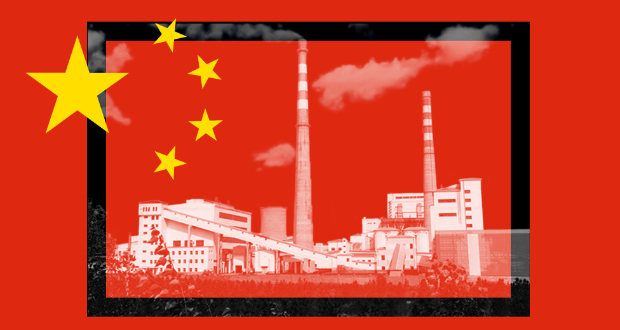
China's carbon emissions are vast and growing, dwarfing those of other countries. Experts agree that without big reductions in China's emissions, the world cannot win the fight against climate change. In 2020, China's President Xi Jinping said his country would aim for its emissions to reach their highest point before 2030 and for carbon neutrality before 2060. His statement has now been confirmed as China's official position ahead of the COP26 global climate summit in Glasgow. But China has not said exactly how these goals will be achieved.
Why China's climate policy matters to us all
China's carbon emissions are vast and growing, dwarfing those of other countries. Experts agree that without big reductions in China's emissions, the world cannot win the fight against climate change. In 2020, China's President Xi Jinping said his country would aim for its emissions to reach their highest point before 2030 and for carbon neutrality before 2060. His statement has now been confirmed as China's official position ahead of the COP26 global climate summit in Glasgow. But China has not said exactly how these goals will be achieved.
Deliver on promises, developing world tells rich at climate talks

A crucial U.N. conference heard calls on its first day for the world's major economies to keep their promises of financial help to address the climate crisis, while big polluters India and Brazil made new commitments to cut emissions. World leaders, environmental experts and activists all pleaded for decisive action to halt the global warming which threatens the future of the planet at the start of the two-week COP26 summit in the Scottish city of Glasgow on Monday. The task facing negotiators was made even more daunting by the failure of the Group of 20 major industrial nations to agree ambitious new commitments at the weekend.