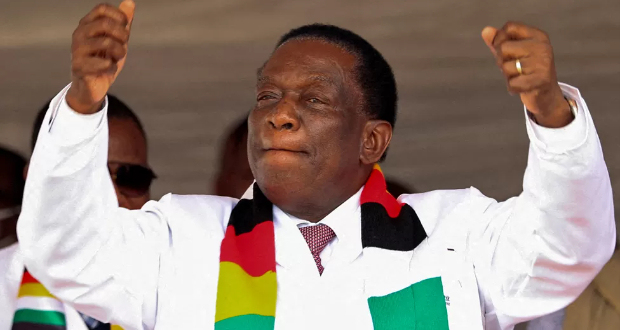
Mr Mnangagwa is only Zimbabwe's second president. A 2017 coup against veteran ruler Robert Mugabe put him in charge.
Zimbabweans still face high inflation, poverty and a climate of fear.
When he first became president, Mr Mnangagwa - known as "The Crocodile" for his ruthlessness - promised a new start for his country's people.
But Zimbabwe had one of the highest inflation rates in the world last month - prices in July had rocketed by 101.3% since the previous year. Unemployment also remains rife, with only 25% of Zimbabweans holding formal jobs.
Mr Mnangagwa's vow to guarantee human rights also appears hollow, with little changing in this regard since Mr Mugabe's departure.
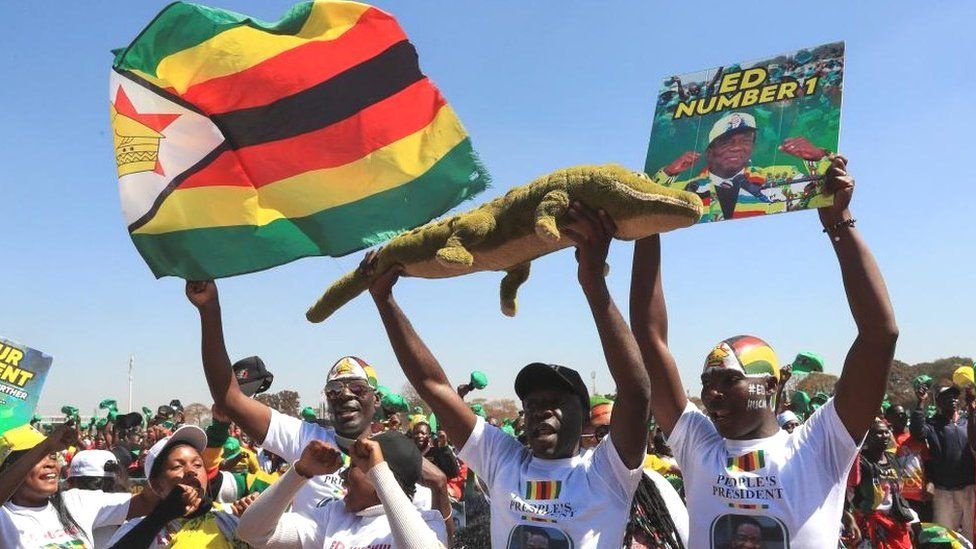
Critics say the 80-year-old silenced dissent and clamped down on the opposition in the run-up to the vote, which he had been widely-expected to win.
The Zimbabwe Electoral Commission (ZEC) said Mr Mnangagwa's main challenger, Citizens' Coalition for Change (CCC) candidate Nelson Chamisa, secured 44% of the vote.
Mr Mnangagwa received more than 2.3m votes, while Mr Chamisa took 1.9m, according to the ZEC. Voter turnout in the country of almost 16m was 69%, the electoral body said.
The opposition claims the vote was rigged, but the constitutional court has upheld the result.
A spokesperson for the CCC posted on X - formerly known as Twitter - that the party rejected "any result hastily assembled without proper verification".
Promise Mkwananzi, a spokesperson for the party, told the AFP news agency that the CCC did not sign the "false" final tally and "cannot accept the results".
He said the party would announce its next move soon.
Observer missions from the EU, Commonwealth and 16-nation Southern African Development Community (SADC) said they had a number of concerns with the vote, including the banning of opposition rallies, issues with the electoral register, biased state media coverage and voter intimidation.
"The elections were fraught with irregularities and aggrieved the people of Zimbabwe," political analyst Rejoice Ngwenya told AFP.
The run-up to the election was largely free of violence, but CCC members were convicted on what they describe as fabricated charges aimed at weakening the party. The party says the police have banned several of its meetings since July, and nearly 100 gatherings since it was formed in January last year.