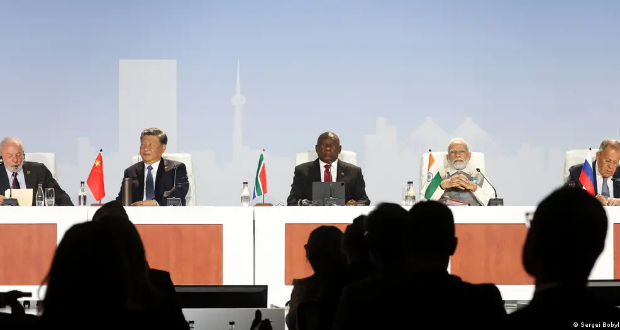
BRICS: The West reacts to plans for enlargement
The BRICS countries — Brazil, Russia, India, China and South Africa — want to add six new members to their group on January 1, 2024. The West is playing it cool.
Perhaps the US really doesn't see the BRICS plans as a serious threat. Or perhaps downplaying the group's intention to bring in Iran, Saudi Arabia, the United Arab Emirates, Egypt, Ethiopia, and Argentina is simply political strategy. At any rate, US national security advisor Jake Sullivan has said that the BRICS bloc is not a geopolitical rival to the United States because their interests are too different.
The White House is clearly trying not to rock the boat. No one has denounced the initiative as an open attack on American global supremacy. A State Department spokesman said that, in order to maintain global peace and security, the US "will continue to work with our partners and allies in bilateral, regional and multilateral fora ...The US reiterates its belief that countries may choose the partners and groupings with whom they will associate."
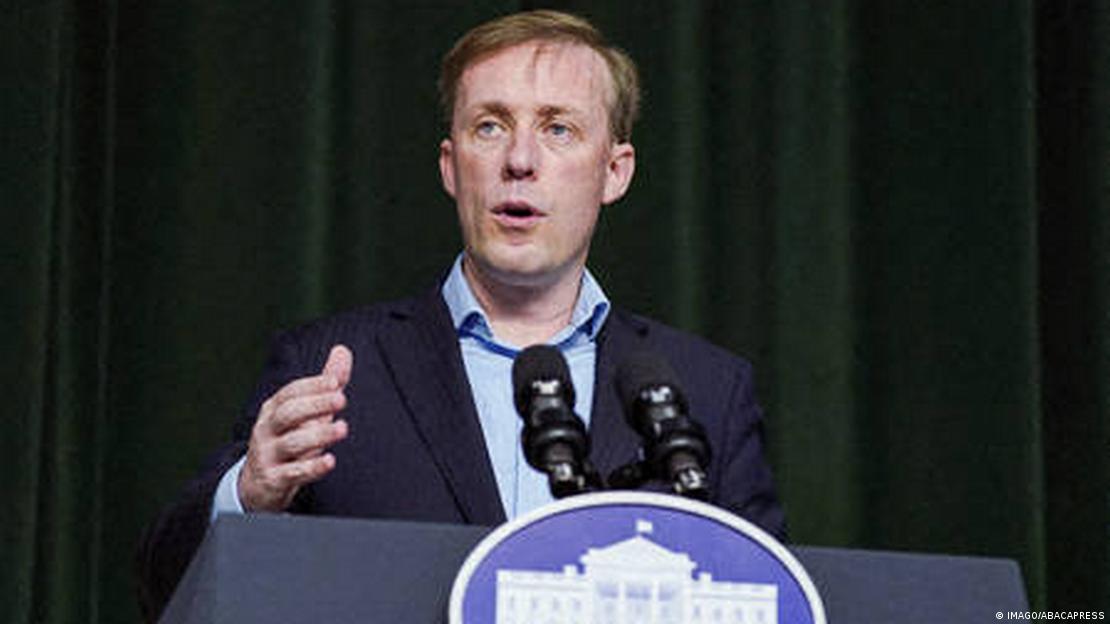
Instead Washington is seeking to focus on the 18th summit of the G20 countries, which will take place in New Delhi in two weeks' time. The five BRICS countries will be represented there as will potential new members, Argentina and Saudi Arabia — but not the UAE, Egypt or Ethiopia. Most importantly the US' archenemy, Iran, will not be present. The White House stated that Western nations were looking for "strong outcomes" at the New Delhi meeting that would demonstrate the G20's role as "the premier forum for economic cooperation."
"First and foremost an economic alliance"
Many Western countries remain guarded about the possibility of BRICS becoming a new center of power. Only a few media outlets have ventured to break cover, expressing what many governments may well be thinking behind closed doors.
The Norwegian newspaper Aftenposten commented that the BRICS group has "become a global club for authoritarian and reactionary leaders, with China and Russia at their head." The people of these countries deserve better, the paper said.
"The fact that, in the end, only Argentina, Egypt, Ethiopia, Iran, Saudi Arabia, and the United Arab Emirates were invited to join is a setback for China," Dutch newspaper NRC wrote. South Africa stressed that it was "completely wrong" to see BRICS as an anti-Western platform. "The group is not yet an alternative to the G7, as China would like it to be," the paper concluded.
India targets net-zero carbon emissions by 2070, says Modi
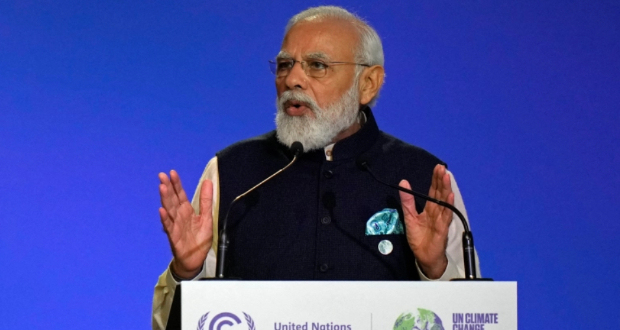
India’s economy will become carbon neutral by the year 2070, the country’s prime minster has announced at the COP26 climate crisis summit in Glasgow. The target date is two decades beyond what scientists say is needed to avert catastrophic climate impacts. India is the last of the world’s major carbon polluters to announce a net-zero target, with China saying it would reach that goal in 2060, and the United States and the European Union aiming for 2050.
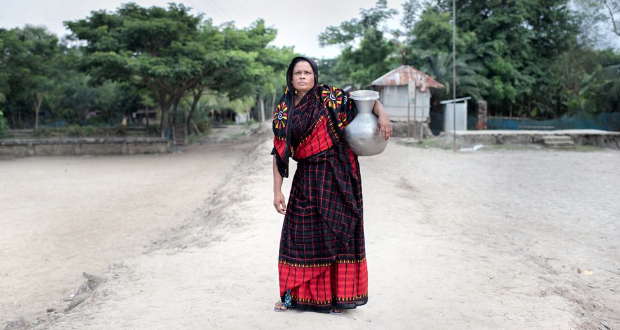
COP26: What climate summit means for one woman in Bangladesh
China's carbon emissions are vast and growing, dwarfing those of other countries. Experts agree that without big reductions in China's emissions, the world cannot win the fight against climate change. In 2020, China's President Xi Jinping said his country would aim for its emissions to reach their highest point before 2030 and for carbon neutrality before 2060. His statement has now been confirmed as China's official position ahead of the COP26 global climate summit in Glasgow. But China has not said exactly how these goals will be achieved.
Why China's climate policy matters to us all
China's carbon emissions are vast and growing, dwarfing those of other countries. Experts agree that without big reductions in China's emissions, the world cannot win the fight against climate change. In 2020, China's President Xi Jinping said his country would aim for its emissions to reach their highest point before 2030 and for carbon neutrality before 2060. His statement has now been confirmed as China's official position ahead of the COP26 global climate summit in Glasgow. But China has not said exactly how these goals will be achieved.
Deliver on promises, developing world tells rich at climate talks

A crucial U.N. conference heard calls on its first day for the world's major economies to keep their promises of financial help to address the climate crisis, while big polluters India and Brazil made new commitments to cut emissions. World leaders, environmental experts and activists all pleaded for decisive action to halt the global warming which threatens the future of the planet at the start of the two-week COP26 summit in the Scottish city of Glasgow on Monday. The task facing negotiators was made even more daunting by the failure of the Group of 20 major industrial nations to agree ambitious new commitments at the weekend.