![North Korean leader Kim Jong Un left Pyongyang for Russia by train [KCNA via Reuters]](/Uploads/Images/News/2023/9/Image-1914-20230912070806.jpeg)
‘A new and terrifying world’: Kim and Putin to meet again in Russia
North Korean leader Kim Jong Un and Russian President Vladimir Putin held their first-ever summit in 2019.
Kim travelled to Vladivostok in his armoured train where the men spent two days enjoying folk dances, feasting on borscht and reindeer dumplings, and toasting the burgeoning relationship between their two countries.
At that time, broadly supportive of the United Nations sanctions imposed on Pyongyang over its weapons programme, Putin promised to do what he could with China and the United States to break the impasse in denuclearisation talks.
Four years later, Kim and Putin are due to meet again.
This time, however, it is all about arms sales and technology transfer.
“It’s a new and terrifying world we are entering,” In-bum Chun, a retired Lieutenant General in the South Korean army and an expert on North Korea’s military and politics, told Al Jazeera. “Putin will receive weapons and North Korea, [the] technology to improve its nuclear weapons’ capabilities.”

Moscow had hoped for a swift end to the conflict but the fighting has dragged on for more than 18 months.
And Russia is now not only far more isolated on the world stage than it was in 2019, but also the target of sanctions.
“This is a war of attrition,” said Mason Richey, an associate professor of international politics at Hankuk University for Foreign Studies in the South Korean capital Seoul.
“We think of this as a war of people but that’s where Russia has a relative advantage. Where Ukraine has an advantage is in ‘metal’ – the military assets. It can count on support from the US and Europe. They’ve gone chips all in on supporting Ukraine.”
According to the Royal United Services Institute, a London-based think tank, Russia used some 12 million shells in Ukraine in 2022 and is expected to use some 7 million this year. Its munitions factories have the capacity to produce just 2.5 million shells a year.
Given sanctions imposed on Moscow and the consequences of breaching them, “Russia’s search for ammunition partners has turned up a hodgepodge of aggrieved, ambitious and opportunistic nations,” Matthew Sussex, an expert in Russian foreign policy at the Australian National University, wrote in The Conversation on September 10.
Plenty of ‘metal’
While North Korea has spent much of the recent past testing out the new weapons and military equipment it is developing to modernise its military, the country still has plenty of “metal” – from shells to ammunition – and the ability to produce it in large quantities.
India targets net-zero carbon emissions by 2070, says Modi
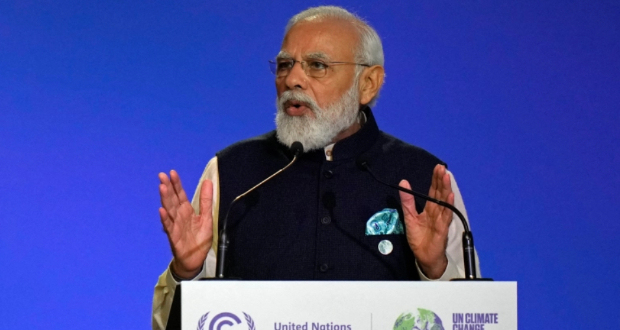
India’s economy will become carbon neutral by the year 2070, the country’s prime minster has announced at the COP26 climate crisis summit in Glasgow. The target date is two decades beyond what scientists say is needed to avert catastrophic climate impacts. India is the last of the world’s major carbon polluters to announce a net-zero target, with China saying it would reach that goal in 2060, and the United States and the European Union aiming for 2050.
COP26: What climate summit means for one woman in Bangladesh
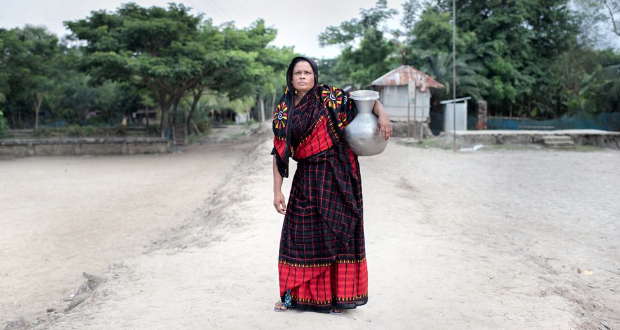
China's carbon emissions are vast and growing, dwarfing those of other countries. Experts agree that without big reductions in China's emissions, the world cannot win the fight against climate change. In 2020, China's President Xi Jinping said his country would aim for its emissions to reach their highest point before 2030 and for carbon neutrality before 2060. His statement has now been confirmed as China's official position ahead of the COP26 global climate summit in Glasgow. But China has not said exactly how these goals will be achieved.
Why China's climate policy matters to us all
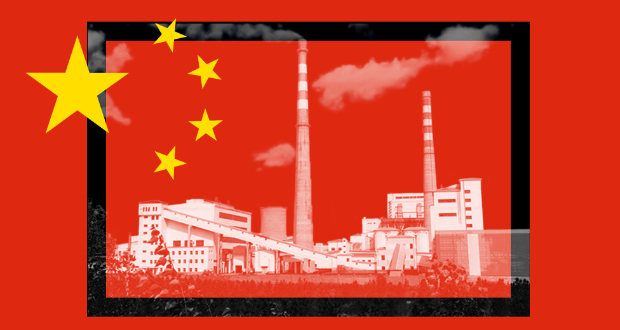
China's carbon emissions are vast and growing, dwarfing those of other countries. Experts agree that without big reductions in China's emissions, the world cannot win the fight against climate change. In 2020, China's President Xi Jinping said his country would aim for its emissions to reach their highest point before 2030 and for carbon neutrality before 2060. His statement has now been confirmed as China's official position ahead of the COP26 global climate summit in Glasgow. But China has not said exactly how these goals will be achieved.
Deliver on promises, developing world tells rich at climate talks

A crucial U.N. conference heard calls on its first day for the world's major economies to keep their promises of financial help to address the climate crisis, while big polluters India and Brazil made new commitments to cut emissions. World leaders, environmental experts and activists all pleaded for decisive action to halt the global warming which threatens the future of the planet at the start of the two-week COP26 summit in the Scottish city of Glasgow on Monday. The task facing negotiators was made even more daunting by the failure of the Group of 20 major industrial nations to agree ambitious new commitments at the weekend.