![Russia's Foreign Minister Sergei Lavrov attends a news conference after addressing the UN General Assembly [Eduardo Munoz/Reuters]](/Uploads/Images/News/2023/9/Image-1948-20230924074610.jpeg)
‘Empire of lies’: Russia’s Lavrov slams West in UN speech
Russia’s foreign minister glosses over Ukraine, accuses Western allies of neo-colonialism at the UN General Assembly.
Russia’s Foreign Minister Sergei Lavrov has called the West an “empire of lies” and accused it of adopting a neo-colonial mindset in its overtures to the Global South to win backing for Ukraine in the war.
Speaking after a week of intense global diplomacy at the annual gathering of world leaders at UN headquarters in New York, where Ukraine and its Western allies sought to drum up support for Kyiv as it fights against Russia’s invasion, Lavrov said a “global majority” was being duped by the West.
“The US and its subordinated collective continue to fuel conflicts which artificially divide humanity into hostile blocks and hamper the achievement of overall aims,” Lavrov said.
“They are trying to force the world to play according to their own self-centred rules.”
James Bays, Al Jazeera’s diplomatic correspondent, said Lavrov’s speech was part of a “tour around the world of Russia’s views” that contained no real mention of Ukraine and few indications of Moscow’s plan one year into the conflict.
During a news conference following the speech, the foreign minister dismissed a 10-point proposal put forward by Ukraine’s President Volodymyr Zelenskyy, as well as the latest UN proposals to revive the Black Sea grain initiative.
“It is completely not feasible,” he said of the peace blueprint promoted by Kyiv. “It is not possible to implement this. It’s not realistic and everybody understands this, but at the same time, they say this is the only basis for negotiations.”
India targets net-zero carbon emissions by 2070, says Modi
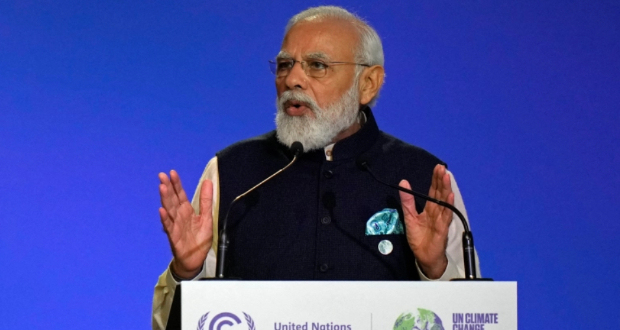
India’s economy will become carbon neutral by the year 2070, the country’s prime minster has announced at the COP26 climate crisis summit in Glasgow. The target date is two decades beyond what scientists say is needed to avert catastrophic climate impacts. India is the last of the world’s major carbon polluters to announce a net-zero target, with China saying it would reach that goal in 2060, and the United States and the European Union aiming for 2050.
COP26: What climate summit means for one woman in Bangladesh

China's carbon emissions are vast and growing, dwarfing those of other countries. Experts agree that without big reductions in China's emissions, the world cannot win the fight against climate change. In 2020, China's President Xi Jinping said his country would aim for its emissions to reach their highest point before 2030 and for carbon neutrality before 2060. His statement has now been confirmed as China's official position ahead of the COP26 global climate summit in Glasgow. But China has not said exactly how these goals will be achieved.
Why China's climate policy matters to us all
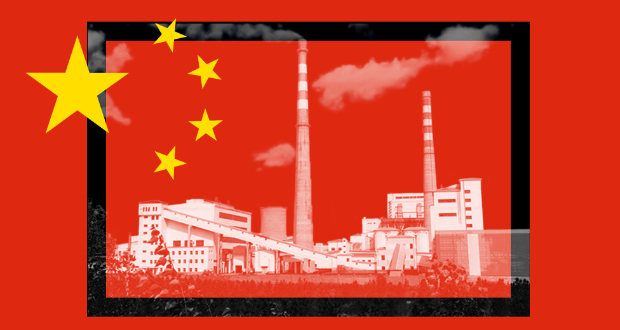
China's carbon emissions are vast and growing, dwarfing those of other countries. Experts agree that without big reductions in China's emissions, the world cannot win the fight against climate change. In 2020, China's President Xi Jinping said his country would aim for its emissions to reach their highest point before 2030 and for carbon neutrality before 2060. His statement has now been confirmed as China's official position ahead of the COP26 global climate summit in Glasgow. But China has not said exactly how these goals will be achieved.
Deliver on promises, developing world tells rich at climate talks

A crucial U.N. conference heard calls on its first day for the world's major economies to keep their promises of financial help to address the climate crisis, while big polluters India and Brazil made new commitments to cut emissions. World leaders, environmental experts and activists all pleaded for decisive action to halt the global warming which threatens the future of the planet at the start of the two-week COP26 summit in the Scottish city of Glasgow on Monday. The task facing negotiators was made even more daunting by the failure of the Group of 20 major industrial nations to agree ambitious new commitments at the weekend.