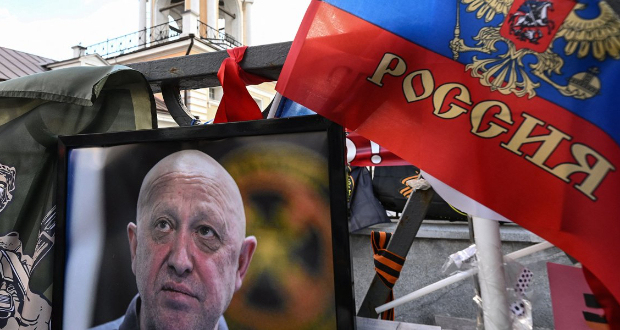
Prigozhin sensed better than anyone else in Moscow the strategic and lucrative opportunities that the resource-rich and politically fragile spots across Africa could bring to Russia. Dubbed “Putin’s chef,” Prigozhin moved from the actual catering business into the PMC business. In Africa, he made tailormade recipes for the Kremlin’s various targets, while using some signature ingredients such as security protection, election meddling, and disinformation campaigns to the benefit of local partners in exchange for deals for access to natural resources, including oil, gold, diamonds, and uranium.
After years of the Kremlin enjoying the plausible deniability granted by the Wagner Group’s murky legal status, the June 2023 armed mutiny led by Prigozhin against the Russian government exposed the intricacies of the relationship between the PMC and Moscow, including the latter’s dependence on the Wagner chief to gain influence and control over different African governments.
The elimination of Prigozhin now raises a new set of questions: How will his demise affect Russia’s clout in Africa? Will Prigozhin’s killing create a power vacuum within Wagner, as well as in the African countries where the PMC has been prominent? Will new faces emerge to assume control of Prigozhin’s formidable multimillion-dollar legacy? And does Russia’s Ministry of Defense, or others from the security apparatus, have the means to take over Wagner’s activities while the war in Ukraine is still ongoing?
So far, fluid battlegrounds and embattled regimes across Africa such as the CAR, Niger, Burkina Faso, and Sudan suggest that Russia’s appeal as a security guarantor and military partner remains intact, irrespective of the fate of the Wagner Group. One reason for this—as the authors of this piece have argued earlier—is that Russia’s provision of regime survival packages in this destabilized region “supersedes any other potential gains from traditional cooperation agreements advanced by Western partners, which are usually based on institutional capacity building instead of securing the authorities themselves.”
However, a series of signs, including Russia’s military shortcomings in Ukraine, Russia’s inability to stop drone attacks on Moscow, and domestic fissures regarding Wagner’s future, might negatively impact the perception of the Kremlin as a guarantor of security and stability across Africa. As the dust keeps settling, this analysis looks at the possible directions of Wagner and its operations in Africa in a post-Prigozhin world, concluding with recommendations for U.S. and Western policymakers.
Recapping Prigozhin’s Multimillion-Dollar Operations in Africa
On August 21, video footage of Prigozhin, allegedly recorded in Mali, emerged on social media, in which he pledged to make “Russia even greater on every continent and Africa even freer.”[1] Two days later—and two months after his failed armed mutiny—Prigozhin died in a plane crash along with other senior figures from Wagner, including Dmitry Utkin, long believed to be the founder of the PMC, and Valery Chekalov, who reportedly managed Prigozhin’s oil, gas, and mineral businesses in Africa and the Middle East.