Bangladesh’s economic boom

The Commonwealth Trade and Investment Forum, held in Dhaka earlier this month, highlights the growing global interest in Bangladesh and its fast-growing economy. Hundreds of international businesspeople, from as far away as Africa and the South Pacific, flocked to the nation’s capital in order to seize on the opportunities presented by modern Bangladesh. Increasingly, international businesses and investors count Bangladesh amongst the most promising nations in the world today.


Look at the figures, and it’s easy to see why. In 2022, the country saw top-line economic growth of 7.1%, with projected growth of 5.5% in 2023, and 6.5% in 2024. Foreign direct investment is up, at $2.9 billion, while the country remains the second largest exporter of apparel in the world.

Set to become the ninth largest consumer market globally by 2030, Dhaka has seen considerable infrastructure investment in recent years, including the new Dhaka Metro and a new third terminal at Dhaka Airport. At the same time, the city maintains some of the lowest electricity and water costs in the region, with as much as 55% savings on electricity costs compared to cities such as Karachi and Beijing.

However, these strong economic fundamentals alone are not enough to power Bangladesh’s development. In order to make the most of its economic potential, Bangladesh must improve its global cultural profile, leveraging soft power into hard cash. The success stories of the late 20th and early 21st centuries -- India, Dubai, Singapore -- have all coupled improvements to their regulatory environments with an attempt to craft a compelling narrative for investors and tourists alike.

Crude as it may seem, businesses and investors are far more likely to invest in a country that feels familiar. It isn’t just Dubai’s low taxes that attract international businesses -- people identify closely with the city’s global image as a playground for the uber-wealthy, one of the world’s great beacons of modernity and modernization. 

By contrast, many of the world’s potentially profitable markets are saddled with poor global perceptions and are overlooked as a result of international ignorance. 

There are lessons to be learned here from Modi’s India, which has successfully used its G20 Presidency to revise the country’s global image. By emphasizing India’s Vedic heritage, and drawing on authentic expressions of Indian culture, Modi has helped India to shed its old reputation as a country of crowded streets, acute poverty, and the Taj Mahal. The world now understands that Modern India is an entirely new nation, which blends ancient history with striking modernity. That compelling narrative, coupled with strong economic fundamentals, will see billions of dollars of investment flow into the country over the coming decades.
Read Full Article:

Share This Article

Related Articles

India targets net-zero carbon emissions by 2070, says Modi

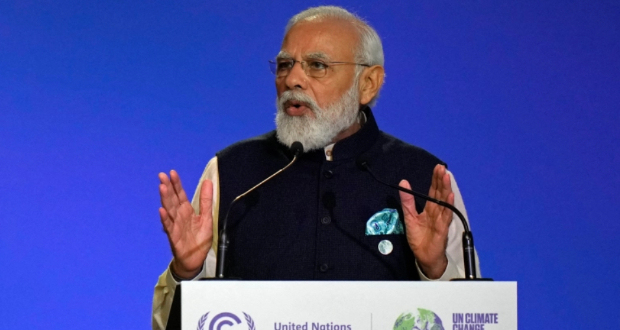
India’s economy will become carbon neutral by the year 2070, the country’s prime minster has announced at the COP26 climate crisis summit in Glasgow. The target date is two decades beyond what scientists say is needed to avert catastrophic climate impacts. India is the last of the world’s major carbon polluters to announce a net-zero target, with China saying it would reach that goal in 2060, and the United States and the European Union aiming for 2050.

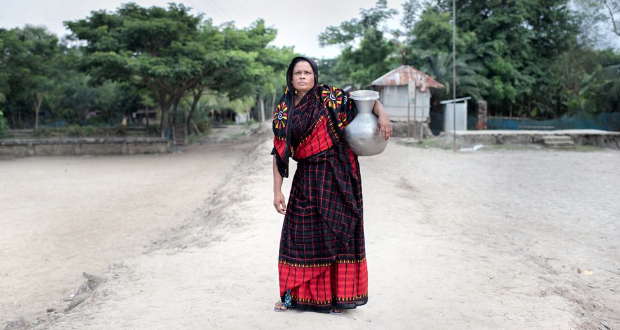
COP26: What climate summit means for one woman in Bangladesh

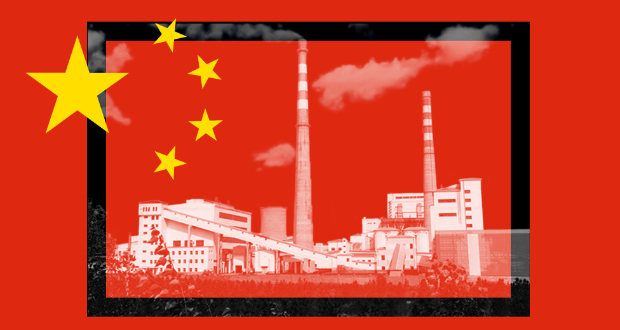
China's carbon emissions are vast and growing, dwarfing those of other countries. Experts agree that without big reductions in China's emissions, the world cannot win the fight against climate change. In 2020, China's President Xi Jinping said his country would aim for its emissions to reach their highest point before 2030 and for carbon neutrality before 2060. His statement has now been confirmed as China's official position ahead of the COP26 global climate summit in Glasgow. But China has not said exactly how these goals will be achieved.

Why China's climate policy matters to us all

China's carbon emissions are vast and growing, dwarfing those of other countries. Experts agree that without big reductions in China's emissions, the world cannot win the fight against climate change. In 2020, China's President Xi Jinping said his country would aim for its emissions to reach their highest point before 2030 and for carbon neutrality before 2060. His statement has now been confirmed as China's official position ahead of the COP26 global climate summit in Glasgow. But China has not said exactly how these goals will be achieved.

Deliver on promises, developing world tells rich at climate talks

A crucial U.N. conference heard calls on its first day for the world's major economies to keep their promises of financial help to address the climate crisis, while big polluters India and Brazil made new commitments to cut emissions. World leaders, environmental experts and activists all pleaded for decisive action to halt the global warming which threatens the future of the planet at the start of the two-week COP26 summit in the Scottish city of Glasgow on Monday. The task facing negotiators was made even more daunting by the failure of the Group of 20 major industrial nations to agree ambitious new commitments at the weekend.