Rise of solar and batteries is upending our renewable future
The boom in solar power and electric vehicles this year is smashing the forecasts of the most bullish analysts, giving hope they are on the net-zero path the world needs. If only the same could be said of other forms of clean energy.
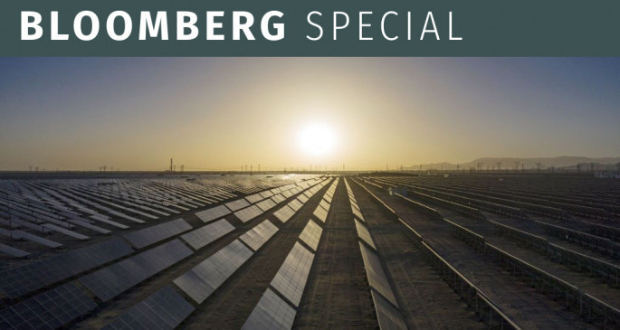
Take photovoltaic panels. Solar modules last month hit a record low 16.5 cents per watt, according to BloombergNEF, and will slump further to 14.5 cents by the end of the year. BloombergNEF has a conservative forecast of 367 gigawatts of solar installed this year — roughly as much as was connected in the seven years through 2017, capable of generating sufficient electricity to power Germany or Brazil. Its optimistic forecast of 563 GW in 2025 would more or less put the industry on track to reduce global emissions to zero by 2050.
The same thing is happening with electric cars and the batteries they use. Sinking costs for battery metals have driven advanced lithium-ion cells in China down to $82.6 per kilowatt-hour, analysts Benchmark Mineral Intelligence wrote last week, within a whisker of levels at which electric vehicles are cheaper than equivalent gasoline and diesel cars. After a brief truce in a price war between major automakers in China, Tesla Inc. cut local models by nearly $10,000 last month. Some 38% of cars sold there in August came with a plug.
At the same time, other technologies equally crucial to the energy transition are struggling. An auction last week to build new offshore wind farms in the UK, the second-biggest market for the technology, received zero bids. Major developers have warned that rising expenses mean projects won't be viable unless the government lifts the tariffs it will pay.
The infrastructure needed to support this transformation is suffering, too. Some 1,250 GW of unbuilt clean power in the US is sitting in regulatory queues awaiting approval to be connected to the grid — roughly equivalent to the capacity of every generator currently operating there. Faced with this slowdown, manufacturers of wind equipment have been putting the brake on expansion, meaning the industry may face shortages in the second half of the decade of everything from windmill blades, turbines, and ships for offshore installations, according to the Global Wind Energy Council, a trade group.
Power Down
The US has a larger volume of zero-carbon generating capacity queueing for a grid connection than it has existing generators connected to the grid

The problem here is that one long-standing rule explaining the dominance of renewables is working too well. Wright's Law, which predicts that manufactured goods will get dramatically cheaper as production expands, is causing vertiginous price declines for solar panels and electric batteries. Wind and transmission equipment, held back by regulation and slower growth, are getting left behind. With manufacturing making up a smaller share of their cost base than construction and engineering, they're unable to achieve the efficiencies that factory-produced goods like batteries and photovoltaic modules can achieve.
It would be nice to be able to tell an optimistic story about this shift, as my former colleague Noah Smith does in a recent post. I'm less convinced.
In most scenarios of a shift to clean energy, solar and wind do roughly comparable shares of the heavy lifting. BloombergNEF sees wind and solar at 48% and 28% of generation, respectively, in 2050, while the International Energy Agency has them at 22% and 25%.
India targets net-zero carbon emissions by 2070, says Modi
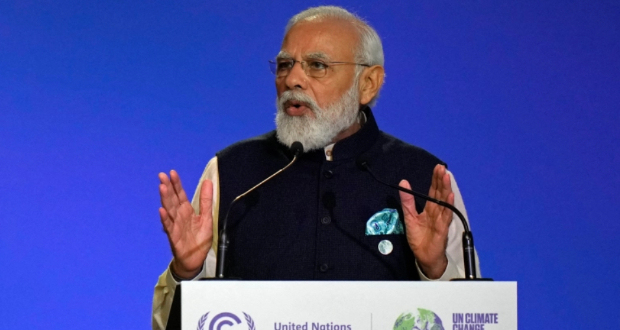
India’s economy will become carbon neutral by the year 2070, the country’s prime minster has announced at the COP26 climate crisis summit in Glasgow. The target date is two decades beyond what scientists say is needed to avert catastrophic climate impacts. India is the last of the world’s major carbon polluters to announce a net-zero target, with China saying it would reach that goal in 2060, and the United States and the European Union aiming for 2050.
COP26: What climate summit means for one woman in Bangladesh

China's carbon emissions are vast and growing, dwarfing those of other countries. Experts agree that without big reductions in China's emissions, the world cannot win the fight against climate change. In 2020, China's President Xi Jinping said his country would aim for its emissions to reach their highest point before 2030 and for carbon neutrality before 2060. His statement has now been confirmed as China's official position ahead of the COP26 global climate summit in Glasgow. But China has not said exactly how these goals will be achieved.
Why China's climate policy matters to us all

China's carbon emissions are vast and growing, dwarfing those of other countries. Experts agree that without big reductions in China's emissions, the world cannot win the fight against climate change. In 2020, China's President Xi Jinping said his country would aim for its emissions to reach their highest point before 2030 and for carbon neutrality before 2060. His statement has now been confirmed as China's official position ahead of the COP26 global climate summit in Glasgow. But China has not said exactly how these goals will be achieved.
Deliver on promises, developing world tells rich at climate talks

A crucial U.N. conference heard calls on its first day for the world's major economies to keep their promises of financial help to address the climate crisis, while big polluters India and Brazil made new commitments to cut emissions. World leaders, environmental experts and activists all pleaded for decisive action to halt the global warming which threatens the future of the planet at the start of the two-week COP26 summit in the Scottish city of Glasgow on Monday. The task facing negotiators was made even more daunting by the failure of the Group of 20 major industrial nations to agree ambitious new commitments at the weekend.