![UK Prime Minister Rishi Sunak (right), US President Joe Biden (centre) and Australian Prime Minister Anthony Albanese (left), announce details of the AUKUS trilateral pact in March [File: Leon Neal/Pool via AP]](/Uploads/Images/News/2023/10/Image-1965-20231002062642.jpeg)
UK awards $4bn contract to build AUKUS nuclear submarines
The United Kingdom has awarded three UK companies a 4 billion pound ($4.9bn) contract to design and manufacture a nuclear-powered attack submarine as part of the country’s AUKUS programme with Australia and the United States.
The UK Ministry of Defence, in a statement on Sunday, said the contract with BAE Systems, Rolls-Royce and Babcock “represents a significant milestone for both the UK and the trilateral AUKUS programme as a whole”.
The new submarines, known as SSN-AUKUS, “will be the largest, most advanced and most powerful attack submarines ever operated” by the Royal Navy and will “combine world-leading sensors, design and weaponry in one vessel”, it said.
The first of the submarines will be delivered into service in the UK in the late 2030s and the first Australian ones will follow in the early 2040s.
The plans for SSN-AUKUS were unveiled in March by the leaders of Australia, the UK and US and came as the three countries ramp up their efforts to counter China in the Asia Pacific region.
The nuclear-powered vessels – which have far greater stealth and range and mark the first time Washington has shared nuclear-propulsion technology with a country other than the UK – represent a significant upgrade to Australia’s current diesel-powered fleet.
Australian Defence Minister Richard Marles previously described the AUKUS deal as “the biggest step forward in our military capability that we’ve had since the end of World War II”.
Under AUKUS, Washington also intends to sell Canberra up to five of its Virginia-class nuclear-powered submarines in the early 2030s.
It will also see US and UK submarines deployed in Western Australia as soon as 2027 to help train Australian crews.
Analysts say the AUKUS programme will strengthen deterrence in the face of China’s increasingly assertive actions in the Pacific, including in the South China Sea where it has built military bases on disputed outcrops and reefs.
India targets net-zero carbon emissions by 2070, says Modi
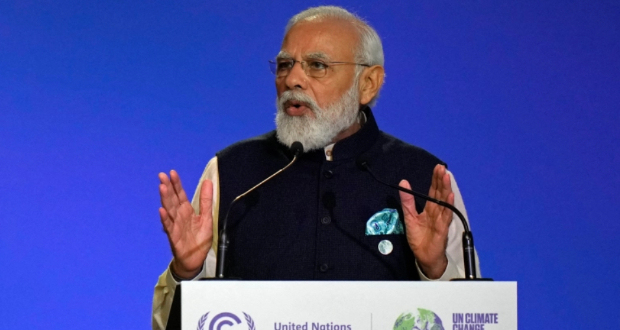
India’s economy will become carbon neutral by the year 2070, the country’s prime minster has announced at the COP26 climate crisis summit in Glasgow. The target date is two decades beyond what scientists say is needed to avert catastrophic climate impacts. India is the last of the world’s major carbon polluters to announce a net-zero target, with China saying it would reach that goal in 2060, and the United States and the European Union aiming for 2050.
COP26: What climate summit means for one woman in Bangladesh

China's carbon emissions are vast and growing, dwarfing those of other countries. Experts agree that without big reductions in China's emissions, the world cannot win the fight against climate change. In 2020, China's President Xi Jinping said his country would aim for its emissions to reach their highest point before 2030 and for carbon neutrality before 2060. His statement has now been confirmed as China's official position ahead of the COP26 global climate summit in Glasgow. But China has not said exactly how these goals will be achieved.
Why China's climate policy matters to us all
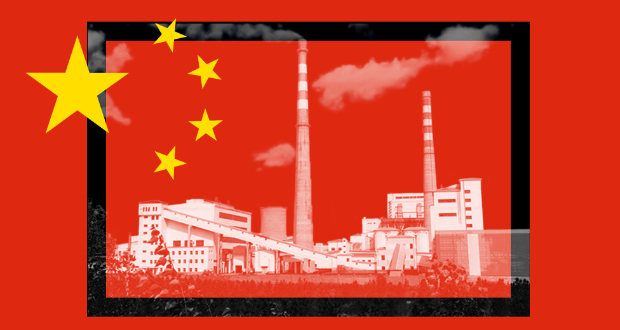
China's carbon emissions are vast and growing, dwarfing those of other countries. Experts agree that without big reductions in China's emissions, the world cannot win the fight against climate change. In 2020, China's President Xi Jinping said his country would aim for its emissions to reach their highest point before 2030 and for carbon neutrality before 2060. His statement has now been confirmed as China's official position ahead of the COP26 global climate summit in Glasgow. But China has not said exactly how these goals will be achieved.
Deliver on promises, developing world tells rich at climate talks

A crucial U.N. conference heard calls on its first day for the world's major economies to keep their promises of financial help to address the climate crisis, while big polluters India and Brazil made new commitments to cut emissions. World leaders, environmental experts and activists all pleaded for decisive action to halt the global warming which threatens the future of the planet at the start of the two-week COP26 summit in the Scottish city of Glasgow on Monday. The task facing negotiators was made even more daunting by the failure of the Group of 20 major industrial nations to agree ambitious new commitments at the weekend.