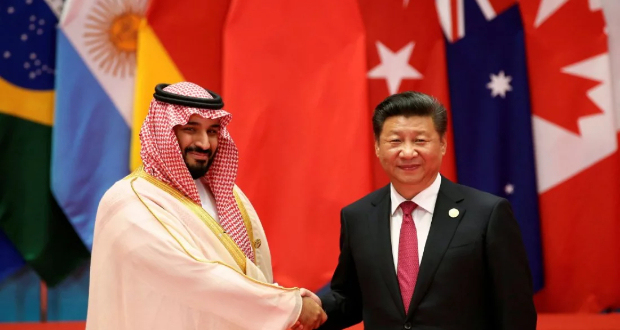
US-China 'tech war': AI sparks first battle in Middle East
Just over a month ago, a leading US technology firm made a rather mysterious announcement.
Nvidia, which produces the world's most advanced computer chips, the small silicon cards needed to run everything from supercomputers to modern cars and cellphones, said the US government was restricting the export of its most advanced chips to "some Middle Eastern countries."
Nvidia did not say which countries were affected or why. But for many observers, it was a sign the "tech war" between China and the US had arrived in the Middle East.
For some time now, the US has been trying to get ahead of China when it comes to the development of world-changing artificial intelligence (AI) technology. In an attempt to slow down Chinese AI progress, a recent tactic has been to throttle Chinese access to the computer chips or semiconductors needed for the most advanced artificial intelligence models.
It's very hard to develop AI without these materials, and they are also mostly produced by US-based companies, including current world leader Nvidia.
That is why last year the US Department of Commerce announced it was restricting exports of advanced chips to China and Russia. This August's announcement adds another layer to these export restrictions.
Which Middle Eastern countries are affected?
Neither the US government nor Nvidia is saying. There are some likely candidates though.
"My best guess as to the countries under closest scrutiny are Iran, Saudi Arabia and UAE," suggested John Calabrese, a professor who teaches US foreign policy at the American University in Washington and who has written regularly about China's presence in the Middle East.
"Iran has demonstrated a high level of 'hacking' proficiency. Saudi Arabia and UAE have the financial means. Qatar and Israel might also have been named. In all these cases, there would seem to be a reasonable 'national security' justification."
The oil-rich Gulf states are some of the most enthusiastic spenders in the world on AI. Saudi Arabia, the UAE, and Qatar all see the ongoing digital transformation of their economies as hugely important in diversifying away from exporting oil.
India targets net-zero carbon emissions by 2070, says Modi
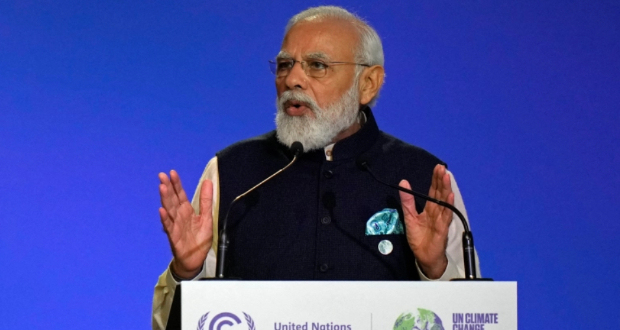
India’s economy will become carbon neutral by the year 2070, the country’s prime minster has announced at the COP26 climate crisis summit in Glasgow. The target date is two decades beyond what scientists say is needed to avert catastrophic climate impacts. India is the last of the world’s major carbon polluters to announce a net-zero target, with China saying it would reach that goal in 2060, and the United States and the European Union aiming for 2050.
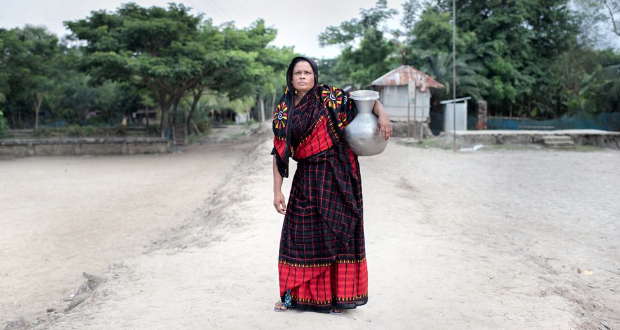
COP26: What climate summit means for one woman in Bangladesh
China's carbon emissions are vast and growing, dwarfing those of other countries. Experts agree that without big reductions in China's emissions, the world cannot win the fight against climate change. In 2020, China's President Xi Jinping said his country would aim for its emissions to reach their highest point before 2030 and for carbon neutrality before 2060. His statement has now been confirmed as China's official position ahead of the COP26 global climate summit in Glasgow. But China has not said exactly how these goals will be achieved.
Why China's climate policy matters to us all
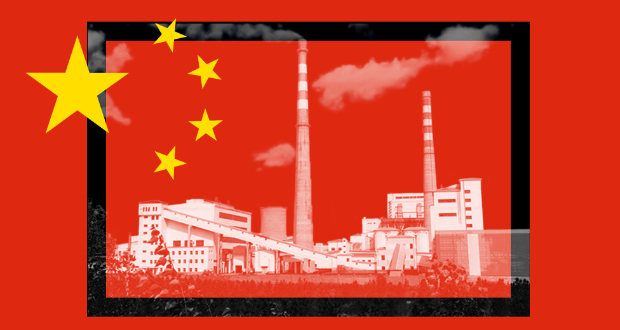
China's carbon emissions are vast and growing, dwarfing those of other countries. Experts agree that without big reductions in China's emissions, the world cannot win the fight against climate change. In 2020, China's President Xi Jinping said his country would aim for its emissions to reach their highest point before 2030 and for carbon neutrality before 2060. His statement has now been confirmed as China's official position ahead of the COP26 global climate summit in Glasgow. But China has not said exactly how these goals will be achieved.
Deliver on promises, developing world tells rich at climate talks

A crucial U.N. conference heard calls on its first day for the world's major economies to keep their promises of financial help to address the climate crisis, while big polluters India and Brazil made new commitments to cut emissions. World leaders, environmental experts and activists all pleaded for decisive action to halt the global warming which threatens the future of the planet at the start of the two-week COP26 summit in the Scottish city of Glasgow on Monday. The task facing negotiators was made even more daunting by the failure of the Group of 20 major industrial nations to agree ambitious new commitments at the weekend.