Inside Asia's arms race: China near 'breakthroughs' with nuclear-armed submarines, report says
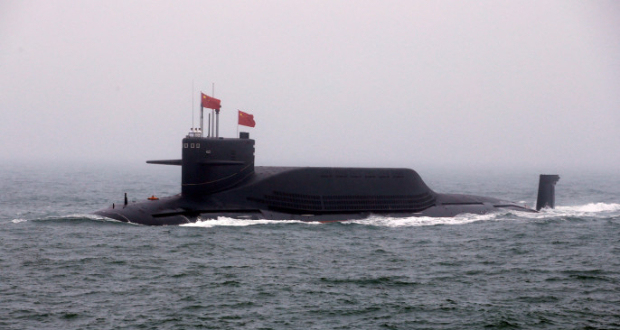
A submarine arms race is intensifying as China embarks on production of a new generation of nuclear-armed submarines that for the first time are expected to pose a challenge to growing US and allied efforts to track them.
Analysts and regional defence attaches say evidence is mounting that China is on track to have its Type 096 ballistic missile submarine operational before the end of the decade, with breakthroughs in its quietness aided in part by Russian technology.
Research discussed at a conference in May at the US Naval War College and published in August by the college's China Maritime Studies Institute predicts the new vessels will be far harder to keep tabs on. That conclusion is credible, according to seven analysts and three Asia-based military attaches.
"The Type 096s are going to be a nightmare," said retired submariner and naval technical intelligence analyst Christopher Carlson, one of the researchers. "They are going to be very, very hard to detect."
The discreet effort to track China's nuclear-powered and -armed ballistic missile submarines, known as SSBNs, is one of the core drivers of increased deployments and contingency planning by the US Navy and other militaries across the Indo-Pacific region. That drive is expected to intensify when Type 096s enter service.
The Chinese navy is routinely staging fully armed nuclear deterrence patrols with its older Type 094 boats out of Hainan Island in the South China Sea, the Pentagon said in November, much like patrols operated for years by the United States, Britain, Russia and France.
But the Type 094s, which carry China's most advanced submarine-launched JL-3 missile, are considered relatively noisy - a major handicap for military submarines.
The paper notes that the Type 096 submarine will compare to state-of-the-art Russian submarines in terms of stealth, sensors and weapons. It said that jump in capabilities would have "profound" implications for the US and its Indo-Pacific allies.
India targets net-zero carbon emissions by 2070, says Modi
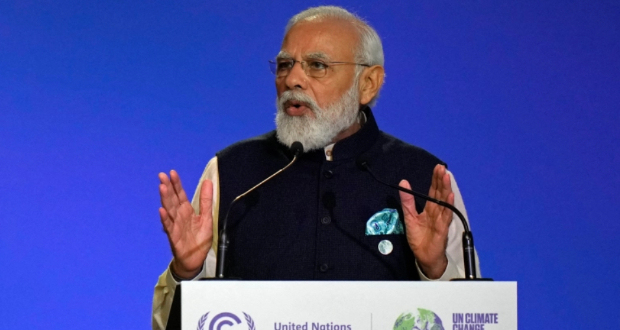
India’s economy will become carbon neutral by the year 2070, the country’s prime minster has announced at the COP26 climate crisis summit in Glasgow. The target date is two decades beyond what scientists say is needed to avert catastrophic climate impacts. India is the last of the world’s major carbon polluters to announce a net-zero target, with China saying it would reach that goal in 2060, and the United States and the European Union aiming for 2050.
COP26: What climate summit means for one woman in Bangladesh

China's carbon emissions are vast and growing, dwarfing those of other countries. Experts agree that without big reductions in China's emissions, the world cannot win the fight against climate change. In 2020, China's President Xi Jinping said his country would aim for its emissions to reach their highest point before 2030 and for carbon neutrality before 2060. His statement has now been confirmed as China's official position ahead of the COP26 global climate summit in Glasgow. But China has not said exactly how these goals will be achieved.
Why China's climate policy matters to us all
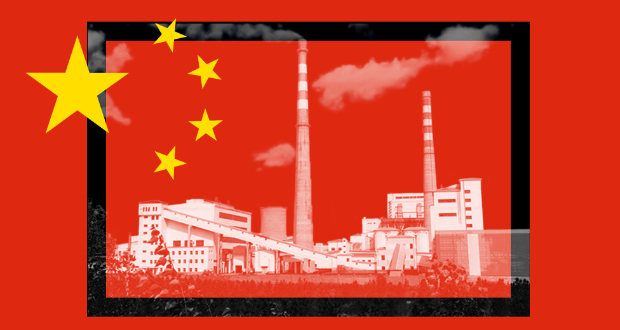
China's carbon emissions are vast and growing, dwarfing those of other countries. Experts agree that without big reductions in China's emissions, the world cannot win the fight against climate change. In 2020, China's President Xi Jinping said his country would aim for its emissions to reach their highest point before 2030 and for carbon neutrality before 2060. His statement has now been confirmed as China's official position ahead of the COP26 global climate summit in Glasgow. But China has not said exactly how these goals will be achieved.
Deliver on promises, developing world tells rich at climate talks

A crucial U.N. conference heard calls on its first day for the world's major economies to keep their promises of financial help to address the climate crisis, while big polluters India and Brazil made new commitments to cut emissions. World leaders, environmental experts and activists all pleaded for decisive action to halt the global warming which threatens the future of the planet at the start of the two-week COP26 summit in the Scottish city of Glasgow on Monday. The task facing negotiators was made even more daunting by the failure of the Group of 20 major industrial nations to agree ambitious new commitments at the weekend.