![Palestinians carry their possessions on their heads as they flee from a village in Galilee about five months after the creation of the state of Israel in 1948 [File: Reuters]](/Uploads/Images/News/2023/10/Image-1992-20231010063245.jpeg)
What’s the Israel-Palestine conflict about? A simple guide
The Israeli-Palestinian conflict has claimed tens of thousands of lives and displaced many millions of people and has its roots in a colonial act carried out more than a century ago.
With Israel declaring war on the Gaza Strip after an unprecedented attack by the armed Palestinian group Hamas on Saturday, the world’s eyes are again sharply focused on what might come next.
Hamas fighters have killed more than 800 Israelis in assaults on multiple towns in southern Israel. In response, Israel has launched a bombing campaign in the Gaza Strip, killing more than 500 Palestinians. It has mobilised troops along the Gaza border, apparently in preparation for a ground attack. And on Monday, it announced a “total blockade” of the Gaza Strip, stopping the supply of food, fuel and other essential commodities to the already besieged enclave in an act that under international law amounts to a war crime.
But what unfolds in the coming days and weeks has its seed in history.
For decades, Western media outlets, academics, military experts and world leaders have described the Israeli-Palestinian conflict as intractable, complicated and deadlocked.
Here’s a simple guide to break down one of the world’s longest-running conflicts:
What was the Balfour Declaration?
- More than 100 years ago, on November 2, 1917, Britain’s then-foreign secretary, Arthur Balfour, wrote a letter addressed to Lionel Walter Rothschild, a figurehead of the British Jewish community.
- The letter was short – just 67 words – but its contents had a seismic effect on Palestine that is still felt to this day.
- It committed the British government to “the establishment in Palestine of a national home for the Jewish people” and to facilitating “the achievement of this object”. The letter is known as the Balfour Declaration.
- In essence, a European power promised the Zionist movement a country where Palestinian Arab natives made up more than 90 percent of the population.
- A British Mandate was created in 1923 and lasted until 1948. During that period, the British facilitated mass Jewish immigration – many of the new residents were fleeing Nazism in Europe – and they also faced protests and strikes. Palestinians were alarmed by their country’s changing demographics and British confiscation of their lands to be handed over to Jewish settlers.
India targets net-zero carbon emissions by 2070, says Modi
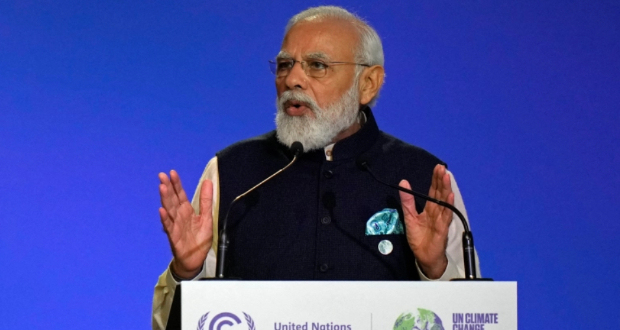
India’s economy will become carbon neutral by the year 2070, the country’s prime minster has announced at the COP26 climate crisis summit in Glasgow. The target date is two decades beyond what scientists say is needed to avert catastrophic climate impacts. India is the last of the world’s major carbon polluters to announce a net-zero target, with China saying it would reach that goal in 2060, and the United States and the European Union aiming for 2050.
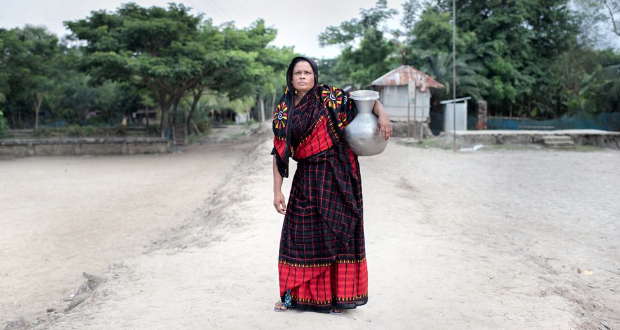
COP26: What climate summit means for one woman in Bangladesh
China's carbon emissions are vast and growing, dwarfing those of other countries. Experts agree that without big reductions in China's emissions, the world cannot win the fight against climate change. In 2020, China's President Xi Jinping said his country would aim for its emissions to reach their highest point before 2030 and for carbon neutrality before 2060. His statement has now been confirmed as China's official position ahead of the COP26 global climate summit in Glasgow. But China has not said exactly how these goals will be achieved.
Why China's climate policy matters to us all
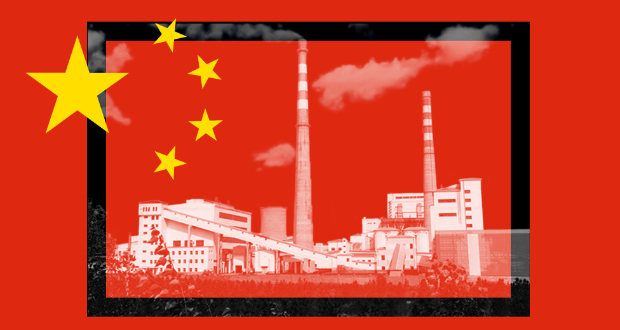
China's carbon emissions are vast and growing, dwarfing those of other countries. Experts agree that without big reductions in China's emissions, the world cannot win the fight against climate change. In 2020, China's President Xi Jinping said his country would aim for its emissions to reach their highest point before 2030 and for carbon neutrality before 2060. His statement has now been confirmed as China's official position ahead of the COP26 global climate summit in Glasgow. But China has not said exactly how these goals will be achieved.
Deliver on promises, developing world tells rich at climate talks

A crucial U.N. conference heard calls on its first day for the world's major economies to keep their promises of financial help to address the climate crisis, while big polluters India and Brazil made new commitments to cut emissions. World leaders, environmental experts and activists all pleaded for decisive action to halt the global warming which threatens the future of the planet at the start of the two-week COP26 summit in the Scottish city of Glasgow on Monday. The task facing negotiators was made even more daunting by the failure of the Group of 20 major industrial nations to agree ambitious new commitments at the weekend.