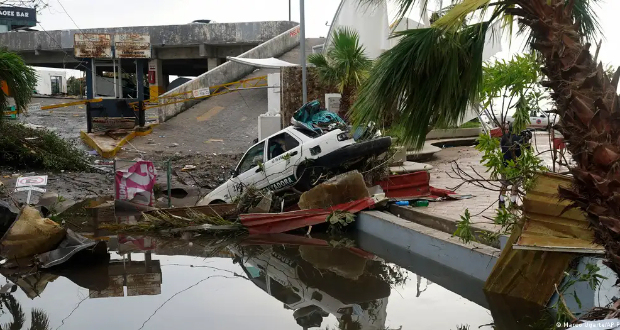
Climate adaptation funds woefully inadequate, says UN
With human-induced global heating blamed for more severe heatwaves, storms and floods in recent months, a report by the United Nations Environment Programme (UNEP) highlights an urgent need to fund adaptation measures that build resilience to climate extremes.
The research points out that critical investment actually declined in 2021, with the number of new adaptation projects stagnating for a decade as climate impacts worsen.
While the UNEP report partly attributes this retreat to external circumstances such as the COVID pandemic and the economic impacts of Russia's invasion of Ukraine, the adaptation finance gap has nonetheless grown to between $194 billion (€183 billion) and $366 billion a year.
Meanwhile, the adaptation finance needs of climate vulnerable developing countries are 10-18 times above what they are currently receiving, notes "Adaptation Gap Report 2023: Underfinanced. Underprepared".
This adaptation gap is 50% greater than assumed before the study research began.
"This is a hugely worrying deceleration," wrote Inger Andersen, executive director of UNEP, in a report foreward.
"We are in an adaptation emergency. We must act like it. And take steps to close the adaptation gap, now," said UN Secretary-General António Guterres in his message on the report.
Adaptation funding can make a big difference if committed now, say the authors.
If an annual $16 billion were invested in making agriculture more resilient to heat and drought, through better water management or reforestation programs for example, it would prevent some 78 million people from starving or suffering chronic hunger, notes UNEP.
India targets net-zero carbon emissions by 2070, says Modi
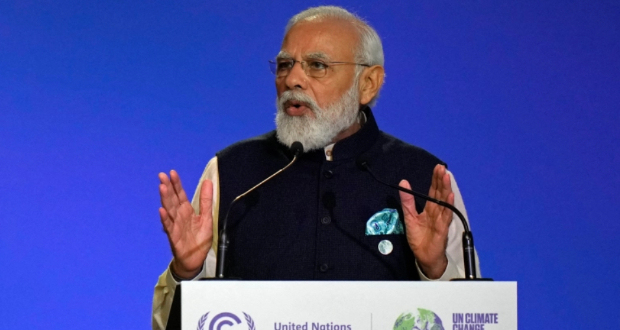
India’s economy will become carbon neutral by the year 2070, the country’s prime minster has announced at the COP26 climate crisis summit in Glasgow. The target date is two decades beyond what scientists say is needed to avert catastrophic climate impacts. India is the last of the world’s major carbon polluters to announce a net-zero target, with China saying it would reach that goal in 2060, and the United States and the European Union aiming for 2050.
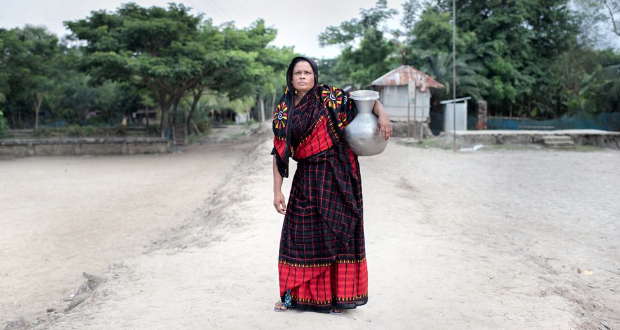
COP26: What climate summit means for one woman in Bangladesh
China's carbon emissions are vast and growing, dwarfing those of other countries. Experts agree that without big reductions in China's emissions, the world cannot win the fight against climate change. In 2020, China's President Xi Jinping said his country would aim for its emissions to reach their highest point before 2030 and for carbon neutrality before 2060. His statement has now been confirmed as China's official position ahead of the COP26 global climate summit in Glasgow. But China has not said exactly how these goals will be achieved.
Why China's climate policy matters to us all
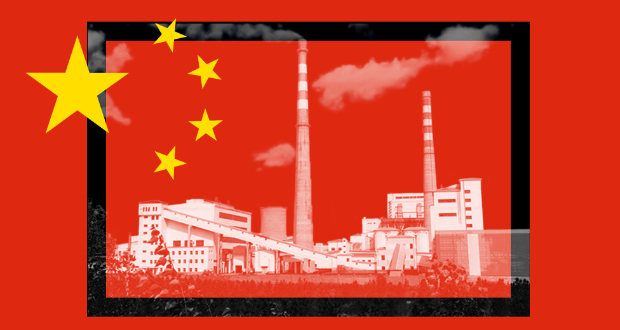
China's carbon emissions are vast and growing, dwarfing those of other countries. Experts agree that without big reductions in China's emissions, the world cannot win the fight against climate change. In 2020, China's President Xi Jinping said his country would aim for its emissions to reach their highest point before 2030 and for carbon neutrality before 2060. His statement has now been confirmed as China's official position ahead of the COP26 global climate summit in Glasgow. But China has not said exactly how these goals will be achieved.
Deliver on promises, developing world tells rich at climate talks

A crucial U.N. conference heard calls on its first day for the world's major economies to keep their promises of financial help to address the climate crisis, while big polluters India and Brazil made new commitments to cut emissions. World leaders, environmental experts and activists all pleaded for decisive action to halt the global warming which threatens the future of the planet at the start of the two-week COP26 summit in the Scottish city of Glasgow on Monday. The task facing negotiators was made even more daunting by the failure of the Group of 20 major industrial nations to agree ambitious new commitments at the weekend.