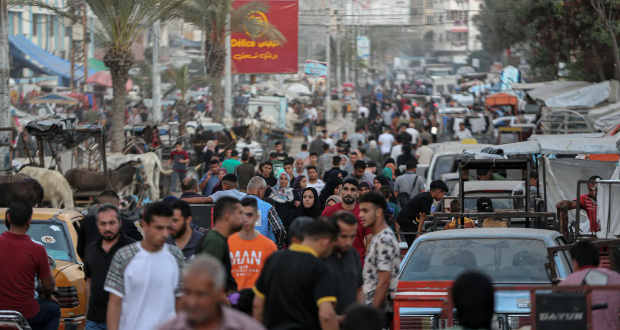
Risk of a Wider Middle East War Threatens a ‘Fragile’ World Economy
Fears that Israel’s expanding military operations in Gaza could escalate into a regional conflict are clouding the global economy’s outlook, threatening to dampen growth and reignite a rise in energy and food prices.
Rich and poor nations were just beginning to catch their breath after a three-year string of economic shocks that included the Covid-19 pandemic and Russia’s invasion of Ukraine. Stinging inflation has been dropping, oil prices have stabilized and predicted recessions have been avoided.
Now, some leading international financial institutions and private investors warn that the fragile recovery could turn bad.
“This is the first time that we’ve had two energy shocks at the same time,” said Indermit Gill, chief economist at the World Bank, referring to the impact of the wars in Ukraine and the Middle East on oil and gas prices.
Those price increases not only chip away at the buying power of families and companies but also push up the cost of food production, adding to high levels of food insecurity, particularly in developing countries like Egypt, Pakistan and Sri Lanka.
As it is, nations are already struggling with unusually high levels of debt, limp private investment and the slowest recovery in trade in five decades, making it tougher for them to grow their way out of the crisis. Higher interest rates, the result of central bank efforts to tame inflation, have made it more difficult for governments and private companies to get access to credit and stave off default.

“All of these things are happening all at the same time,” Mr. Gill said. “We are in one of the most fragile junctures for the world economy.”
India targets net-zero carbon emissions by 2070, says Modi
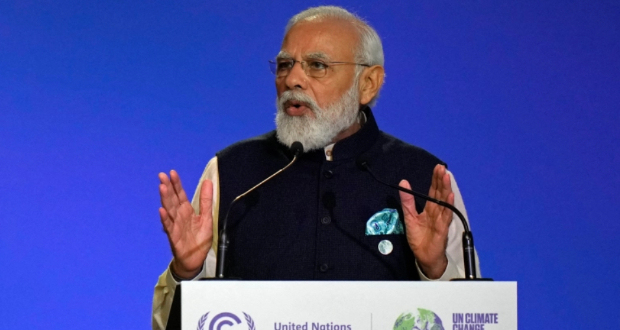
India’s economy will become carbon neutral by the year 2070, the country’s prime minster has announced at the COP26 climate crisis summit in Glasgow. The target date is two decades beyond what scientists say is needed to avert catastrophic climate impacts. India is the last of the world’s major carbon polluters to announce a net-zero target, with China saying it would reach that goal in 2060, and the United States and the European Union aiming for 2050.
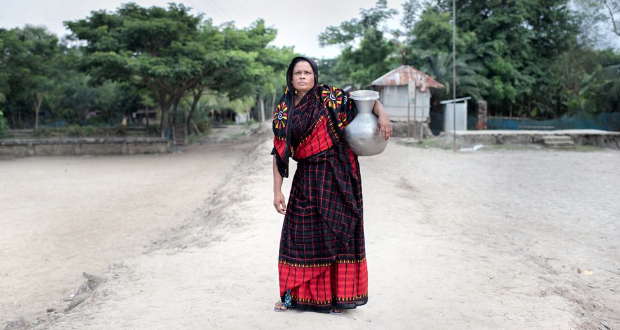
COP26: What climate summit means for one woman in Bangladesh
China's carbon emissions are vast and growing, dwarfing those of other countries. Experts agree that without big reductions in China's emissions, the world cannot win the fight against climate change. In 2020, China's President Xi Jinping said his country would aim for its emissions to reach their highest point before 2030 and for carbon neutrality before 2060. His statement has now been confirmed as China's official position ahead of the COP26 global climate summit in Glasgow. But China has not said exactly how these goals will be achieved.
Why China's climate policy matters to us all
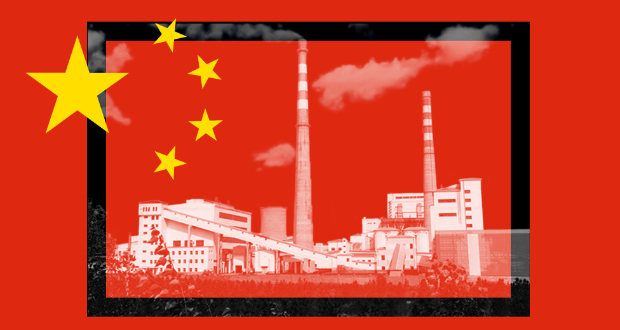
China's carbon emissions are vast and growing, dwarfing those of other countries. Experts agree that without big reductions in China's emissions, the world cannot win the fight against climate change. In 2020, China's President Xi Jinping said his country would aim for its emissions to reach their highest point before 2030 and for carbon neutrality before 2060. His statement has now been confirmed as China's official position ahead of the COP26 global climate summit in Glasgow. But China has not said exactly how these goals will be achieved.
Deliver on promises, developing world tells rich at climate talks

A crucial U.N. conference heard calls on its first day for the world's major economies to keep their promises of financial help to address the climate crisis, while big polluters India and Brazil made new commitments to cut emissions. World leaders, environmental experts and activists all pleaded for decisive action to halt the global warming which threatens the future of the planet at the start of the two-week COP26 summit in the Scottish city of Glasgow on Monday. The task facing negotiators was made even more daunting by the failure of the Group of 20 major industrial nations to agree ambitious new commitments at the weekend.