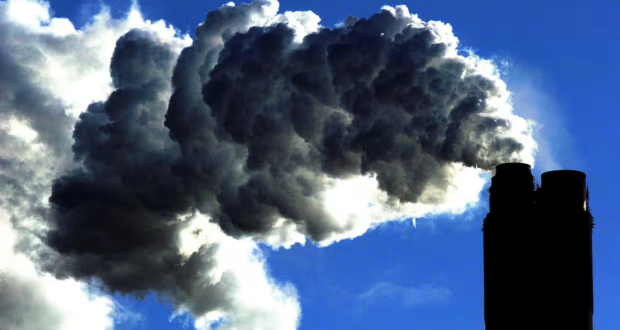
What is the UAE Cop28 plan of climate action?
Sultan Al Jaber, president of the Cop28 UN climate summit to be held this November in the United Arab Emirates, has laid out his long-awaited plan of action at a meeting of governments in Brussels.
The plan covers all the main aspects of climate action, based on the 2015 Paris agreement, now divided into what Al Jaber termed the four pillars, or four Fs: fast-tracking the transition to a low-CO2 world; fixing climate finance; focusing on people, lives and livelihoods; and full inclusivity.
The Cop president’s plan was broadly welcomed by experts and civil society on Thursday. Harjeet Singh of the Climate Action Network said: “[It] sends the right signals about the key elements required for a successful climate summit. [But] while the broad contours are positive, the devil will be in the details.”
Here is a breakdown of the details.
The 1.5C goal
The Paris agreement required countries to hold global temperature rises “well below 2C” above pre-industrial levels, while “pursuing efforts” to stay within 1.5C. Since 2015, science has shown that 2C would entail calamitous impacts, so at Cop26 in 2021 governments agreed to focus on the more stringent goal of 1.5C.
Last year, some governments tried to unpick that commitment to 1.5C, so Al Jaber made clear from the outset that his plan was based on the tougher, and safer, goal. “This plan is guided by a single north star, and that is keeping 1.5C within reach,” he told ministers.
Kate Hampton, chief executive of the Children’s Investment Fund Foundation, who worked unpaid on the plan, said: “The commitment to 1.5C is particularly important – the presidency has recognised it is time to accelerate the essential and inevitable end for fossil fuels. The challenge now for the presidency is to ensure delivery across a comprehensive agenda, which can only be achieved with a transformational plan for mobilising finance.”
National plans
At Cop28, governments will conduct for the first time a “global stocktake” that will set out the progress countries have made on the emissions reduction commitments – known as “nationally determined contributions” or NDCs – they made in Paris.
The stocktake is certain to find that the world is way off track to meet its Paris goals, but the Cop presidency has decided against naming and shaming individual countries. Instead, all countries will be required to submit updated NDCs in September, that are sufficiently tough to meet the 1.5 goal.
UAE has submitted a revision to its NDC, with emissions reductions of 40% compared with business as usual.
Phase out or phase down?
Al Jaber emphasised that this effort would entail “the phase down of fossil fuels”, which he said was “inevitable and essential”.
The wording is significant. Al Jaber was heavily criticised two months ago for repeatedly referring to the “phase out of fossil fuel emissions”, which observers took to mean that oil and gas companies could carry on extracting fossil fuels as long as the resulting carbon dioxide was somehow captured. But scientists have warned against using carbon capture and storage technology (CCS) as a “free lunch” to excuse continued extraction.
The phrasing “phase down” will also disappoint campaigners and the 80-plus countries who want Cop28 to pass a commitment to phasing out fossil fuels entirely.
Clean energy
Commitments to double energy efficiency, triple renewable energy capacity to 11,000GW globally, and double hydrogen production to 180m tonnes a year by 2030 will be put to governments at Cop28, and are expected to be agreed.
Romain Ioualalen, global policy lead at Oil Change International, said: “Recent history has shown that more renewable energy does not automatically translate into less fossil fuels. Cop28 will only be a success if its presidency sets aside the interests of the oil and gas industry and facilitates a clear outcome on the need for a decline of all fossil fuel production and use, as well as a rapid phase-in of wind and solar. The only way we’ll build a new energy system that is both clean and fair is by actively phasing out the old.”
India targets net-zero carbon emissions by 2070, says Modi
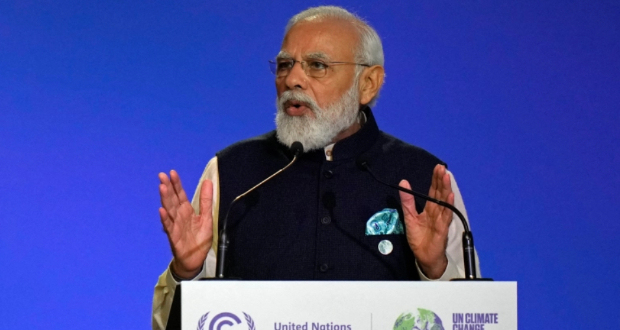
India’s economy will become carbon neutral by the year 2070, the country’s prime minster has announced at the COP26 climate crisis summit in Glasgow. The target date is two decades beyond what scientists say is needed to avert catastrophic climate impacts. India is the last of the world’s major carbon polluters to announce a net-zero target, with China saying it would reach that goal in 2060, and the United States and the European Union aiming for 2050.
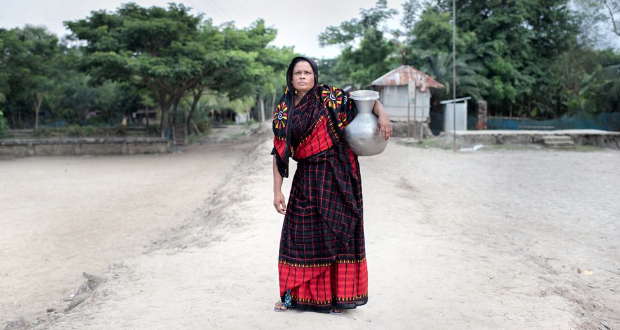
COP26: What climate summit means for one woman in Bangladesh
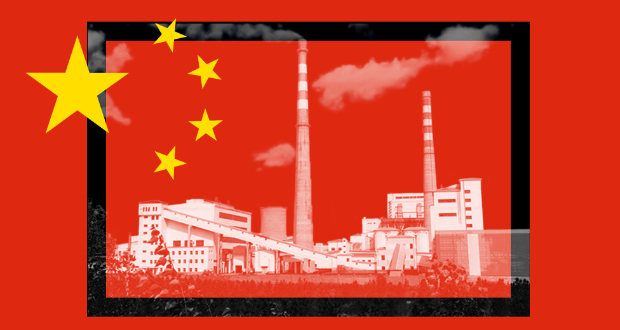
China's carbon emissions are vast and growing, dwarfing those of other countries. Experts agree that without big reductions in China's emissions, the world cannot win the fight against climate change. In 2020, China's President Xi Jinping said his country would aim for its emissions to reach their highest point before 2030 and for carbon neutrality before 2060. His statement has now been confirmed as China's official position ahead of the COP26 global climate summit in Glasgow. But China has not said exactly how these goals will be achieved.
Why China's climate policy matters to us all
China's carbon emissions are vast and growing, dwarfing those of other countries. Experts agree that without big reductions in China's emissions, the world cannot win the fight against climate change. In 2020, China's President Xi Jinping said his country would aim for its emissions to reach their highest point before 2030 and for carbon neutrality before 2060. His statement has now been confirmed as China's official position ahead of the COP26 global climate summit in Glasgow. But China has not said exactly how these goals will be achieved.
Deliver on promises, developing world tells rich at climate talks

A crucial U.N. conference heard calls on its first day for the world's major economies to keep their promises of financial help to address the climate crisis, while big polluters India and Brazil made new commitments to cut emissions. World leaders, environmental experts and activists all pleaded for decisive action to halt the global warming which threatens the future of the planet at the start of the two-week COP26 summit in the Scottish city of Glasgow on Monday. The task facing negotiators was made even more daunting by the failure of the Group of 20 major industrial nations to agree ambitious new commitments at the weekend.