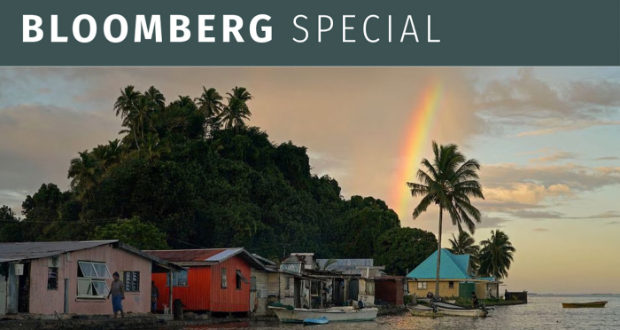
Climate negotiators reach framework to aid vulnerable countries
Global climate negotiators reached a framework for a fund to help vulnerable nations deal with loss and damage from increasingly extreme weather, though the breakthrough was marred by sparring over exactly how the program would be funded.
Delegates meeting in Abu Dhabi agreed late Saturday that the World Bank will host a new Loss and Damage Fund on an interim basis for four years — breaking an impasse after months of negotiations. They also set basic guideposts for funding, with developed countries urged to provide support. The discussion next heads to the United Nations climate change summit known as COP28, which starts in Dubai later this month.
"Billions of people, lives and livelihoods who are vulnerable to the effects of climate change depend upon the adoption of this recommended approach," said Sultan Al Jaber, the president-designate of COP28. The document is "clear and strong" and "paves the way for agreement," he said.
The Business Standard Google News Keep updated, follow The Business Standard's Google news channel
Human rights activists and representatives from poorer nations said they were disappointed to leave without a commitment for an immediate and significant infusion of money, and tensions now threaten to spill over into the broader climate talks. Even as the pact was reached, the lead US representative objected it didn't reflect consensus.
Poor nations had sought specific language making clear the burden for funding falls on wealthy nations that built their economies by burning fossil fuels — and have released the bulk of greenhouse gases in the atmosphere today. Vulnerable nations had been reluctant to situate the fund within the World Bank amid concerns it will sufficiently prioritize climate action.
The committee "delivered on its mandate, but it was the furthest thing imaginable from a success," said Brandon Wu, director of policy and campaigns at ActionAid USA. "Developing countries showed massive flexibility, giving concessions from the very beginning," but developed nations "simply dug in their heels."
The final language doesn't demand immediate capitalization of the fund and doesn't indicate the intended scale of those contributions, said Harjeet Singh, head of global political strategy at Climate Action Network-International.
"We are only looking at an empty bank account," Singh said in an interview. "It doesn't go far enough to support communities who are facing climate emergencies now" and address needs that "are already running into hundreds of billions of dollars."
Human rights activists blamed the US and other developed nations for fighting language that would specify rich, historic polluters have an obligation to pay into the fund.
Still Developing
Sparring over where to house the fund "distracted from the actual task at hand" and ensuring a fund "that would provide effective remedy for communities suffering harms from the climate crisis," said Lien Vandamme, a senior campaigner for the Center for Environmental Law.
China and Saudi Arabia had also been loathe to pay into such a fund, contending they were still developing and that countries responsible for the bulk of historical emissions should finance the initiative.
Avinash Persaud, the climate envoy to Barbados Prime Minister Mia Mottley, said the island nation has reservations about the agreement he said posed "mutual discomfort" and was a "difficult and challenging outcome." But he stressed it nevertheless represents "a positive step forward."
"Failure would definitely have cast a long shadow over COP," Persaud said in a phone interview.
The US successfully pushed for language making clear the fund can receive money from a wide variety of sources — keeping the door open to revenue from carbon pricing mechanisms and philanthropic donations — after arguing no single government has enough resources to deliver what's needed. But the US lost its bid for language that would have made clear contributions are purely voluntary.
The text doesn't reflect consensus concerning the need for clarity on the voluntary nature of contributions, a US State Department official said.
The fund is one of the most politically divisive issues facing the COP28 summit, and countries may adopt the framework or push to reopen the text for further changes. Developing nations were initially opposed to the World Bank hosting the facility amid a lack of confidence that the institution had shifted sufficiently to spur climate action.
World Bank poised to host climate loss and damage fund, despite concerns
Countries moved a step closer on Saturday to getting a fund off the ground to help poor states damaged by climate disasters, despite reservations from developing nations and the United States.
The deal to create a "loss and damage" fund was hailed as a breakthrough for developing country negotiators at United Nations climate talks in Egypt last year, overcoming years of resistance from wealthy nations.
But in the past 11 months, governments have struggled to reach consensus on the details of the fund, such as who will pay and where the fund will be located.
A special UN committee tasked with implementing the fund met for a fifth time in Abu Dhabi this week - following a deadlock in Egypt last month - to finalise recommendations that will be put to governments when they meet for the annual climate summit COP28 in Dubai in less than four weeks' time. The goal is to get the fund up and running by 2024.
To get all countries on board, it was agreed the World Bank would serve as interim trustee and host of the fund for a four-year period.
Jennifer Morgan, Germany's special climate envoy, said in a post on X that Berlin "stands ready to fulfil its responsibility - we're actively working towards contributing to the new fund and assessing options for more structural sources of financing".
Others were less optimistic.
"It is a sombre day for climate justice, as rich countries turn their backs on vulnerable communities," said Harjeet Singh, head of global political strategy at nonprofit Climate Action Network International.
"Rich countries ... have not only coerced developing nations into accepting the World Bank as the host of the Loss and Damage Fund but have also evaded their duty to lead in providing financial assistance to those communities and countries."
India targets net-zero carbon emissions by 2070, says Modi
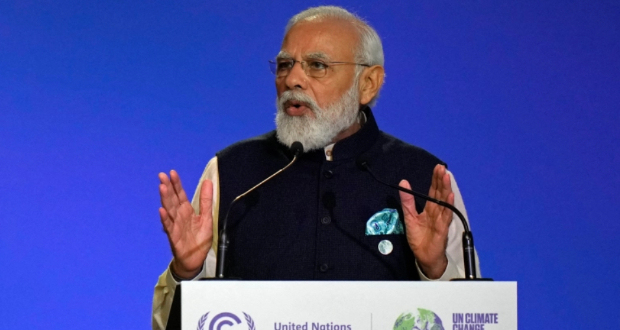
India’s economy will become carbon neutral by the year 2070, the country’s prime minster has announced at the COP26 climate crisis summit in Glasgow. The target date is two decades beyond what scientists say is needed to avert catastrophic climate impacts. India is the last of the world’s major carbon polluters to announce a net-zero target, with China saying it would reach that goal in 2060, and the United States and the European Union aiming for 2050.
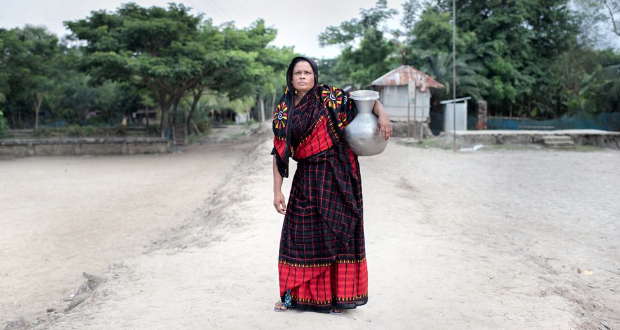
COP26: What climate summit means for one woman in Bangladesh
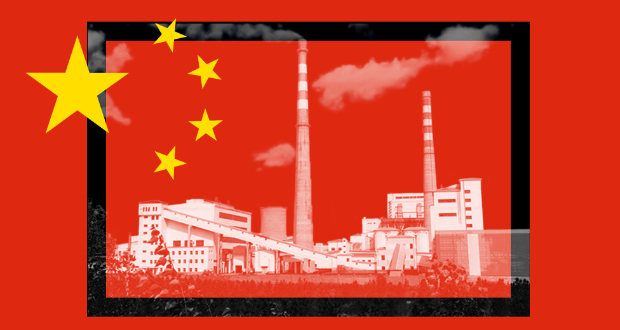
China's carbon emissions are vast and growing, dwarfing those of other countries. Experts agree that without big reductions in China's emissions, the world cannot win the fight against climate change. In 2020, China's President Xi Jinping said his country would aim for its emissions to reach their highest point before 2030 and for carbon neutrality before 2060. His statement has now been confirmed as China's official position ahead of the COP26 global climate summit in Glasgow. But China has not said exactly how these goals will be achieved.
Why China's climate policy matters to us all
China's carbon emissions are vast and growing, dwarfing those of other countries. Experts agree that without big reductions in China's emissions, the world cannot win the fight against climate change. In 2020, China's President Xi Jinping said his country would aim for its emissions to reach their highest point before 2030 and for carbon neutrality before 2060. His statement has now been confirmed as China's official position ahead of the COP26 global climate summit in Glasgow. But China has not said exactly how these goals will be achieved.
Deliver on promises, developing world tells rich at climate talks

A crucial U.N. conference heard calls on its first day for the world's major economies to keep their promises of financial help to address the climate crisis, while big polluters India and Brazil made new commitments to cut emissions. World leaders, environmental experts and activists all pleaded for decisive action to halt the global warming which threatens the future of the planet at the start of the two-week COP26 summit in the Scottish city of Glasgow on Monday. The task facing negotiators was made even more daunting by the failure of the Group of 20 major industrial nations to agree ambitious new commitments at the weekend.