Myanmar junta's war against rebels displaces millions: UN
The United Nations Secretary-General Antonio Guterres has expressed his deep concern over the escalating conflict in Myanmar.
According to the UN, the number of people displaced by the fighting has reached two million, and the secretary-general appealed to all sides to protect non-combatants and open access for humanitarian aid.
The striking success of an alliance of three ethnic armed groups in Shan State in driving the army and police out of large areas along the border with China has emboldened other opposition forces around Myanmar.
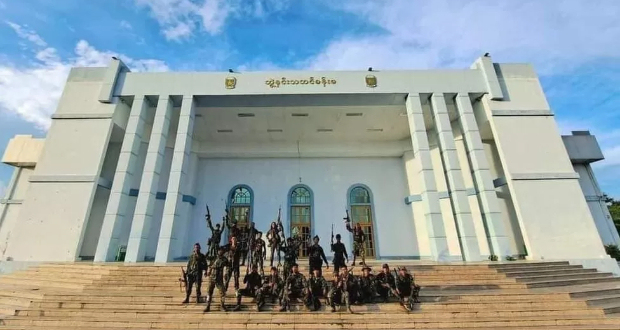
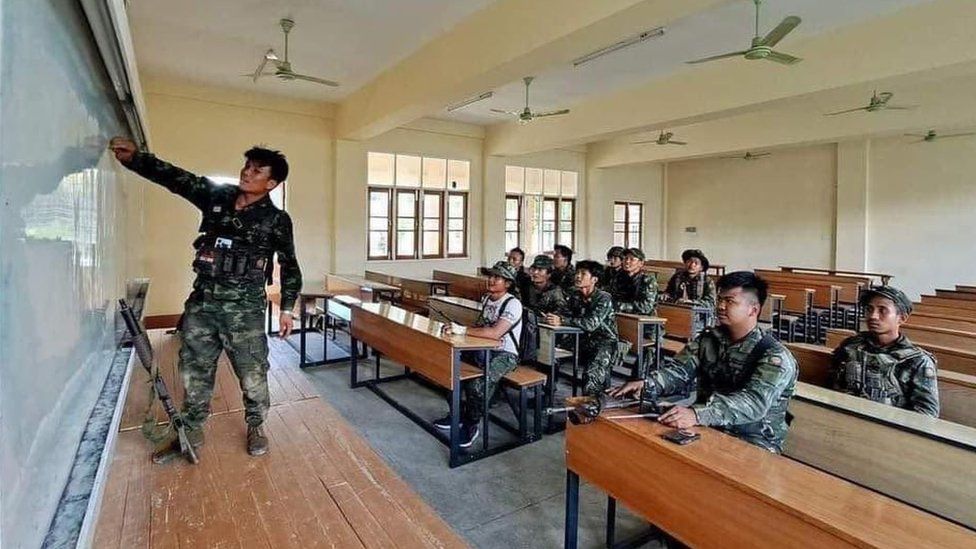
In Kayah State, south of Shan State along the border with Thailand, ethnic Karenni insurgents, who already control much of the state, are attacking the main town of Loikaw and have already captured the university on its outskirts.
Volunteer People's Defence Forces (PDFs) - the militias formed by local activists after the suppression of peaceful protest back in 2021 - have launched their own attacks to take advantage of the military's setbacks in Shan State and keep up the pressure on the ruling junta.
PDFs are less experienced and more poorly armed than the established ethnic armies, but their capabilities are improving, and they often ally themselves with the more experienced ethnic soldiers, who have been fighting the central government for decades.
In Sagaing, where PDFs in the villages have been waging a desperate struggle against the military, they have recently taken the town of Kawlin, and are attacking the strategically important town of Tigyaing on the Irrawaddy River. PDFs are very active around Myanmar's second-largest city of Mandalay.
The junta has also lost control of much of the border with India. Ethnic Chin insurgents dominate their own state, and recently captured the border town of Rikhawdar.
Further south, the Arakan Army, one of the best-armed of the ethnic insurgent groups, has ended its ceasefire and begun attacking army and police posts there.
Another large ethnic force, the Karen National Union in south-eastern Myanmar, is also stepping up operations against military positions along the vital trade route to the Thai border. There are now even regular attacks on the army in Tanintharyi, the southernmost state.
All these armed groups are outgunned by a military equipped with Russian and Chinese-made aircraft, helicopters and heavy weapons, like multiple rocket launchers. But the greatly-expanded scale of the armed resistance has left Myanmar's military rulers badly over-stretched.
The air force, for example, has around 40 transport helicopters, but not all are in service. There is not the capacity to move troops around the country to concentrate them in the latest trouble spot.
India targets net-zero carbon emissions by 2070, says Modi
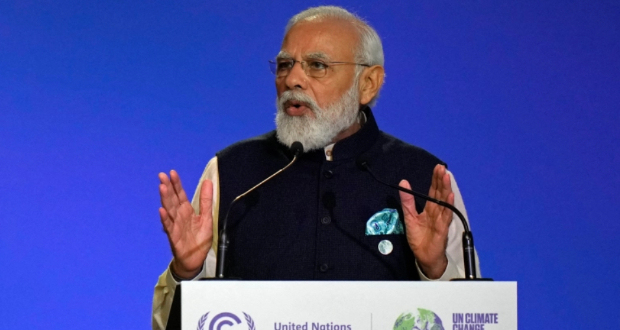
India’s economy will become carbon neutral by the year 2070, the country’s prime minster has announced at the COP26 climate crisis summit in Glasgow. The target date is two decades beyond what scientists say is needed to avert catastrophic climate impacts. India is the last of the world’s major carbon polluters to announce a net-zero target, with China saying it would reach that goal in 2060, and the United States and the European Union aiming for 2050.
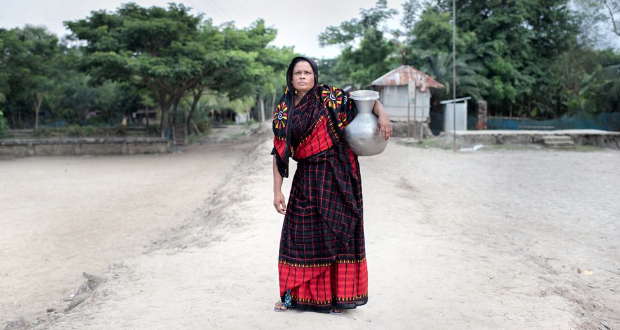
COP26: What climate summit means for one woman in Bangladesh
China's carbon emissions are vast and growing, dwarfing those of other countries. Experts agree that without big reductions in China's emissions, the world cannot win the fight against climate change. In 2020, China's President Xi Jinping said his country would aim for its emissions to reach their highest point before 2030 and for carbon neutrality before 2060. His statement has now been confirmed as China's official position ahead of the COP26 global climate summit in Glasgow. But China has not said exactly how these goals will be achieved.
Why China's climate policy matters to us all
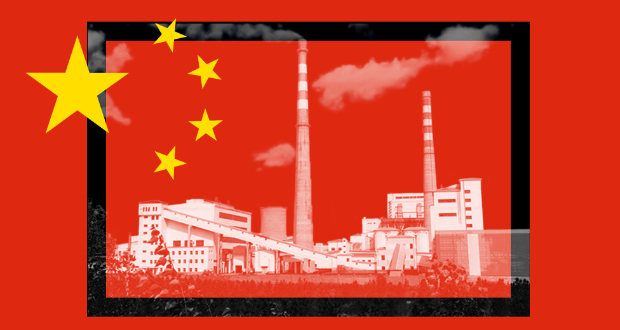
China's carbon emissions are vast and growing, dwarfing those of other countries. Experts agree that without big reductions in China's emissions, the world cannot win the fight against climate change. In 2020, China's President Xi Jinping said his country would aim for its emissions to reach their highest point before 2030 and for carbon neutrality before 2060. His statement has now been confirmed as China's official position ahead of the COP26 global climate summit in Glasgow. But China has not said exactly how these goals will be achieved.
Deliver on promises, developing world tells rich at climate talks

A crucial U.N. conference heard calls on its first day for the world's major economies to keep their promises of financial help to address the climate crisis, while big polluters India and Brazil made new commitments to cut emissions. World leaders, environmental experts and activists all pleaded for decisive action to halt the global warming which threatens the future of the planet at the start of the two-week COP26 summit in the Scottish city of Glasgow on Monday. The task facing negotiators was made even more daunting by the failure of the Group of 20 major industrial nations to agree ambitious new commitments at the weekend.