![A supporter of Niger's National Concil for the Safeguard of the Homeland (CNSP) holds a placard of Niger's new military ruler, General Abdourahamane Tchiani, as they gather at Place de la Concertation in Niamey on August 20, 2023 [AFP]](/Uploads/Images/News/2023/11/Image-2088-20231122125259.jpeg)
Niger government asks court to force ECOWAS to lift coup sanctions
Niger’s military government on Tuesday asked West Africa’s regional court to order the lifting of sanctions imposed on the country by its neighbours following a July coup that deposed elected president Mohamed Bazoum.
“There is no sector of the Nigerien society that has not been affected by these sanctions” which have caused in one of the world’s poorest countries, Younkaila Yaye, one of the government’s lawyers, argued at the hearing in Abuja, Nigeria’s capital.
After a group of soldiers calling itself the National Council for the Safeguard of the Homeland (CNSP) toppled Bazoum, a raft of economic sanctions were imposed by the Economic Community of West African States (ECOWAS). Other countries, including the United States, that had provided aid for health, security and infrastructure needs, also suspended their support.
Until the coup, aid accounted for almost half of Niger’s annual budget. Niger’s neighbours also closed their borders to the country, and more than 70 percent of its electricity, supplied by Nigeria, was cut off. Financial transactions with West African countries were suspended. Niger’s assets in external banks were frozen, and hundreds of millions of dollars in aid were withheld.
The sanctions were the most stringent yet imposed by the regional bloc in an effort to stem the tide of coups in the Sahel. But they have had little or no impact on the ambition of the government, which has consolidated its hold on power while millions in Niger face growing hardship.
At the hearing, the government’s lawyers described the ways the sanctions are hurting Niger: Children are unable to return to school because of limited supplies. Drug stores are running out of supplies. Businesses are shutting down because of rising costs.
India targets net-zero carbon emissions by 2070, says Modi
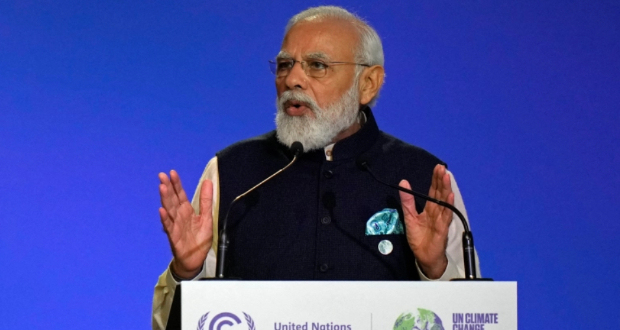
India’s economy will become carbon neutral by the year 2070, the country’s prime minster has announced at the COP26 climate crisis summit in Glasgow. The target date is two decades beyond what scientists say is needed to avert catastrophic climate impacts. India is the last of the world’s major carbon polluters to announce a net-zero target, with China saying it would reach that goal in 2060, and the United States and the European Union aiming for 2050.
COP26: What climate summit means for one woman in Bangladesh
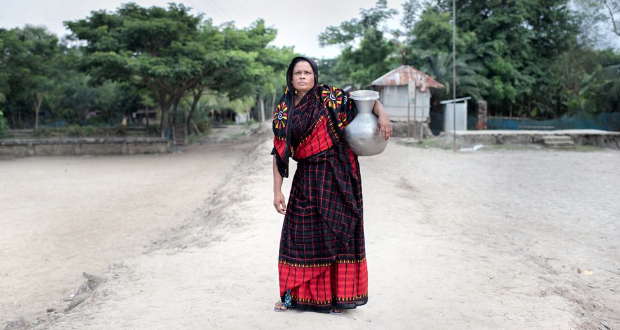
China's carbon emissions are vast and growing, dwarfing those of other countries. Experts agree that without big reductions in China's emissions, the world cannot win the fight against climate change. In 2020, China's President Xi Jinping said his country would aim for its emissions to reach their highest point before 2030 and for carbon neutrality before 2060. His statement has now been confirmed as China's official position ahead of the COP26 global climate summit in Glasgow. But China has not said exactly how these goals will be achieved.
Why China's climate policy matters to us all
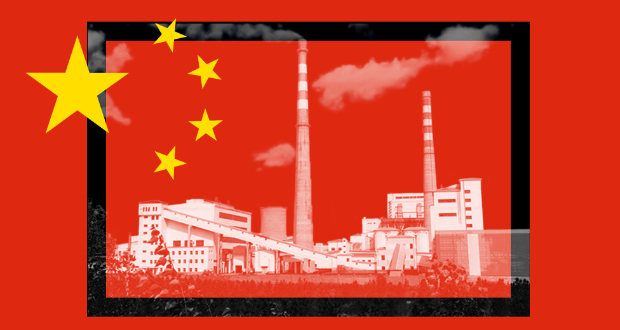
China's carbon emissions are vast and growing, dwarfing those of other countries. Experts agree that without big reductions in China's emissions, the world cannot win the fight against climate change. In 2020, China's President Xi Jinping said his country would aim for its emissions to reach their highest point before 2030 and for carbon neutrality before 2060. His statement has now been confirmed as China's official position ahead of the COP26 global climate summit in Glasgow. But China has not said exactly how these goals will be achieved.
Deliver on promises, developing world tells rich at climate talks

A crucial U.N. conference heard calls on its first day for the world's major economies to keep their promises of financial help to address the climate crisis, while big polluters India and Brazil made new commitments to cut emissions. World leaders, environmental experts and activists all pleaded for decisive action to halt the global warming which threatens the future of the planet at the start of the two-week COP26 summit in the Scottish city of Glasgow on Monday. The task facing negotiators was made even more daunting by the failure of the Group of 20 major industrial nations to agree ambitious new commitments at the weekend.