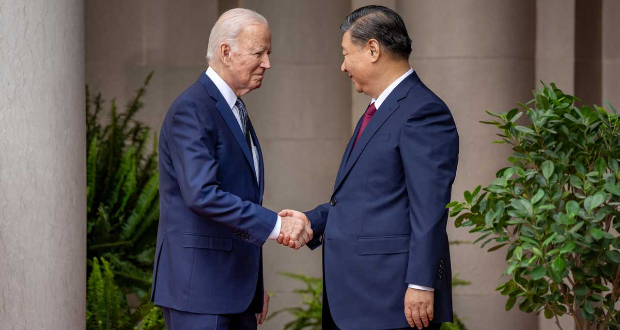
Biden-Xi summit: No significant breakthrough in San Francisco
The Biden-Xi summit sends a signal to Russia too. Russia’s relations with the US are at an impasse, but China, while joining hands with Russia to counter US hegemony, is also seeking engagement with the US. In the China-Russia-US triangle, China is giving itself more flexible diplomatic options, notes Kanwal Sibal, a former Indian Foreign Secretary, India’s Ambassador to Turkey, Egypt, France and Russia.
The Joe Biden-Xi Jinping meeting in San Francisco on the occasion of the APEC summit did not signify any meaningful breakthrough in their increasingly adversarial relationship. To alter the dynamics behind the deterioration of their ties, a redefinition of their interests and policies is needed. This is not on the cards.
The US sees China as a rival, the only real one that can counter US global power, politically, economically and technologically. If the Chinese political and economic system was compatible with that of the West and China was seen as willing to become a part of the West-dominated global system without challenging it as it became more powerful itself, its rise would not have been considered threatening the way it is today. In fact, this was the US expectation when China was admitted to the WTO, the West made massive investments in China and gave access to its advanced technology.
At his meeting with Xi, Biden, according to the White House readout, registered the various US concerns about China and was unapologetic about the steps taken to redress the balance in America’s favour. He made it clear that the two countries were in competition but that the US would want to manage this competition responsibly in order to prevent conflict and avoid confrontation. This nuances the earlier enunciation of US policy towards China which laid out that the US will compete, cooperate, and where necessary, confront China.
Biden made it plain that the US will invest in sources of strength at home and align with allies and partners. Not that China is not aware of this, but the point in emphasising this was to draw limits to the engagement that the US seeks with China. With this in view, Biden reaffirmed support for a free and open Indo-Pacific, peace and stability in the South China Sea and the East China Sea, and freedom of navigation and overflight. He underlined America’s iron-clad commitment to defending its allies, which was a signal also to its allies that this US overture towards China would not be at the cost of its commitment to its allies. On the very sensitive issue of Taiwan, he warned against any unilateral change of status quo in Taiwan and called for Chinese restraint.
India targets net-zero carbon emissions by 2070, says Modi
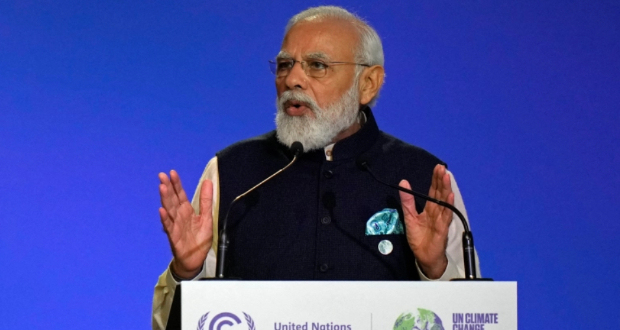
India’s economy will become carbon neutral by the year 2070, the country’s prime minster has announced at the COP26 climate crisis summit in Glasgow. The target date is two decades beyond what scientists say is needed to avert catastrophic climate impacts. India is the last of the world’s major carbon polluters to announce a net-zero target, with China saying it would reach that goal in 2060, and the United States and the European Union aiming for 2050.
COP26: What climate summit means for one woman in Bangladesh

China's carbon emissions are vast and growing, dwarfing those of other countries. Experts agree that without big reductions in China's emissions, the world cannot win the fight against climate change. In 2020, China's President Xi Jinping said his country would aim for its emissions to reach their highest point before 2030 and for carbon neutrality before 2060. His statement has now been confirmed as China's official position ahead of the COP26 global climate summit in Glasgow. But China has not said exactly how these goals will be achieved.
Why China's climate policy matters to us all
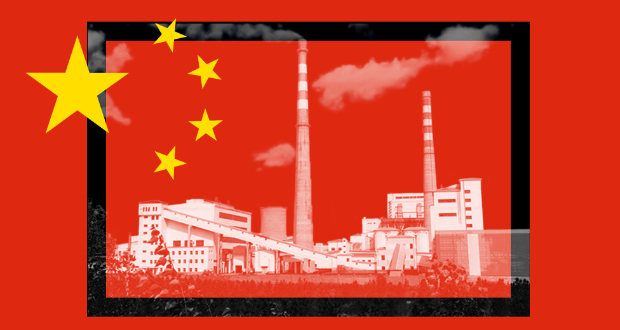
China's carbon emissions are vast and growing, dwarfing those of other countries. Experts agree that without big reductions in China's emissions, the world cannot win the fight against climate change. In 2020, China's President Xi Jinping said his country would aim for its emissions to reach their highest point before 2030 and for carbon neutrality before 2060. His statement has now been confirmed as China's official position ahead of the COP26 global climate summit in Glasgow. But China has not said exactly how these goals will be achieved.
Deliver on promises, developing world tells rich at climate talks

A crucial U.N. conference heard calls on its first day for the world's major economies to keep their promises of financial help to address the climate crisis, while big polluters India and Brazil made new commitments to cut emissions. World leaders, environmental experts and activists all pleaded for decisive action to halt the global warming which threatens the future of the planet at the start of the two-week COP26 summit in the Scottish city of Glasgow on Monday. The task facing negotiators was made even more daunting by the failure of the Group of 20 major industrial nations to agree ambitious new commitments at the weekend.