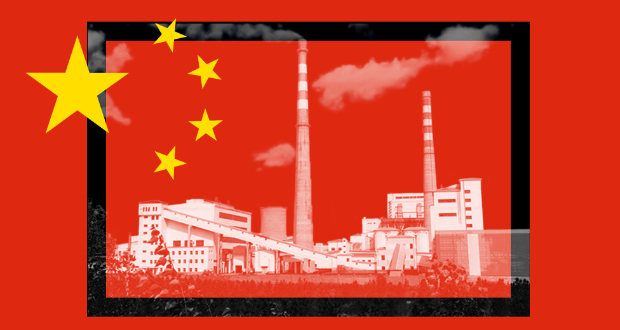
China’s Remote Deserts Are Hiding an Energy Revolution

Out of the rolling yellow dunes of the Kubuqi desert arises what appears to be an oasis, shimmering blue beneath the northern China sky.


Row after row of hundreds of solar panels cover this otherwise barren stretch of Inner Mongolia, about 500 kilometers (311 miles) inland from Beijing. They’re the centerpiece of a clean energy project the size of 20 Central Parks that provides enough electricity for 1.1 million homes.

The mammoth site is just one small piece of President Xi Jinping’s plan to deliver the largest ever deployment of man-made power capacity. By the end of this decade, China aims to build the equivalent of 225 more of these massive renewables bases across vast swathes of the country’s interior.

It’s a campaign that promises an upheaval across the energy sector: curbing China’s demand for fossil fuels, trimming its reliance on energy imports and steering the world’s biggest polluter toward a feasible path to zero out its greenhouse gas emissions.

Once complete, the renewables bases will total 455 gigawatts of wind turbines and solar panels. That’s more clean energy generation capacity than is currently available in any nation outside China, and almost the size of the entire power network — including coal plants and nuclear reactors — in India, the world’s third-largest system.

“It’s mind-blowing,” said Cosimo Ries, a Shanghai-based energy analyst with Trivium China. “There’s nothing in history you can benchmark this against.”

Few details on China’s desert developments have been disclosed since Xi outlined his vision for the strategy in a 2021 speech. Now, work by Bloomberg News and analysts at BloombergNEF to visit sites, interview those involved and review thousands of pages of government documents and industry databases is offering the first major assessment of progress.
Read Full Article:

Share This Article

Related Articles

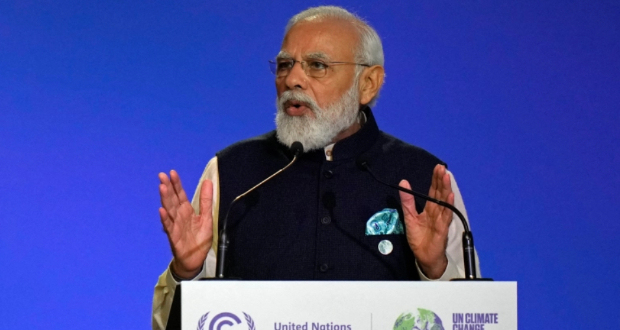
India targets net-zero carbon emissions by 2070, says Modi

India’s economy will become carbon neutral by the year 2070, the country’s prime minster has announced at the COP26 climate crisis summit in Glasgow. The target date is two decades beyond what scientists say is needed to avert catastrophic climate impacts. India is the last of the world’s major carbon polluters to announce a net-zero target, with China saying it would reach that goal in 2060, and the United States and the European Union aiming for 2050.

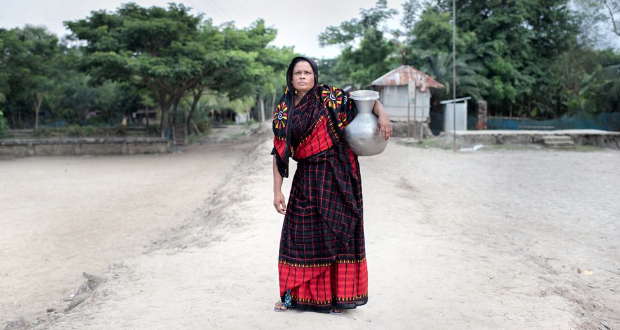
COP26: What climate summit means for one woman in Bangladesh

China's carbon emissions are vast and growing, dwarfing those of other countries. Experts agree that without big reductions in China's emissions, the world cannot win the fight against climate change. In 2020, China's President Xi Jinping said his country would aim for its emissions to reach their highest point before 2030 and for carbon neutrality before 2060. His statement has now been confirmed as China's official position ahead of the COP26 global climate summit in Glasgow. But China has not said exactly how these goals will be achieved.

Why China's climate policy matters to us all

China's carbon emissions are vast and growing, dwarfing those of other countries. Experts agree that without big reductions in China's emissions, the world cannot win the fight against climate change. In 2020, China's President Xi Jinping said his country would aim for its emissions to reach their highest point before 2030 and for carbon neutrality before 2060. His statement has now been confirmed as China's official position ahead of the COP26 global climate summit in Glasgow. But China has not said exactly how these goals will be achieved.

Deliver on promises, developing world tells rich at climate talks

A crucial U.N. conference heard calls on its first day for the world's major economies to keep their promises of financial help to address the climate crisis, while big polluters India and Brazil made new commitments to cut emissions. World leaders, environmental experts and activists all pleaded for decisive action to halt the global warming which threatens the future of the planet at the start of the two-week COP26 summit in the Scottish city of Glasgow on Monday. The task facing negotiators was made even more daunting by the failure of the Group of 20 major industrial nations to agree ambitious new commitments at the weekend.