Putin Plans Visit to Gulf in Wake of OPEC+ Deal on Output Cuts

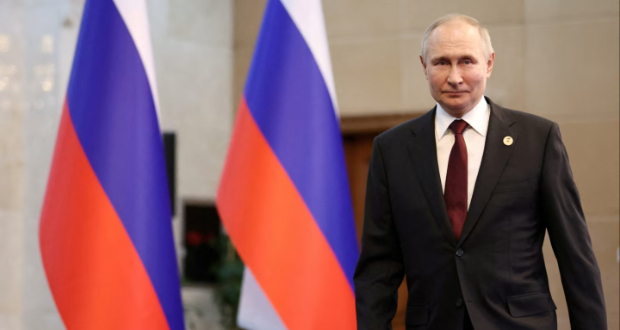
Russian President Vladimir Putin will visit the United Arab Emirates and Saudi Arabia this week, using a rare trip abroad since his invasion of Ukraine to bolster partnerships with key oil producers.
 

Putin will meet with both UAE President Sheikh Mohammed Bin Zayed Al Nahyan and Saudi Crown Prince Mohammed bin Salman on Wednesday to discuss a range of issues including trade and investment and Israel’s military campaign, according to the Kremlin. Interfax also reported that the oil market and the Ukraine war are set to be on the agenda.

In the UAE, Putin will be in Abu Dhabi and won’t visit the COP28 summit, which is taking place in the neighboring emirate of Dubai, Kremlin spokesman Dmitry Peskov told Bloomberg News.

The visit signals Putin’s growing confidence to travel outside Russia despite US and European efforts to isolate him on the global stage, with his economy on a surer footing and fighting in Ukraine settling into a stalemate. The Gulf states’ cooperation with Moscow is crucial for the Kremlin, given Russia’s dependence on energy revenues.

Putin’s visit to the two key Gulf powers is “a clear sign” that Russia is breaking out of its international isolation, said Fyodor Lukyanov, head of the Council on Foreign and Defense Policy, which advises the Kremlin. The move serves to increase Russia’s Middle East influence and shows the UAE and Saudi Arabia, both traditional US allies, are keen to balance their foreign-policy interests, he said.

Saudi Arabia, the UAE and Russia are all members of OPEC+, the oil-producer alliance which last week agreed to extend and deepen its production cuts. In an interview with Bloomberg on Monday, Saudi Energy Minister Prince Abdulaziz bin Salman emphasized the level of trust and cooperation between Riyadh and Moscow, a relationship which forms the backbone of the OPEC+ group.

Read Full Article:

Share This Article

Related Articles

India targets net-zero carbon emissions by 2070, says Modi

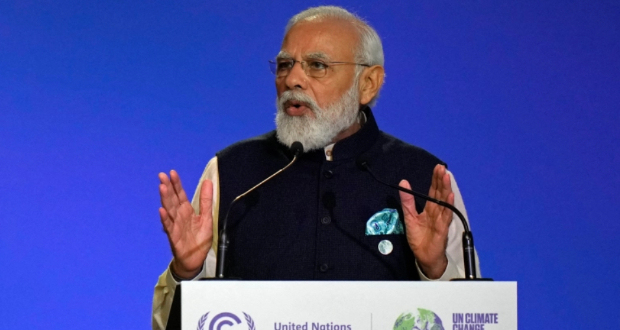
India’s economy will become carbon neutral by the year 2070, the country’s prime minster has announced at the COP26 climate crisis summit in Glasgow. The target date is two decades beyond what scientists say is needed to avert catastrophic climate impacts. India is the last of the world’s major carbon polluters to announce a net-zero target, with China saying it would reach that goal in 2060, and the United States and the European Union aiming for 2050.

COP26: What climate summit means for one woman in Bangladesh

China's carbon emissions are vast and growing, dwarfing those of other countries. Experts agree that without big reductions in China's emissions, the world cannot win the fight against climate change. In 2020, China's President Xi Jinping said his country would aim for its emissions to reach their highest point before 2030 and for carbon neutrality before 2060. His statement has now been confirmed as China's official position ahead of the COP26 global climate summit in Glasgow. But China has not said exactly how these goals will be achieved.

Why China's climate policy matters to us all

China's carbon emissions are vast and growing, dwarfing those of other countries. Experts agree that without big reductions in China's emissions, the world cannot win the fight against climate change. In 2020, China's President Xi Jinping said his country would aim for its emissions to reach their highest point before 2030 and for carbon neutrality before 2060. His statement has now been confirmed as China's official position ahead of the COP26 global climate summit in Glasgow. But China has not said exactly how these goals will be achieved.

Deliver on promises, developing world tells rich at climate talks

A crucial U.N. conference heard calls on its first day for the world's major economies to keep their promises of financial help to address the climate crisis, while big polluters India and Brazil made new commitments to cut emissions. World leaders, environmental experts and activists all pleaded for decisive action to halt the global warming which threatens the future of the planet at the start of the two-week COP26 summit in the Scottish city of Glasgow on Monday. The task facing negotiators was made even more daunting by the failure of the Group of 20 major industrial nations to agree ambitious new commitments at the weekend.