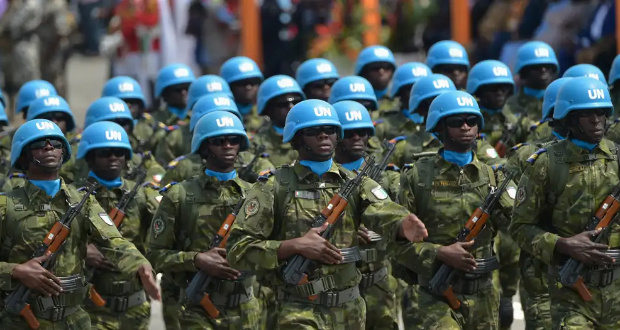
Calls grow to reform UN peacekeeping missions
UN peacekeeping missions have received a significant boost from UN member states, who pledged their support and resources this week at the 2023 ministerial meeting in Ghana's capital, Accra.
Nearly 75 years after the first UN peacekeeping mission was established, more than two million peacekeepers from 158 countries have served in 71 operations.
But in the past decade, UN peacekeeping missions have faced many challenges, including reputational damage and mistrust, particularly in Africa.
In Mali and the Democratic Republic of Congo, for example, UN peacekeeping missions haven't achieved their goals and have often been accused of escalating tensions.
Both countries have called for an end to the peacekeeping missions in their respective nations and the blue helmets are already withdrawing from Mali following a request by the ruling junta.
Such reactions have cast doubt on the continuous relevance of peacekeeping missions worldwide, but delegates attending the fifth UN peacekeeping ministerial gathering in Accra have re-echoed their support.

UN peacekeeping missions are ongoing in the Democratic Republic of Congo, South Sudan, Western Sahara, and the Central African Republic.
Support for UN peacekeeping operations
The UN Under-Secretary-General for peace operations, Jean-Pierre Lacroix, told DW that the commitment of all nations was essential amid the many doubts.
"We have a more divided world, we have conflicts that are multiplying, we have more threats and deteriorating security environment in most of our peacekeeping operations," Lacroix said.
The UN top official said the Accra meeting gives hope of securing the support of political leaders towards peacekeeping operations.
India targets net-zero carbon emissions by 2070, says Modi
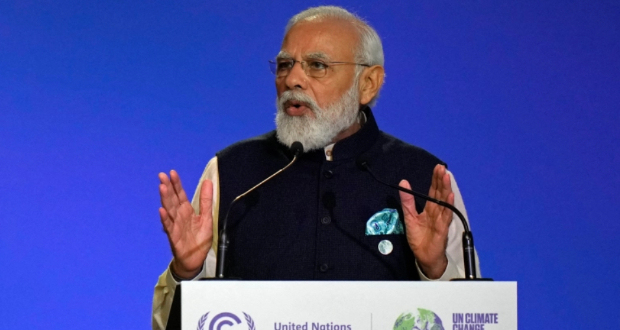
India’s economy will become carbon neutral by the year 2070, the country’s prime minster has announced at the COP26 climate crisis summit in Glasgow. The target date is two decades beyond what scientists say is needed to avert catastrophic climate impacts. India is the last of the world’s major carbon polluters to announce a net-zero target, with China saying it would reach that goal in 2060, and the United States and the European Union aiming for 2050.
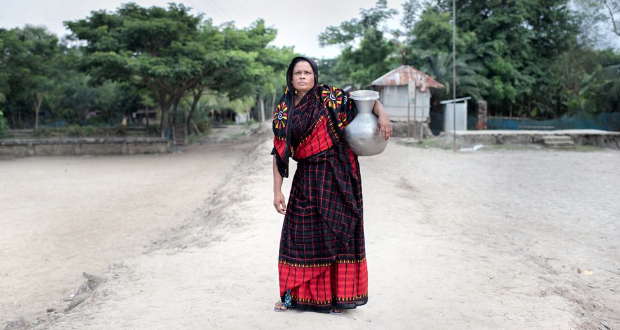
COP26: What climate summit means for one woman in Bangladesh
China's carbon emissions are vast and growing, dwarfing those of other countries. Experts agree that without big reductions in China's emissions, the world cannot win the fight against climate change. In 2020, China's President Xi Jinping said his country would aim for its emissions to reach their highest point before 2030 and for carbon neutrality before 2060. His statement has now been confirmed as China's official position ahead of the COP26 global climate summit in Glasgow. But China has not said exactly how these goals will be achieved.
Why China's climate policy matters to us all
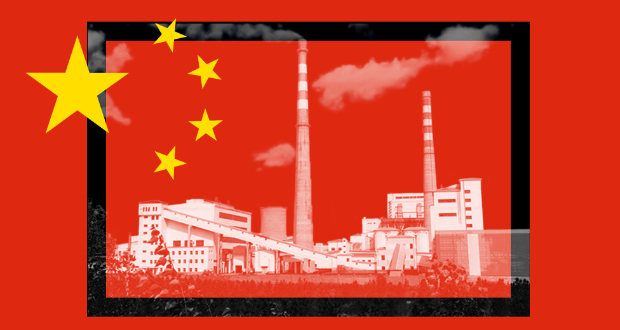
China's carbon emissions are vast and growing, dwarfing those of other countries. Experts agree that without big reductions in China's emissions, the world cannot win the fight against climate change. In 2020, China's President Xi Jinping said his country would aim for its emissions to reach their highest point before 2030 and for carbon neutrality before 2060. His statement has now been confirmed as China's official position ahead of the COP26 global climate summit in Glasgow. But China has not said exactly how these goals will be achieved.
Deliver on promises, developing world tells rich at climate talks

A crucial U.N. conference heard calls on its first day for the world's major economies to keep their promises of financial help to address the climate crisis, while big polluters India and Brazil made new commitments to cut emissions. World leaders, environmental experts and activists all pleaded for decisive action to halt the global warming which threatens the future of the planet at the start of the two-week COP26 summit in the Scottish city of Glasgow on Monday. The task facing negotiators was made even more daunting by the failure of the Group of 20 major industrial nations to agree ambitious new commitments at the weekend.