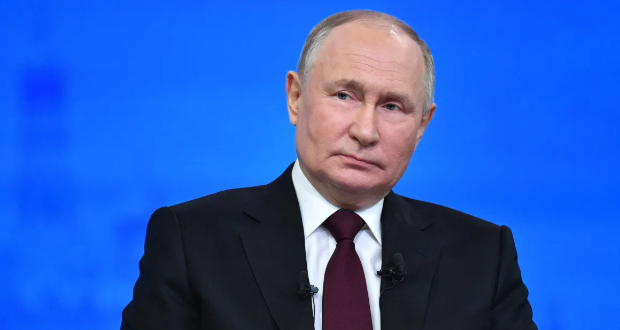
Putin warns of problems with neighboring Finland after West ‘dragged it into NATO’
Russian President Vladimir Putin has warned there will be “problems” with neighboring Finland after it joined the North Atlantic Treaty Organization (NATO) earlier this year.
Finland’s ascension to NATO marked a major shift in the security landscape in northern Europe, and added some 1,300 kilometers (830 miles) to the alliance’s frontier with Russia.
It was also a blow for President Putin, who has long warned against NATO expansion.
“They (the West) took Finland and dragged it into NATO! Why, did we have any disputes with Finland? All disputes, including those of a territorial nature in the middle of the 20th Century, have all been resolved long ago,” Putin said in an interview published on Sunday.
“There were no problems, but now there will be, because we will now create the Leningrad military district there and definitely concentrate military units there,” Putin added in the interview by Russian state broadcaster Russia 1.
Putin also dismissed as “complete nonsense” remarks from US President Joe Biden, who earlier this month warned that Putin would “keep going” if he takes Ukraine, suggesting that Russia could eventually attack a NATO ally and draw US troops into conflict.
The Russian leader said Russia “has no reason, no interest, no geopolitical interest, neither economic, nor political, nor military, to fight with NATO countries,” adding Moscow does not have any territorial claims in NATO countries.
“There is no desire to spoil relations with them (NATO countries), we are interested in developing relations,” Putin added.
Border spat
Finland became the 31st member of NATO when it joined in April, doubling the security alliance’s direct frontier with Russia.
Even before Putin launched his invasion of Ukraine, he had demanded NATO limit its expansion. Yet, it was the war that “altered the security environment of Finland,” driving the Nordic nation’s desire to join the alliance, President Sauli Niinistö said in May 2022 when announcing his country would seek to join.
Within a few months of its application, the Finnish government said it would spend around $143 million on building barrier fences along Finland’s 830-mile eastern border with Russia, which used to have little security protections.
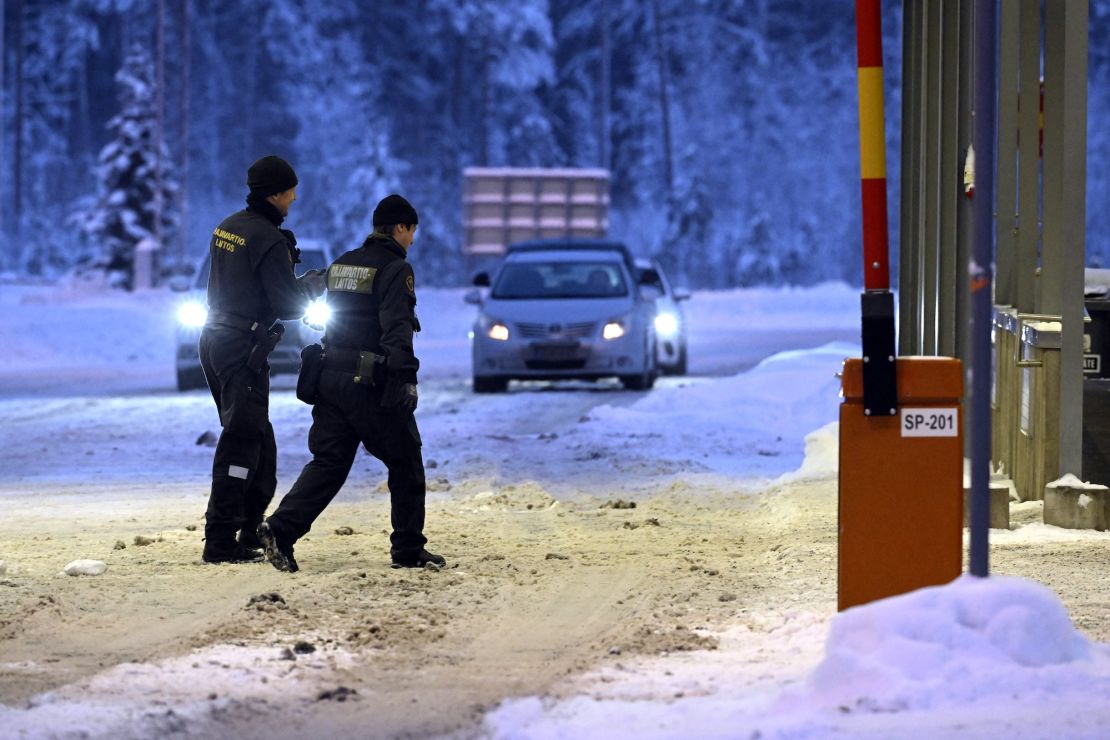
Finland again shut its entire border with Russia this week, over claims hundreds of people were trying to cross without a visa.
India targets net-zero carbon emissions by 2070, says Modi
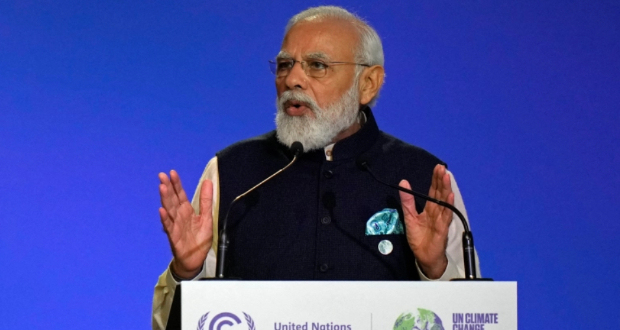
India’s economy will become carbon neutral by the year 2070, the country’s prime minster has announced at the COP26 climate crisis summit in Glasgow. The target date is two decades beyond what scientists say is needed to avert catastrophic climate impacts. India is the last of the world’s major carbon polluters to announce a net-zero target, with China saying it would reach that goal in 2060, and the United States and the European Union aiming for 2050.
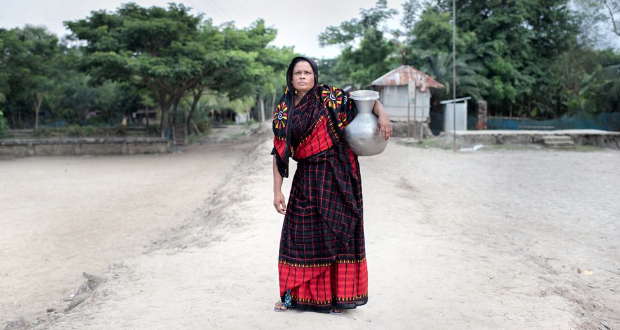
COP26: What climate summit means for one woman in Bangladesh
China's carbon emissions are vast and growing, dwarfing those of other countries. Experts agree that without big reductions in China's emissions, the world cannot win the fight against climate change. In 2020, China's President Xi Jinping said his country would aim for its emissions to reach their highest point before 2030 and for carbon neutrality before 2060. His statement has now been confirmed as China's official position ahead of the COP26 global climate summit in Glasgow. But China has not said exactly how these goals will be achieved.
Why China's climate policy matters to us all
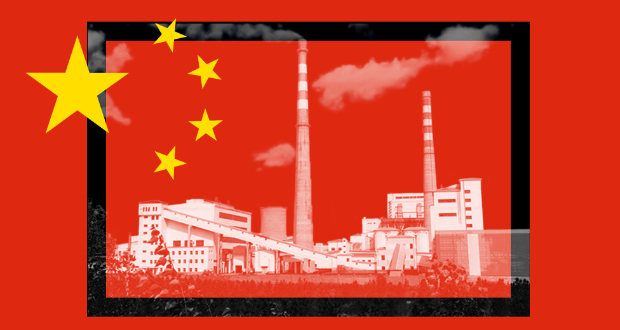
China's carbon emissions are vast and growing, dwarfing those of other countries. Experts agree that without big reductions in China's emissions, the world cannot win the fight against climate change. In 2020, China's President Xi Jinping said his country would aim for its emissions to reach their highest point before 2030 and for carbon neutrality before 2060. His statement has now been confirmed as China's official position ahead of the COP26 global climate summit in Glasgow. But China has not said exactly how these goals will be achieved.
Deliver on promises, developing world tells rich at climate talks

A crucial U.N. conference heard calls on its first day for the world's major economies to keep their promises of financial help to address the climate crisis, while big polluters India and Brazil made new commitments to cut emissions. World leaders, environmental experts and activists all pleaded for decisive action to halt the global warming which threatens the future of the planet at the start of the two-week COP26 summit in the Scottish city of Glasgow on Monday. The task facing negotiators was made even more daunting by the failure of the Group of 20 major industrial nations to agree ambitious new commitments at the weekend.