How Putin Turned a Western Boycott Into a Bonanza

Soon after Russian troops invaded his country, the Ukrainian president, Volodymyr Zelensky, made a plea to Western companies: “Leave Russia,” he said. “Make sure that the Russians do not receive a single penny.”

Hundreds of companies answered the call. Politicians and activists predicted that it would help strangle the Russian economy and undermine the Kremlin’s war effort.

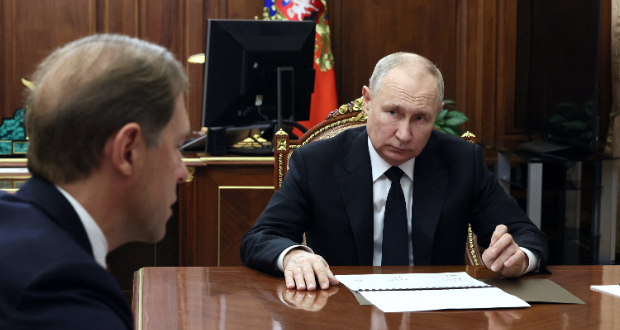
President Vladimir V. Putin had other plans.

Mr. Putin has turned the exits of major Western companies into a windfall for Russia’s loyal elite and the state itself. He has forced companies wishing to sell to do so at fire-sale prices. He has limited sales to buyers anointed by Moscow. Sometimes he has seized firms outright.

A New York Times investigation traced how Mr. Putin has turned an expected misfortune into an enrichment scheme. Western companies that have announced departures have declared more than $103 billion in losses since the start of the war, according to a Times analysis of financial reports. Mr. Putin has squeezed companies for as much of that wealth as possible by dictating the terms of their departure.

He has also subjected those exits to ever-increasing taxes, generating at least $1.25 billion in the past year for Russia’s war chest.

No private deal is safe. The Dutch beer company Heineken, for example, found a buyer this spring and set a price. But the Russian government unilaterally rejected the deal, people close to the negotiations said, and put the company’s Russian holdings in the hands of an aerosol-packaging titan married to a former Russian senator.

In all, Mr. Putin has overseen one of the biggest transfers of wealth within Russia since the fall of the Soviet Union. Huge swaths of industries — elevators, tires, industrial coatings and more — are now in the hands of increasingly dominant Russian players.

In some cases, that player is the state. Government-owned enterprises have acquired the assets of corporate giants like Ikea and Toyota. In many cases, Mr. Putin personally signs off on sales.

“These are good deals for us, for sure,” said Anton Pinsky, a prominent restaurateur who joined with a pro-Putin rapper and associates of a powerful senator to take over Starbucks. In an interview in Moscow, he downplayed the significance of his own deal but was clear about the effect of the Western departures.

“You screwed up, left it,” he said. “We picked it up inexpensively. Thank you.”

Today in Russia, a robust consumer world carries on, helping Mr. Putin maintain a sense of normalcy despite a war that has proved longer, deadlier and costlier than he predicted. Most foreign companies remain in Russia, unwilling to lose the billions they’ve invested there over decades.
Read Full Article:

Share This Article

Related Articles

India targets net-zero carbon emissions by 2070, says Modi

India’s economy will become carbon neutral by the year 2070, the country’s prime minster has announced at the COP26 climate crisis summit in Glasgow. The target date is two decades beyond what scientists say is needed to avert catastrophic climate impacts. India is the last of the world’s major carbon polluters to announce a net-zero target, with China saying it would reach that goal in 2060, and the United States and the European Union aiming for 2050.

COP26: What climate summit means for one woman in Bangladesh

China's carbon emissions are vast and growing, dwarfing those of other countries. Experts agree that without big reductions in China's emissions, the world cannot win the fight against climate change. In 2020, China's President Xi Jinping said his country would aim for its emissions to reach their highest point before 2030 and for carbon neutrality before 2060. His statement has now been confirmed as China's official position ahead of the COP26 global climate summit in Glasgow. But China has not said exactly how these goals will be achieved.

Why China's climate policy matters to us all

China's carbon emissions are vast and growing, dwarfing those of other countries. Experts agree that without big reductions in China's emissions, the world cannot win the fight against climate change. In 2020, China's President Xi Jinping said his country would aim for its emissions to reach their highest point before 2030 and for carbon neutrality before 2060. His statement has now been confirmed as China's official position ahead of the COP26 global climate summit in Glasgow. But China has not said exactly how these goals will be achieved.

Deliver on promises, developing world tells rich at climate talks

A crucial U.N. conference heard calls on its first day for the world's major economies to keep their promises of financial help to address the climate crisis, while big polluters India and Brazil made new commitments to cut emissions. World leaders, environmental experts and activists all pleaded for decisive action to halt the global warming which threatens the future of the planet at the start of the two-week COP26 summit in the Scottish city of Glasgow on Monday. The task facing negotiators was made even more daunting by the failure of the Group of 20 major industrial nations to agree ambitious new commitments at the weekend.