Russia bans anti-war candidate from challenging Putin

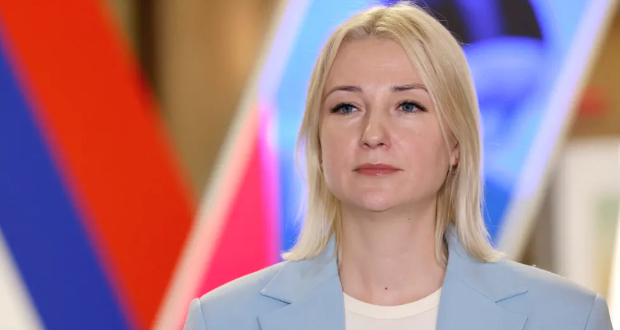
A former TV journalist who announced she would challenge President Putin in Russia's spring election has been barred from standing.


Independent politician Yekaterina Duntsova wanted to run on a platform to end the war with Ukraine.

But the electoral commission voted unanimously to reject her candidacy three days after her application, citing 100 "mistakes" on her form.

Ms Duntsova said she would appeal the decision at the Supreme Court.

The presidential election, which will be held in March 2024, is Russia's first since President Putin launched his full-scale invasion of Ukraine nearly two years ago.

The immediate slap-down of a Putin critic will be seen as evidence by some that no dissent will be tolerated in the campaign.

The head of Russia's electoral commission, Ella Pamfilova, said Ms Duntsova would not be allowed to progress to the next stage of gathering thousands of supporters' signatures.

"You are a young woman, you have everything ahead of you. Any minus can always be turned into a plus. Any experience is still an experience," she told Ms Duntsova, 40, after the decision.

The former TV journalist had declared she would run for the presidency in November. At the time, she told the Reuters news agency: "Any sane person taking this step would be afraid - but fear must not win."

Russia's constitution was amended in 2020, increasing the presidential term from four to six years and giving Mr Putin a clean slate to run again by cancelling out his previous terms.

Moscow has sidelined opposition figures for years, and President Putin is expected to win in March; the Kremlin claims he enjoys genuine support among Russians.

Ms Duntsova had been vocal on her plans to run a campaign on ending the war in Ukraine and freeing political prisoners.

She was quick to respond after the commission's decision. "We will appeal to the Supreme Court, since this decision is not based on the law," a message on her Telegram channel said.
Read Full Article:

Share This Article

Related Articles

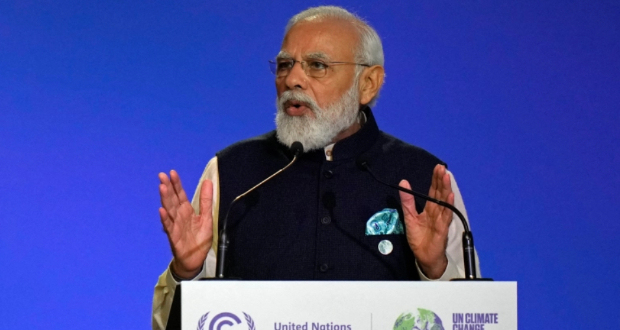
India targets net-zero carbon emissions by 2070, says Modi

India’s economy will become carbon neutral by the year 2070, the country’s prime minster has announced at the COP26 climate crisis summit in Glasgow. The target date is two decades beyond what scientists say is needed to avert catastrophic climate impacts. India is the last of the world’s major carbon polluters to announce a net-zero target, with China saying it would reach that goal in 2060, and the United States and the European Union aiming for 2050.

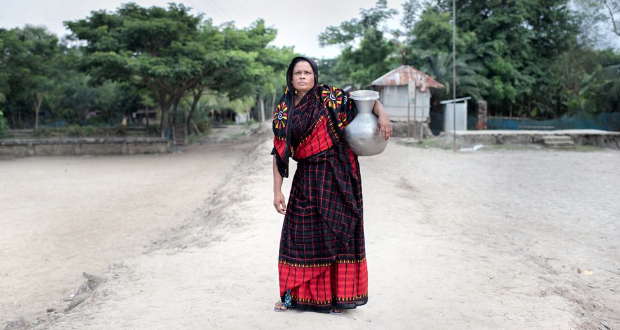
COP26: What climate summit means for one woman in Bangladesh

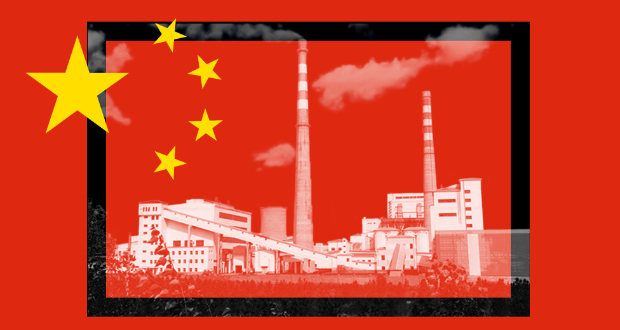
China's carbon emissions are vast and growing, dwarfing those of other countries. Experts agree that without big reductions in China's emissions, the world cannot win the fight against climate change. In 2020, China's President Xi Jinping said his country would aim for its emissions to reach their highest point before 2030 and for carbon neutrality before 2060. His statement has now been confirmed as China's official position ahead of the COP26 global climate summit in Glasgow. But China has not said exactly how these goals will be achieved.

Why China's climate policy matters to us all

China's carbon emissions are vast and growing, dwarfing those of other countries. Experts agree that without big reductions in China's emissions, the world cannot win the fight against climate change. In 2020, China's President Xi Jinping said his country would aim for its emissions to reach their highest point before 2030 and for carbon neutrality before 2060. His statement has now been confirmed as China's official position ahead of the COP26 global climate summit in Glasgow. But China has not said exactly how these goals will be achieved.

Deliver on promises, developing world tells rich at climate talks

A crucial U.N. conference heard calls on its first day for the world's major economies to keep their promises of financial help to address the climate crisis, while big polluters India and Brazil made new commitments to cut emissions. World leaders, environmental experts and activists all pleaded for decisive action to halt the global warming which threatens the future of the planet at the start of the two-week COP26 summit in the Scottish city of Glasgow on Monday. The task facing negotiators was made even more daunting by the failure of the Group of 20 major industrial nations to agree ambitious new commitments at the weekend.