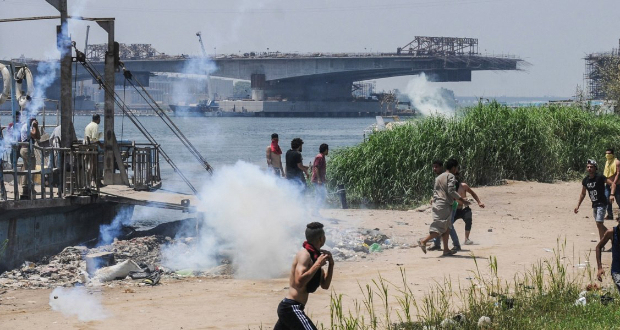
Growing Cities On The Frontlines of Climate Change
The U.N.’s annual climate conference that just wrapped up in Dubai had an unprecedented focus on food and agriculture. An impressive 134 world leaders signed on to the COP28 United Arab Emirates Declaration on Sustainable Agriculture, Resilient Food Systems, and Climate Action, which seeks to address “global emissions while protecting the lives and livelihoods of farmers who live on the frontlines of climate change.” Agriculture is a huge consumer of water and a major emitter of greenhouse gases. It affects and is affected by climate change. Even so, a focus on agriculture should not distract from the need to address cities, where most people live.
Today, some 56 percent of the world’s population lives in urban areas, and an estimated 70 percent will by 2050. Countries in the Middle East and North Africa (MENA) are nearly there already: 65 percent of the population is urban, a number that has almost doubled since 1960. As cities grow, governments must be sensitive to the climate impacts of their practices in cities and the countryside simultaneously.
The total population of the Middle East and North Africa (MENA) region almost quadrupled from around 100 million in 1950 to about 380 million in 2000, growing faster than every other region. In addition to the pull of economic opportunity, two major trends pushed people into cities. The first was the effects of conflicts. Iraq still has over a million internally displaced persons (IDPs), and violence pushed millions more out of the country and into neighboring countries’ cities. In many cases, war has irrevocably changed their communities and pushed them to find security and economic opportunity elsewhere.
The second was water scarcity and degradation of formerly arable land. Iraq’s recent history has many signs of both. The International Organization for Migration (IOM) estimates that between 2016 and 2022, 15 percent of the population in central and southern Iraq have been displaced due to climate change and environmental degradation. Environmental factors have displaced over 50 percent of the population in some subdistricts of Thi-qar and Maysan.
India targets net-zero carbon emissions by 2070, says Modi
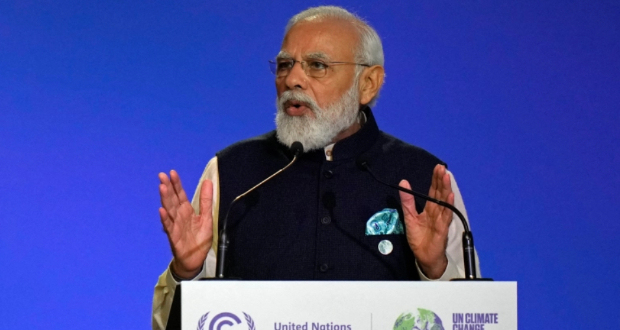
India’s economy will become carbon neutral by the year 2070, the country’s prime minster has announced at the COP26 climate crisis summit in Glasgow. The target date is two decades beyond what scientists say is needed to avert catastrophic climate impacts. India is the last of the world’s major carbon polluters to announce a net-zero target, with China saying it would reach that goal in 2060, and the United States and the European Union aiming for 2050.
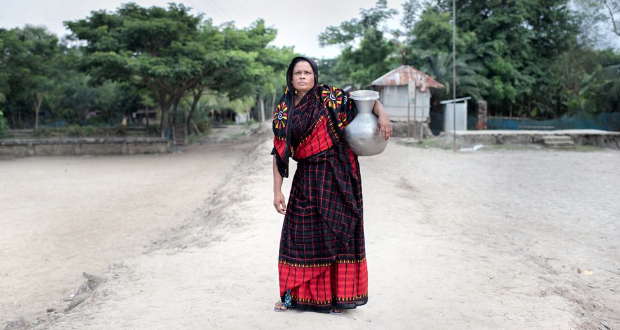
COP26: What climate summit means for one woman in Bangladesh
China's carbon emissions are vast and growing, dwarfing those of other countries. Experts agree that without big reductions in China's emissions, the world cannot win the fight against climate change. In 2020, China's President Xi Jinping said his country would aim for its emissions to reach their highest point before 2030 and for carbon neutrality before 2060. His statement has now been confirmed as China's official position ahead of the COP26 global climate summit in Glasgow. But China has not said exactly how these goals will be achieved.
Why China's climate policy matters to us all
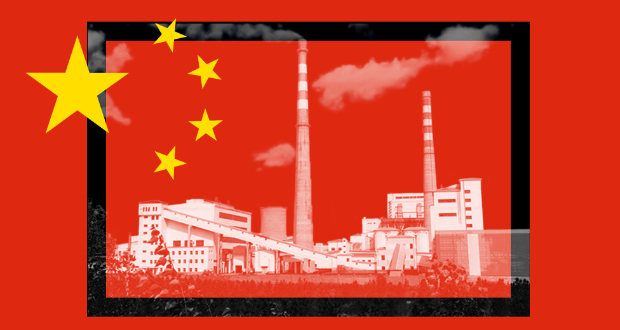
China's carbon emissions are vast and growing, dwarfing those of other countries. Experts agree that without big reductions in China's emissions, the world cannot win the fight against climate change. In 2020, China's President Xi Jinping said his country would aim for its emissions to reach their highest point before 2030 and for carbon neutrality before 2060. His statement has now been confirmed as China's official position ahead of the COP26 global climate summit in Glasgow. But China has not said exactly how these goals will be achieved.
Deliver on promises, developing world tells rich at climate talks

A crucial U.N. conference heard calls on its first day for the world's major economies to keep their promises of financial help to address the climate crisis, while big polluters India and Brazil made new commitments to cut emissions. World leaders, environmental experts and activists all pleaded for decisive action to halt the global warming which threatens the future of the planet at the start of the two-week COP26 summit in the Scottish city of Glasgow on Monday. The task facing negotiators was made even more daunting by the failure of the Group of 20 major industrial nations to agree ambitious new commitments at the weekend.