![This November 12, 2018 photo shows the USS Carney in the Mediterranean Sea [Mass Communication Specialist 1st Class Ryan U Kledzik/US Navy via AP]](/Uploads/Images/News/2023/12/Image-2166-20231228065425.jpeg)
Analysis: In the Red Sea, the US has no good options against the Houthis
Operation Prosperity Guardian (OPG), the United States Navy-led coalition of the willing intended to allow international shipping to continue navigating safely through the Red Sea, is set to activate within days.
Including allies from Europe and the Middle East, as well as Canada and Australia, the operation has been snubbed by three important NATO countries, France, Italy and Spain.
What is the exact task of OPG?
The official line, “to secure safe passage for the commercial ships”, is too vague for any naval flag officer to feel comfortable getting into. Admirals want politicians to give them precise tasks and clear mandates needed to achieve the desired results.
Defining the threat seems easy, for now: antiship missiles and drones of various types carrying explosive warheads have been targeting merchant ships on the way to and from the Suez Canal. All were fired from Yemen, by the Houthi group also known as Ansar Allah which now controls most of the country, including the longest section of its 450km-long Red Sea coast. All missiles were surface-launched, with warheads that can damage but hardly sink big cargo ships.
The Houthis at first announced that they would target Israeli-owned ships, then expanded that to include all those using Israeli ports, ultimately to those trading with Israel. After several attacks where the Israeli connection appeared very distant or vague, it is prudent to assume that any ship could be targeted.
All missiles neutralised by US and French warships so far were shot down by sophisticated shipborne surface-to-air missiles (SAM), proving that the modern vertical-launch systems guided by the latest generation phased array radars work as designed. Many nations earmarked to participate in OPG have ships with similar capabilities. Almost all also carry modern surface-to-surface missiles that can attack targets at sea or land.
If the task of OPG were to be defined narrowly, only to prevent hits on merchant ships, it could be performed using the centuries-old principle of sailing in convoys with the protection of warships.
In a convoy, slow, defenceless commercial cargos sail in several columns at precisely defined distances from each other — led, flanked and tailed by fast warships that can take on any threat. The system is effective, as the United Kingdom, Russia, Malta, and many other countries saved by convoys in World War II can attest.
India targets net-zero carbon emissions by 2070, says Modi
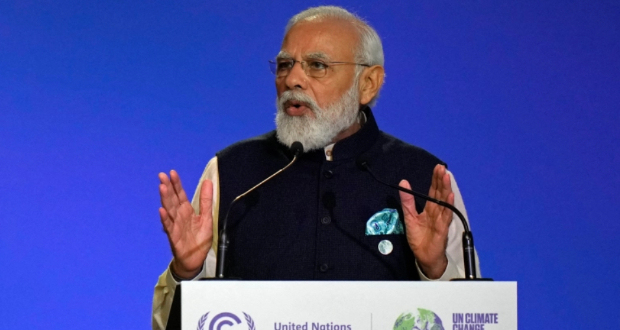
India’s economy will become carbon neutral by the year 2070, the country’s prime minster has announced at the COP26 climate crisis summit in Glasgow. The target date is two decades beyond what scientists say is needed to avert catastrophic climate impacts. India is the last of the world’s major carbon polluters to announce a net-zero target, with China saying it would reach that goal in 2060, and the United States and the European Union aiming for 2050.
COP26: What climate summit means for one woman in Bangladesh

China's carbon emissions are vast and growing, dwarfing those of other countries. Experts agree that without big reductions in China's emissions, the world cannot win the fight against climate change. In 2020, China's President Xi Jinping said his country would aim for its emissions to reach their highest point before 2030 and for carbon neutrality before 2060. His statement has now been confirmed as China's official position ahead of the COP26 global climate summit in Glasgow. But China has not said exactly how these goals will be achieved.
Why China's climate policy matters to us all
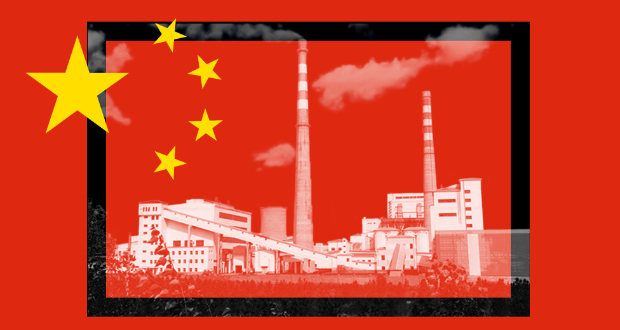
China's carbon emissions are vast and growing, dwarfing those of other countries. Experts agree that without big reductions in China's emissions, the world cannot win the fight against climate change. In 2020, China's President Xi Jinping said his country would aim for its emissions to reach their highest point before 2030 and for carbon neutrality before 2060. His statement has now been confirmed as China's official position ahead of the COP26 global climate summit in Glasgow. But China has not said exactly how these goals will be achieved.
Deliver on promises, developing world tells rich at climate talks

A crucial U.N. conference heard calls on its first day for the world's major economies to keep their promises of financial help to address the climate crisis, while big polluters India and Brazil made new commitments to cut emissions. World leaders, environmental experts and activists all pleaded for decisive action to halt the global warming which threatens the future of the planet at the start of the two-week COP26 summit in the Scottish city of Glasgow on Monday. The task facing negotiators was made even more daunting by the failure of the Group of 20 major industrial nations to agree ambitious new commitments at the weekend.