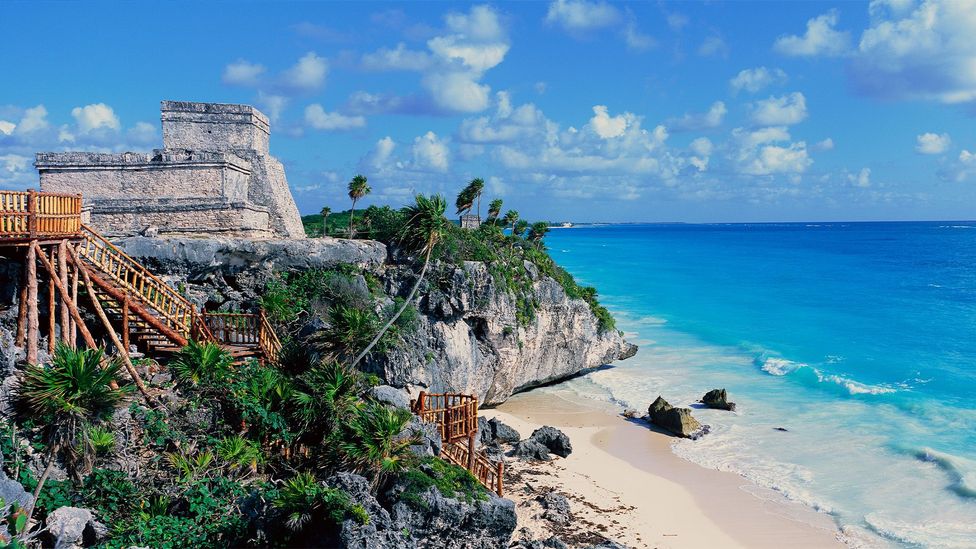
I first visited Tulum Pueblo as a backpacker in 2017. Located in Mexico's south-eastern Yucatán Peninsula, the beach town is famed for its turquoise waters, eco-boutique hotels and clifftop Maya ruins. It is known as something of a green alternative to the skyscraper resorts of Cancún and Playa del Carmen to the north, and I spent the week doing beach yoga, turtle-spotting in the Sian Ka'an Biosphere Reserve, and biking along hot, dusty paths to jungle-clad cenotes believed by the ancient Maya to be portals to the underworld.
Since my visit, tourism in Tulum has boomed. What was once a strip of wild beach scattered with palm leaf-roofed meditation retreats is now one of Mexico's most popular tourist destinations. In 2022, Tulum Ruins – one of the last cities inhabited by the Maya before the Spanish conquest in 1526, and the only one built overlooking the sea – received more than 1.3 million visits. That same year, the number of July and August visitors to Yucatán's largest international airport, Cancún, were up by nearly four million compared to pre-pandemic numbers.
In response to the area's staggering growth, Mexican President Andrés Manuel López Obrador ordered the military to build a new international airport in Tulum at breakneck speed. In December 2023, less than two years after construction began, Obrador inaugurated the airport with its first three inbound flights. While the new airport currently only receives domestic travellers, international flights are expected to begin in March 2024.
However, the opening of Tulum's new airport is just one piece of a far-more ambitious tourism and infrastructure plan – one that Obrador has boldly called "the greatest construction project in the world".
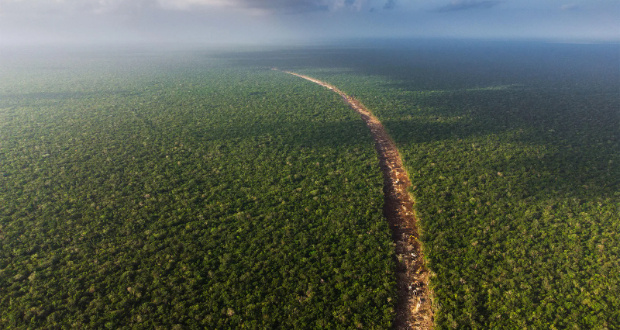
On 15 December 2023, Obrador joined the inaugural journey from San Francisco de Campeche to Cancún aboard the new Tren Maya (Maya Train), a 1,500km rail route that, when complete, will stretch from near the Unesco-inscribed archaeological site of Palenque in the state of Chiapas to the city of Chetumal on the border with Belize. The train's route is currently split into seven sections, which will be opening in stages. Sections one through four, which run 892km north-east from Palenque to Cancún, opened in December; while sections five through seven, which connect to the new Tulum airport and end at the city of Escárcega, are scheduled to open in February 2024.
When fully open to the public, the $28.5bn train line will span five states, 40 municipalities and 181 towns in south-eastern Mexico. It will connect tourist hotspots like Cancún, Playa del Carmen and Tulum to lesser-visited towns, biosphere reserves and inland archaeological sites across the Yucatán Peninsula through a mixture of direct stops and complementary bus transfers. Passengers will be able to choose from three different services: Xiinbal ("walking" in the Mayan language) trains are equipped with economy- and premier-class seating; Janal ("eating") trains have a dining car serving hot meals; and P'tal ("accommodation") trains include reclining seats and sleeping cabins for long-distance journeys.
Once fully operational, the Tren Maya is expected to run every two hours, offering a more reliable and comfortable way for travellers to see the Yucatan Peninsula than buses or colectivos (shared taxis), the main mode of public transport in south-eastern Mexico until now. The train also makes it easier to plan multi-day itineraries to some of the region's harder-to-reach highlights, including Calakmul, Mexico's largest protected forest, and spectacular Maya ruins like Uxmal, Palenque and Campeche, which have received a surge of interest since the discovery of the lost Maya city of Ocomtún in 2023. Historical cities like Merida and Izamal, home to beautifully preserved colonial architecture and ancient Maya dishes like poc chuc (grilled pork) and cochinita pibil (pulled pork shoulder), will also be along the route. Ticket prices range from 431.50 pesos (£19.95) to 1,862 pesos (£86.10) depending on the length of the journey and class.
But as a press release stated following the inauguration of the train's first sections, the line isn't just hoping to boost tourism, but also "[generate] economic opportunities for communities that have until now been marginalized from the benefits of mass tourism".
Read Full Article: