Red Sea attacks threaten global trade
Many of the world's economic crises of recent years have been about supply chains. Pandemic lockdowns, the war in Ukraine and the overall surge in global inflation all impacted, or were impacted by, the flow of global trade and the myriad moving parts that keep it all going.
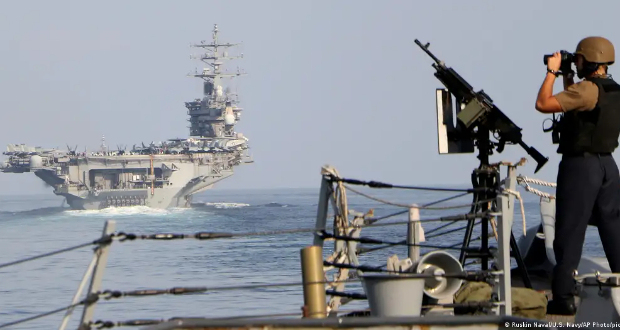
As 2023 turns to 2024, a new threat to global supply chains has emerged in the Red Sea. The world's largest container-shipping companies have been pausing or suspending their services in the area because of the increasing number of attacks on ships there by Iran-backed Houthi rebels operating from Yemen.
Any hope of some new year's respite was shattered on January 1 when Iran sent a warship to the Red Sea after the US Navy destroyed three Houthi boats there a day earlier.
The US says it sank the three boats "in self-defense" after Houthi vessels fired on a Maersk container ship and then attempted to board the ship before the US struck. The arrival of the Iranian warship in response is a sign of potential escalation in a crisis with major potential implications for the global economy.
Oil prices jumped by more than 2% on Tuesday, the first day of trading following the attacks.
What's been happening?
Houthi rebels have been attacking ships in the Red Sea since November, claiming they are acting in solidarity with the people of Gaza amid Israel's bombing of the enclave.
The attacks are taking place near the narrow strait of Bab al-Mandab, between Africa and the Arabian Peninsula. It's a critical waterway in global trade, through which just under one-third of all global container ships move daily.
Although the Houthis claim to be targeting vessels connected to Israel, they have launched more than 100 drone and missile attacks on all kinds of ships navigating the lane since November. The Maersk ship attacked on December 31 is registered in Singapore and operated by a Danish company.
The Houthis are a Shia Islamist rebel group, which have controlled large parts of western Yemen for most of the last decade. Heavily backed by Iran, they have been attempting to wrest control from the government of Yemen in the country's ongoing civil war.
In response to the attacks, which have increased markedly in intensity and volume since mid-December, the US has set up a naval task force including the UK, France and other NATO countries, as well as regional allies such as Bahrain. Known as Operation Prosperity Guardian, its stated aim is to safeguard shipping in the area.
Why the trade route is so important
The Suez Canal is located at the Red Sea's northern point and connects the waterway to the Mediterranean Sea. That makes it by far the shortest naval route between Europe and Asia. Around 12% of all global shipping trade by volume travels through the route. It's an especially important energy transit point, with around 9 million barrels of oil passing through the canal each day.
The tense security situation has prompted companies such as Maersk, CMA CGM, Hapag-Lloyd and MSC to periodically pause operations in the area for the past few weeks, causing delays and driving up costs.
India targets net-zero carbon emissions by 2070, says Modi
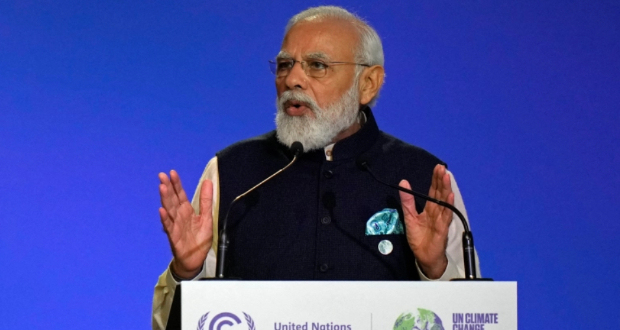
India’s economy will become carbon neutral by the year 2070, the country’s prime minster has announced at the COP26 climate crisis summit in Glasgow. The target date is two decades beyond what scientists say is needed to avert catastrophic climate impacts. India is the last of the world’s major carbon polluters to announce a net-zero target, with China saying it would reach that goal in 2060, and the United States and the European Union aiming for 2050.
COP26: What climate summit means for one woman in Bangladesh

China's carbon emissions are vast and growing, dwarfing those of other countries. Experts agree that without big reductions in China's emissions, the world cannot win the fight against climate change. In 2020, China's President Xi Jinping said his country would aim for its emissions to reach their highest point before 2030 and for carbon neutrality before 2060. His statement has now been confirmed as China's official position ahead of the COP26 global climate summit in Glasgow. But China has not said exactly how these goals will be achieved.
Why China's climate policy matters to us all
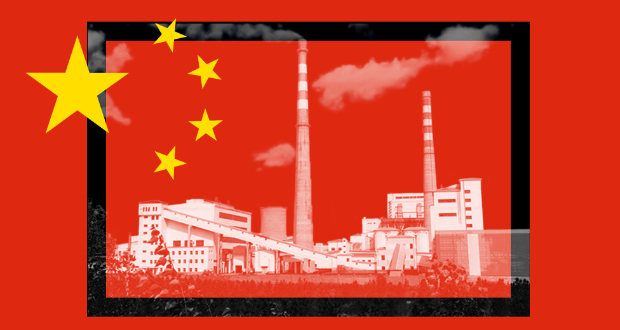
China's carbon emissions are vast and growing, dwarfing those of other countries. Experts agree that without big reductions in China's emissions, the world cannot win the fight against climate change. In 2020, China's President Xi Jinping said his country would aim for its emissions to reach their highest point before 2030 and for carbon neutrality before 2060. His statement has now been confirmed as China's official position ahead of the COP26 global climate summit in Glasgow. But China has not said exactly how these goals will be achieved.
Deliver on promises, developing world tells rich at climate talks

A crucial U.N. conference heard calls on its first day for the world's major economies to keep their promises of financial help to address the climate crisis, while big polluters India and Brazil made new commitments to cut emissions. World leaders, environmental experts and activists all pleaded for decisive action to halt the global warming which threatens the future of the planet at the start of the two-week COP26 summit in the Scottish city of Glasgow on Monday. The task facing negotiators was made even more daunting by the failure of the Group of 20 major industrial nations to agree ambitious new commitments at the weekend.