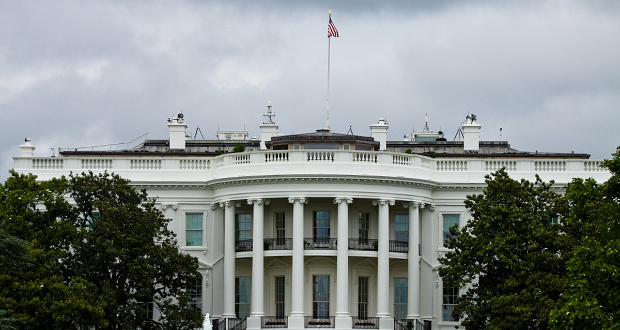
Biden, Trump kick off 2024 election campaigns in verbal attacks
As the 2024 US presidential election draws closer, the two most prominent candidates - incumbent US President Joe Biden and former president Donald Trump - have begun their campaign rallies. However, to the disappointment of voters and the global public, both candidates launched fierce verbal attacks against each other in their first speeches of the new year, rather than discussing ways to address domestic issues.
The negative tone of the speeches by the two likely presidential nominees, marking the start of the election year, suggests that the trend of this US election feature even more extreme polarization, which scholars and experts described as "unprecedented in over a century." Comparing it to a "soccer field without referees," the election is likely to open up a scenario of low-quality democracy, analysts said.
During his speech on Friday in Valley Forge, Pennsylvania, Biden accused Trump of instigating the Capitol riot in 2021 and plotting revenge. The attack went on in his first major campaign speech of the year, which had been scheduled on Saturday, the third anniversary of the riot, but which was rescheduled due to weather reasons. Biden said that Trump's reelection bid is based on trying to seek "revenge and retribution" against his political enemies, and that Trump had used Nazi language, media reported.
Only a few hours later, Trump fired back at Biden during his speech in Sioux Center, Iowa. After Biden called him a threat to American democracy, Trump mocked the Democrat over his stutter, saying "he's a threat to d-d-democracy." He also called Biden's speech a "pathetic fearmongering campaign event."
The trend of extreme polarization is further strengthened in the 2024 US election, as can be seen from the first campaign speeches by Biden and Trump, Lü Xiang, a research fellow at the Chinese Academy of Social Sciences, told the Global Times on Sunday.
Both candidates, from the two parties, are adopting a "strongman strategy," vigorously smearing each other and claiming that the other is a person who undermines the country and democracy, Lü said. "Such election rhetoric did not appear even before 2020, but now it has further intensified."
"The current US election situation is like a soccer field without referees, with both sides deploying red cards," Lü said, referring to this election as the most intense and extreme since the American Civil War.
Diao Daming, an associate professor at the Renmin University of China in Beijing, pointed out that both sides are already adopting negative campaign strategies, which is usually done toward the end of the campaign in previous elections.
Read Full Article:
India targets net-zero carbon emissions by 2070, says Modi
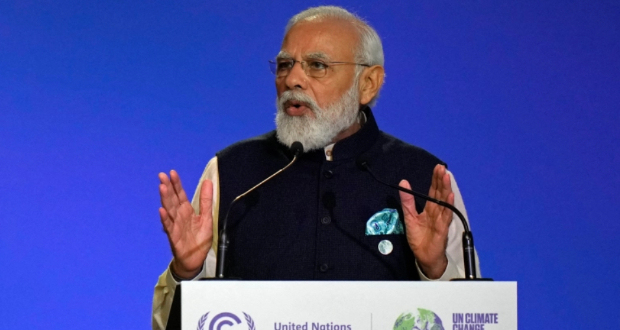
India’s economy will become carbon neutral by the year 2070, the country’s prime minster has announced at the COP26 climate crisis summit in Glasgow. The target date is two decades beyond what scientists say is needed to avert catastrophic climate impacts. India is the last of the world’s major carbon polluters to announce a net-zero target, with China saying it would reach that goal in 2060, and the United States and the European Union aiming for 2050.
COP26: What climate summit means for one woman in Bangladesh

China's carbon emissions are vast and growing, dwarfing those of other countries. Experts agree that without big reductions in China's emissions, the world cannot win the fight against climate change. In 2020, China's President Xi Jinping said his country would aim for its emissions to reach their highest point before 2030 and for carbon neutrality before 2060. His statement has now been confirmed as China's official position ahead of the COP26 global climate summit in Glasgow. But China has not said exactly how these goals will be achieved.
Why China's climate policy matters to us all
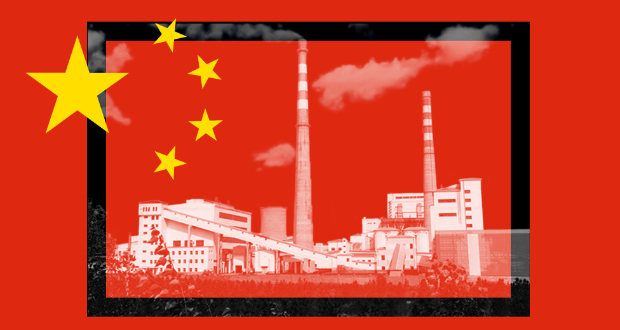
China's carbon emissions are vast and growing, dwarfing those of other countries. Experts agree that without big reductions in China's emissions, the world cannot win the fight against climate change. In 2020, China's President Xi Jinping said his country would aim for its emissions to reach their highest point before 2030 and for carbon neutrality before 2060. His statement has now been confirmed as China's official position ahead of the COP26 global climate summit in Glasgow. But China has not said exactly how these goals will be achieved.
Deliver on promises, developing world tells rich at climate talks
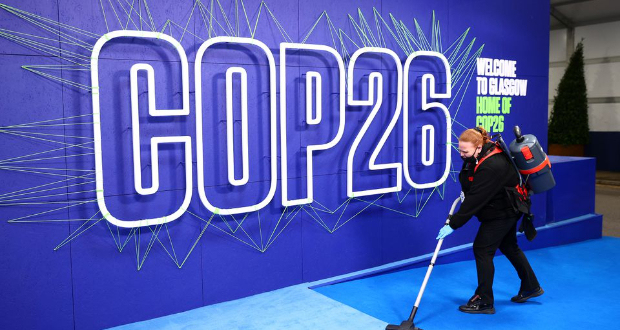
A crucial U.N. conference heard calls on its first day for the world's major economies to keep their promises of financial help to address the climate crisis, while big polluters India and Brazil made new commitments to cut emissions. World leaders, environmental experts and activists all pleaded for decisive action to halt the global warming which threatens the future of the planet at the start of the two-week COP26 summit in the Scottish city of Glasgow on Monday. The task facing negotiators was made even more daunting by the failure of the Group of 20 major industrial nations to agree ambitious new commitments at the weekend.